Zanu PF, let’s hear it from horse’s mouth
Acting President Joice Mujuru was this week quoted as apologising for the conduct of Zanu PF supporters who last week invaded resort lodges and camps at Lake Chivero.
The Zimbabwe Tourism Authority (ZTA) confirmed that Mujuru had sent her apologies with an assurance that nothing of the sort would ever happen again.
“Special mention goes to the Acting President, Amai Mujuru, for prudent guidance in the matter,” said the ZTA. “She has since instructed the tourism authorities and the nation that these unfortunate circumstances will not recur.”
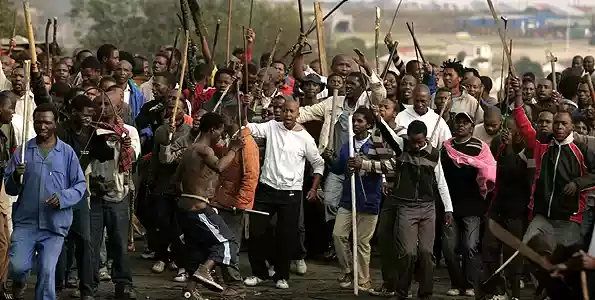
This was after more than 300 marauders from Zvimba district had invaded various properties in the area, saying it was part of the drive to indigenise the economy.
More than 20 properties, including lodges, chalets and boating clubs, belonging both to black and white citizens, were invaded.
The invaders flew Zanu PF flags and sang the party’s song as they denied owners, their families, visitors — among them tourists — and employees entry and exit.
This was her second mea culpa within months as late last year she expressed contrition for murders and other dastardly acts perpetrated in the name of her party, Zanu PF, pledging that the party would make up for its grave mistakes and would make overtures to the victims.
“Why do we have to sleep with one eye open thinking somebody is going to harm me? It has happened in the communities and we end up saying it’s President Robert Mugabe yet it’s someone who has orchestrated that mishap on you. Mugabe doesn’t know.”
But the total picture is not convincing. Last week there was pandemonium in Harare as Zanu PF supporters besieged Town House and, among other outrages, “assaulted officials on duty” under the guise of protesting at the slashing of planted maize, but no arrests were made.
And it was indeed curious that the “protestors included bouncers that are commonly hired at soccer matches and musical shows”, as reported in the state media.
The Herald had a caption referring to these hooligans as “Harare residents” to give respectability to their thuggery.
“Soviet communism might not have endured for 70 years but for enablers in academia, religion and journalism,” says an expert observer. While the lake invaders were driven out of the lodges by armed riot police, there were no arrests.
Zanu PF heavyweight Ignatius Chombo unconvincingly tried to distance his party from the marauders, but the fact that no mention was made of arrests shows where their allegiance lay.
Curiously, ZTA chief executive Karikoga Kaseke described some of the leaders of the invaders as “dignified individuals”.
Before that, Nyanga holiday lodges were invaded at the height of the festive season last month — with the same results: no arrests.
Now, could there be a worse time for that to happen when you have both foreign and domestic tourism peaks? There is a link in this whole series of events soon after the Zanu PF conference in December.
The purported purpose of the invasion was to “indigenise” the properties. Let’s start by giving them the benefit of the doubt that they were indeed driven by indigenisation.
Research has shown that there is a shift in people’s views of themselves influenced by external cues, such as the euphoria characterising the current invasions and those before them.
People without the requisite skills suddenly overestimate their own level of skill; fail to recognise genuine skill in others; and fail, with tragic results, to recognise the extremity of their inadequacy.
Charles Darwin says: “Ignorance more frequently begets confidence than does knowledge.” How can a mere villager, not even acquainted with double entry bookkeeping, hope to run a modern, sophisticated business successfully? It takes years to build a business but days or even less to destroy it.There is a world of difference between political fervour and business acumen.
Instead of destroying already thriving businesses, a more productive way would be to start your own business at your level of ability.
Of course, this takes hard work, involving as much as 16 hours a day to the project and existing on the bare minimum for many years without even the guarantee or assurance that you will succeed.
One must like to work hard and create something; they must be success-driven, and would be proud of employing tens or hundreds of people and being a fair and compassionate employer at that.
That’s what it takes to run a business. Are these invaders prepared to do that without even asking whether they have the aptitude?
Such an approach to indigenisation of taking in all and sundry amounts to policy failure.
There is need to appreciate the interconnectedness of various sectors of the economy upstream and downstream, and sideways.
Destroying one sector has economy-wide ramifications. Indigenisation in itself is no guarantee to prosperity.
It is imperative to preserve those remaining jobs at a time when private-sector activity has virtually collapsed and employers have been retrenching workers and/or failing to pay them altogether. “
Investors will need to distinguish between countries that are starting to live up to their potential and those whose politics and policies will keep them stuck in the slow lane,” says economist Pratibha Thaker. Acting with speed is of paramount importance.
Let’s go back to 2000.
A few weeks after the beginning of the farm invasions, Acting President Joseph Msika and then Home Affairs minister Dumiso Dabengwa ordered the occupiers out of farms in the belief that invasions were not state policy and in compliance with court orders, but they were overruled by Mugabe immediately on his return to the country from a foreign trip.
He made it abundantly clearly that they should stay there untouched.
The fate of foreign investment and tourism was sealed with those words and deeds.
This was at a time of electioneering, but the purpose of election should be policy, not personality.
While the land issue was legitimate, it became highly politicised to such an extent that everything else came to a standstill at great socio-economic cost — like what happened at Nyanga, Lake Chivero and Town House. They say one thing and go on to do the exact opposite.
They haven’t shown willingness to do away with their political past. There is no ideology or sense of purpose involved other than consolidating the ruling class itself and its supportive bureaucracy.
We are far from the end of the road back to stability. The economy has to be rebooted at a macro level, not in this disjointed, damaging way which has not produced significant results and sustainable take-off.
This week a Mbare magistrate released without bail 19 MDC-T supporters on the understanding that they would voluntarily come to court on the set date, saying:
“From the evidence given by the investigating officer, the court is of the view that the state case is weak, and the statements that the accused persons have no fixed abode is not tangible.” The MDC-T supporters had gone to the local police station to report an attack on them by Zanu PF supporters, but were instead locked up themselves and charged.
“We are a Concorde with no reverse and no brakes,” said then Zanu PF chairman John Nkomo just before the 2002 presidential election, adding: “Captain Mugabe is at the controls.”
Unless and until the man at the controls, the man who calls the shots, comes out categorically and unequivocally against this lawlessness, Mujuru’s apology will not inspire confidence among those who have been at the receiving end of Zanu PF’s physical and economic excesses.
Let’s hear it straight from the horse’s mouth.
ctutani@newsday.co.zw
“Special mention goes to the Acting President, Amai Mujuru, for prudent guidance in the matter,” said the ZTA. “She has since instructed the tourism authorities and the nation that these unfortunate circumstances will not recur.”
This was after more than 300 marauders from Zvimba district had invaded various properties in the area, saying it was part of the drive to indigenise the economy.
More than 20 properties, including lodges, chalets and boating clubs, belonging both to black and white citizens, were invaded.
The invaders flew Zanu PF flags and sang the party’s song as they denied owners, their families, visitors — among them tourists — and employees entry and exit.
This was her second mea culpa within months as late last year she expressed contrition for murders and other dastardly acts perpetrated in the name of her party, Zanu PF, pledging that the party would make up for its grave mistakes and would make overtures to the victims.
“Why do we have to sleep with one eye open thinking somebody is going to harm me? It has happened in the communities and we end up saying it’s President Robert Mugabe yet it’s someone who has orchestrated that mishap on you. Mugabe doesn’t know.”
But the total picture is not convincing. Last week there was pandemonium in Harare as Zanu PF supporters besieged Town House and, among other outrages, “assaulted officials on duty” under the guise of protesting at the slashing of planted maize, but no arrests were made.
And it was indeed curious that the “protestors included bouncers that are commonly hired at soccer matches and musical shows”, as reported in the state media.
The Herald had a caption referring to these hooligans as “Harare residents” to give respectability to their thuggery.
“Soviet communism might not have endured for 70 years but for enablers in academia, religion and journalism,” says an expert observer. While the lake invaders were driven out of the lodges by armed riot police, there were no arrests.
Zanu PF heavyweight Ignatius Chombo unconvincingly tried to distance his party from the marauders, but the fact that no mention was made of arrests shows where their allegiance lay.
Curiously, ZTA chief executive Karikoga Kaseke described some of the leaders of the invaders as “dignified individuals”.
Before that, Nyanga holiday lodges were invaded at the height of the festive season last month — with the same results: no arrests.
Now, could there be a worse time for that to happen when you have both foreign and domestic tourism peaks? There is a link in this whole series of events soon after the Zanu PF conference in December.
The purported purpose of the invasion was to “indigenise” the properties. Let’s start by giving them the benefit of the doubt that they were indeed driven by indigenisation.
Research has shown that there is a shift in people’s views of themselves influenced by external cues, such as the euphoria characterising the current invasions and those before them.
People without the requisite skills suddenly overestimate their own level of skill; fail to recognise genuine skill in others; and fail, with tragic results, to recognise the extremity of their inadequacy.
Charles Darwin says: “Ignorance more frequently begets confidence than does knowledge.” How can a mere villager, not even acquainted with double entry bookkeeping, hope to run a modern, sophisticated business successfully? It takes years to build a business but days or even less to destroy it.There is a world of difference between political fervour and business acumen.
Instead of destroying already thriving businesses, a more productive way would be to start your own business at your level of ability.
Of course, this takes hard work, involving as much as 16 hours a day to the project and existing on the bare minimum for many years without even the guarantee or assurance that you will succeed.
One must like to work hard and create something; they must be success-driven, and would be proud of employing tens or hundreds of people and being a fair and compassionate employer at that.
That’s what it takes to run a business. Are these invaders prepared to do that without even asking whether they have the aptitude?
Such an approach to indigenisation of taking in all and sundry amounts to policy failure.
There is need to appreciate the interconnectedness of various sectors of the economy upstream and downstream, and sideways.
Destroying one sector has economy-wide ramifications. Indigenisation in itself is no guarantee to prosperity.
It is imperative to preserve those remaining jobs at a time when private-sector activity has virtually collapsed and employers have been retrenching workers and/or failing to pay them altogether. “
Investors will need to distinguish between countries that are starting to live up to their potential and those whose politics and policies will keep them stuck in the slow lane,” says economist Pratibha Thaker. Acting with speed is of paramount importance.
Let’s go back to 2000.
A few weeks after the beginning of the farm invasions, Acting President Joseph Msika and then Home Affairs minister Dumiso Dabengwa ordered the occupiers out of farms in the belief that invasions were not state policy and in compliance with court orders, but they were overruled by Mugabe immediately on his return to the country from a foreign trip.
He made it abundantly clearly that they should stay there untouched.
The fate of foreign investment and tourism was sealed with those words and deeds.
This was at a time of electioneering, but the purpose of election should be policy, not personality.
While the land issue was legitimate, it became highly politicised to such an extent that everything else came to a standstill at great socio-economic cost — like what happened at Nyanga, Lake Chivero and Town House. They say one thing and go on to do the exact opposite.
They haven’t shown willingness to do away with their political past. There is no ideology or sense of purpose involved other than consolidating the ruling class itself and its supportive bureaucracy.
We are far from the end of the road back to stability. The economy has to be rebooted at a macro level, not in this disjointed, damaging way which has not produced significant results and sustainable take-off.
This week a Mbare magistrate released without bail 19 MDC-T supporters on the understanding that they would voluntarily come to court on the set date, saying:
“From the evidence given by the investigating officer, the court is of the view that the state case is weak, and the statements that the accused persons have no fixed abode is not tangible.” The MDC-T supporters had gone to the local police station to report an attack on them by Zanu PF supporters, but were instead locked up themselves and charged.
“We are a Concorde with no reverse and no brakes,” said then Zanu PF chairman John Nkomo just before the 2002 presidential election, adding: “Captain Mugabe is at the controls.”
Unless and until the man at the controls, the man who calls the shots, comes out categorically and unequivocally against this lawlessness, Mujuru’s apology will not inspire confidence among those who have been at the receiving end of Zanu PF’s physical and economic excesses.
Let’s hear it straight from the horse’s mouth.
ctutani@newsday.co.zw