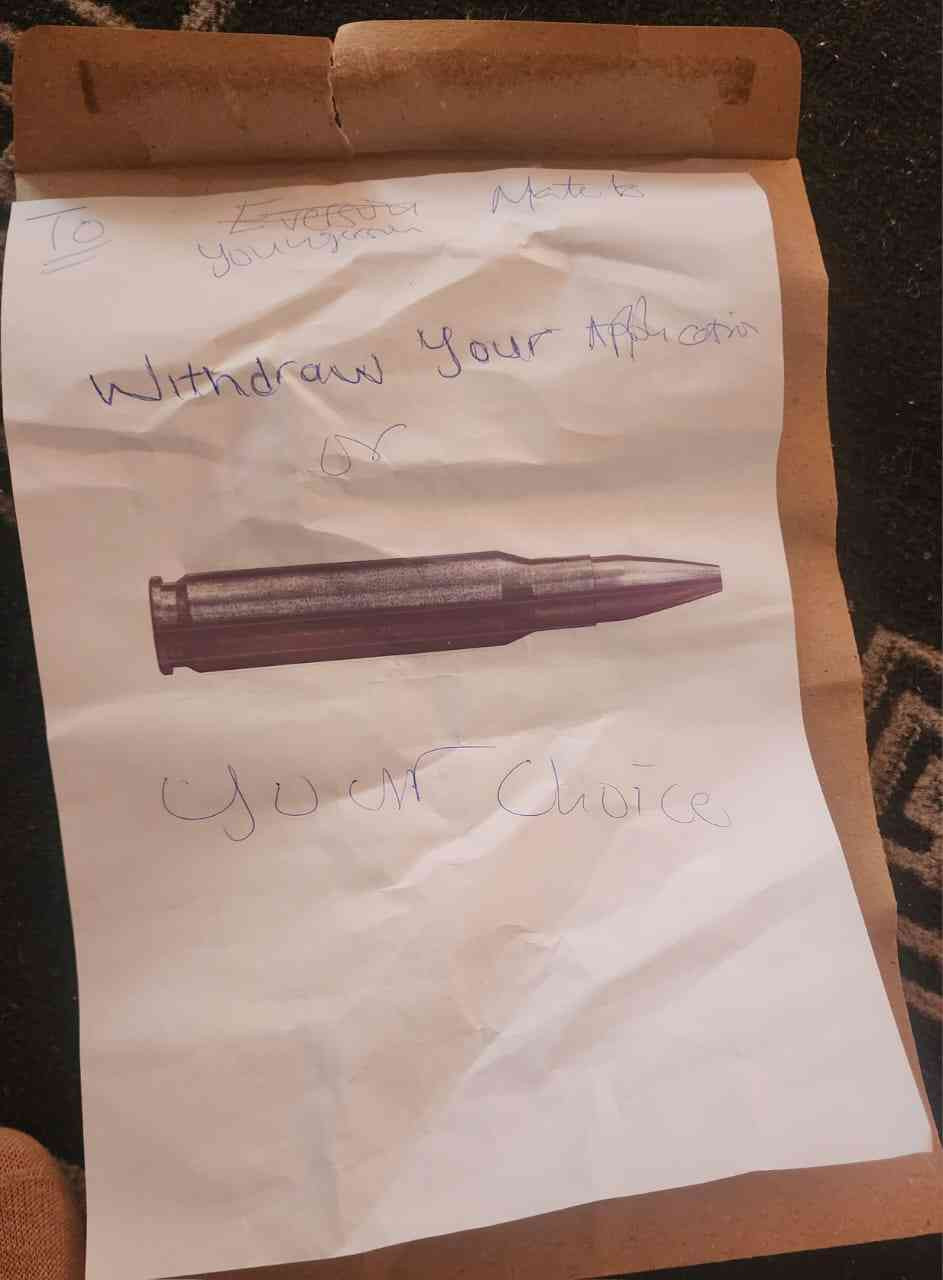
THE reported threats against human rights activist Youngerson Matete and civic leader Joelson Mugari are deeply disturbing and should alarm every Zimbabwean who values democracy, constitutionalism and the rule of law.
According to reports, Matete allegedly received a bullet accompanied by a message warning him to withdraw his court application challenging the Constitution Amendment No. 3 Bill.
Mugari, meanwhile, reportedly received anonymous threats warning him against mobilising citizens to demonstrate against the proposed constitutional changes.
Whether these threats originate from rogue individuals, political zealots or organised networks, they represent a dangerous attack on democratic participation.
In a constitutional democracy, citizens must be free to challenge laws in court, petition Parliament, organise peaceful demonstrations and express dissenting views without fear of violence or intimidation.
Once bullets become part of political discourse, democracy itself is placed under siege.
Zimbabwe has a long and painful history of political intimidation.
Time and again, periods of heightened political contestation have been accompanied by allegations of violence, abductions, torture and threats directed at activists, journalists, opposition politicians and civil society leaders.
- Mavhunga puts DeMbare into Chibuku quarterfinals
- Bulls to charge into Zimbabwe gold stocks
- Ndiraya concerned as goals dry up
- Letters: How solar power is transforming African farms
Keep Reading
What makes these incidents particularly troubling is that many cases remain unresolved years later.
The abduction of journalist and humand rights activist Itai Dzamara in 2015 remains one of Zimbabwe’s most haunting unresolved cases.
Dzamara was allegedly abducted by unidentified men in Harare and has never been seen again.
More than a decade later, his family is still searching for answers.
In 2020, opposition and civil society activists, including Joana Mamombe, Cecilia Chimbiri and Netsai Marova, reported being abducted and tortured after participating in a demonstration. The allegations generated widespread local and international concern.
Journalist and government critic Hopewell Chin’ono has also repeatedly reported harassment, arrests and intimidation linked to his activism and reporting.
Numerous other activists, labour leaders and opposition supporters have similarly reported threats, assaults or arbitrary arrests over the years.
In many instances, investigations either stalled or failed to produce conclusive outcomes that satisfied public concern.
This history explains why reports of bullets, threats and intimidation trigger anxiety among citizens.
Zimbabweans have seen too many examples where political disagreements are not settled through dialogue and democratic processes, but through fear.
What is particularly disappointing is that the CAB 3 debate concerns the very document that is supposed to guarantee citizens’ rights and freedoms.
If constitutional reform is truly in the national interest, its supporters should have no difficulty defending it through public debate, evidence and persuasion.
Ideas should defeat ideas.
Arguments should defeat arguments.
The law should defeat weak legal arguments.
Bullets, threats and intimidation have no place in a constitutional democracy.
The authorities have a duty to thoroughly investigate the reported threats against Matete and Mugari.
Citizens deserve to know who is responsible and whether these acts form part of a broader pattern of political intimidation.
At the same time, all political actors — regardless of party affiliation — should publicly reject violence and condemn those who attempt to silence opponents through fear.
Zimbabwe’s future cannot be built upon intimidation.
It cannot be built upon anonymous threats or messages delivered through bullets.
A confident democracy does not fear criticism.
A strong government does not fear court challenges.
A legitimate political system does not fear peaceful protest.
The answer to disagreement is debate, not intimidation.
The answer to dissent is dialogue, not threats.
And the answer to constitutional questions must always be found in the Constitution itself, not at the barrel of a gun.