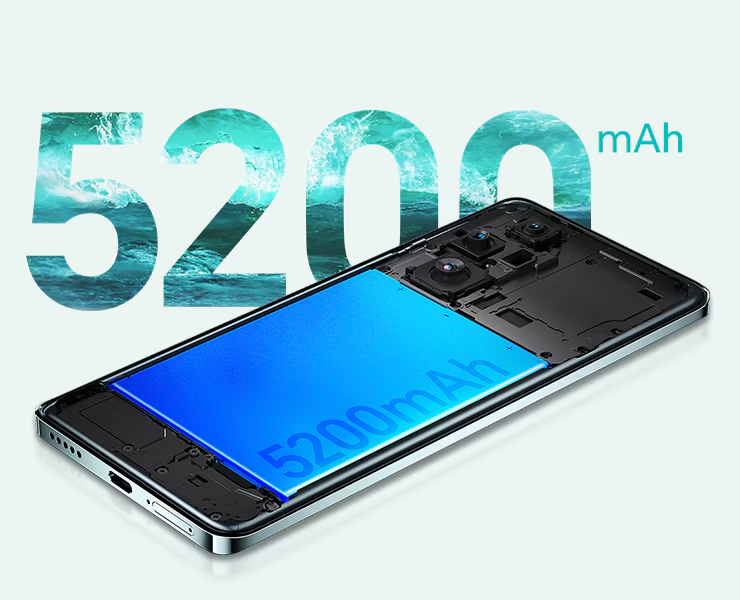
For over a decade, smartphone innovation has faced a stubborn roadblock in the form of the battery.
While processors have grown lightning-fast and displays have become stunningly vibrant, the physical size of our phones has largely been dictated by the chunky, graphite-based Lithium-ion batteries required to get users through a single day.
However, a quiet revolution is currently rewriting the rules of mobile power as Android smartphone manufacturers, including Honor, OnePlus and Xiaomi, increasingly ditch standard Lithium-ion batteries in favor of silicon-carbon anode batteries.
To determine whether this new technology is actually better or just marketing hype, it is essential to break down how these two powerhouses compare in duration, speed, drainage and overall performance.
To understand the shift, it helps to look at the anatomy of a battery.
Both traditional batteries and the new silicon-carbon variants are technically types of lithium-ion systems because they both rely on the movement of lithium ions between a cathode and an anode.
The defining difference lies entirely in the anode material itself.
Traditional Lithium-ion uses a pure graphite carbon anode that acts like a neat bookshelf, storing lithium ions between its layers.
- Motoring: Chinese cars gaining market share
- China’s EV overcapacity: What are the opportunities?
- US lawmakers urge Pentagon to add DeepSeek, Xiaomi to list of firms allegedly aiding Chinese military
- Why Zim’s EV transition faces a long, potholed road ahead
Keep Reading
In contrast, silicon-carbon replaces or augments the graphite with silicon, which acts like a sponge by chemically bonding and alloying with lithium ions.
Because silicon can bond with far more lithium ions than graphite can trap, its theoretical energy capacity is roughly 10 times higher.
This difference in material properties directly translates to a massive leap forward in battery duration and capacity, making silicon-carbon the clear winner in this category.
Because silicon-carbon anodes have a drastically higher energy density, reaching 330 to over 400 Wh/kg compared to the moderate 250 to 300 Wh/kg of traditional graphite, manufacturers can pack significantly more milliamp-hours into the exact same physical footprint.
In the past, a phone with a 6 000 mAh or 7 000 mAh battery was notoriously thick and heavy.
With silicon-carbon, brands are easily fitting 6,000 mAh to 9,000 mAh batteries into sleek, sub-8.5mm flagship smartphones, which translates to real-world usage duration jumping from the typical one-day charger to an easy two-day battery life under normal conditions.
How fast a battery drains depends heavily on user activity, but silicon-carbon batteries offer a massive advantage in a previously weak area for smartphones, extreme cold weather.
Traditional Lithium-ion batteries suffer from high internal resistance when the temperature drops, causing them to drain rapidly or shut down entirely in freezing conditions.
The carbon matrix within silicon-carbon batteries keeps ions flowing smoothly even in sub-zero climates, resulting in significantly slower drainage times when walking through winter weather.
When it comes to charging speeds, silicon-carbon provides an efficient and safe alternative to traditional methods.
In terms of pure, raw wattage, traditional lithium-ion batteries have achieved incredibly fast speeds, but they usually require heavy dual-cell configurations to do so safely without overheating.
Silicon-carbon anodes possess higher electrical conductivity and a larger surface area, allowing for incredibly rapid, highly efficient lithium-ion insertion.
As a result, silicon-carbon batteries natively support fast-charging speeds, often 80W and upward, in a single-cell layout.
This means a phone charges just as fast, if not faster, while generating less internal heat during the process.
Despite these advantages, there is a catch regarding the lifespan trade-off and production cost, which explains why companies like Apple or Samsung have not adopted it across all devices yet.
The issue comes down to physical expansion, production cost and structural longevity.
Traditional Lithium-ion boasts low production costs and a highly mature supply chain with low physical degradation, remaining highly stable over time.
Conversely, silicon-carbon suffers from high production costs due to complex manufacturing and experiences a unique sponge problem.
When a silicon-carbon battery charges, the silicon expands by up to 300% as it absorbs lithium ions and then shrinks when it discharges. Over two to three years, this repetitive breathing causes micro-cracks in the anode material and degrades the battery's overall health faster than standard graphite.
While manufacturers use carbon structures and chemical additives like fluoroethylene carbonate to act as a cage and minimise this swelling, industry experts note that early-generation silicon-carbon batteries still experience slightly quicker capacity degradation over their first few years compared to tried-and-true graphite cells.
For the modern smartphone user, silicon-carbon remains the superior technology.
While traditional lithium-ion remains the affordable, stable benchmark for budget devices, silicon-carbon successfully solves the single biggest complaint consumers have had for a decade, phone batteries that die too quickly.
By offering up to 40% more capacity without adding thickness, boosting fast-charging efficiency and braving the cold, silicon-carbon is officially the new standard for flagship mobile power.
As material science continues to tame the silicon expansion problem, graphite anodes will eventually become a relic of the past.