Walk down the bustling streets of Harare, catch an intercity bus from Mbare Musika, or step into a modern suburban home in Zimbabwe and one reality becomes instantly clear, Chinese brands are no longer just entering the Zimbabwean market, they are dominating it.
Across the smartphone, home appliance, public transport and automotive sectors, Chinese manufacturers have systematically outpaced Western and regional competitors.
By blending aggressive, tiered pricing with localisation, engineering products specifically for the realities of Zimbabwe's infrastructure and economy, Beijing’s tech and motoring giants have become the undisputed backbone of Zimbabwean daily life.
Zimbabwe’s public transport and logistics sectors have been completely revitalised by Chinese engineering.
For years, the country relied on aging European imports or regional second-hand vehicles, but today, the nation moves on custom-built Chinese buses designed specifically to withstand local terrain, potholes and long-distance corrugated roads.
Brands like Yutong, Zhongtong and Higer have become household names, dominating both the Zimbabwe United Passenger Company (ZUPCO) fleet and city to city transport fleets.
Local operators favour these brands because they are supplied with reinforced suspensions, higher ground clearance and fuel-efficient powertrains explicitly configured for Southern African conditions.
Brand-new, 60-seater intercity diesel coaches from Zhongtong and Yutong range between US$190 000 and US$220 000, offering local transport operators a massive return on investment compared to exponentially more expensive European alternatives.
- The brains behind Matavire’s immortalisation
- Red Cross work remembered
- All set for inaugural job fair
- Community trailblazers: Dr Guramatunhu: A hard-driving achiever yearning for better Zim
Keep Reading
Goldstein Motors in Harare now locally distributes and services premium models like the Yutong ZK6128H Luxury Coach, drastically reducing down-time for operators.
In the passenger vehicle and utility space, Chery has made a massive comeback via local dealerships like Kwanza Auto.
Sleek SUVs like the Chery Tiggo 4 Pro and Tiggo 7 Pro, ranging from US$24 000 to US$33 000, are swiftly replacing pre-owned Japanese imports among the middle class, offering a pristine out-of-the-box experience with standard manufacturer warranties.
The green revolution has landed firmly on Zimbabwean tarmac.
BYD (Build Your Dreams), which recently shook the global automotive world by out-pacing Tesla in global EV sales, has opened a dedicated showroom along Airport Road in Harare.
Boasting their ultra-safe blade battery technology, models like the BYD Dolphin and Atto 3 are capturing the premium corporate market, offering a brilliant hedge against local fuel price volatility.
The smartphone arena in Zimbabwe highlights the strategic brilliance of Chinese tech.
The market is fundamentally split into two segments, highly affordable entry-level models that drive mass digital inclusion and ultra-premium flagships that challenge the traditional dominance of Apple and Samsung.
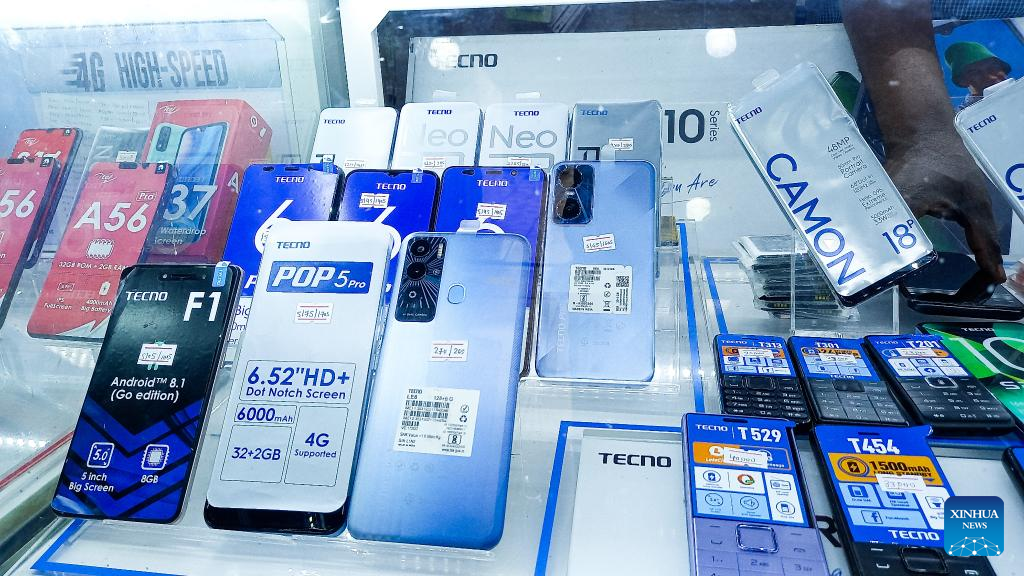
For the vast majority of Zimbabweans, their gateway to the internet comes via Transsion Holdings.
Through its three distinct brands, Itel, Tecno and Infinix,Transsion provides highly optimised devices at price points Western brands simply cannot match.
Itel is known as the ultimate budget-friendly champion, providing reliable smartphones like the itel A-series for between US$60 and US$90.
Meanwhile, brands like the Tecno Spark and Infinix Hot series sit comfortably in the US$110 to US$180 bracket, offering large displays, massive 5000mAh batteries that are crucial for navigating local power cuts and robust build qualities suited for daily commuters.
Further up the ladder, a shift has occurred as power users, content creators and corporate executives are increasingly looking to Xiaomi, Oppo and Vivo for all-round flagship performance and ultimate camera capabilities.
Xiaomi is positioned as the ultimate ecosystem brand, while devices like the Redmi Note series offer incredible mid-range value, flagships like the Xiaomi 17 feature legendary Leica-engineered optics.
Coupled with their popular ecosystem products, like Xiaomi Smartwatches and fitness bands ranging from US$35 to US$150, they offer an interconnected lifestyle.
Oppo and Vivo are known for introducing ground-breaking mobile photography with advanced night-mode capabilities, gimbal stabilisation and portrait algorithms calibrated specifically for diverse skin tones.
Because of this, devices like the Oppo Reno series and Vivo V-series, priced between US$400 and US$750, are championed by local digital media professionals as premier content creation tools.
Catering heavily to performance enthusiasts, Honor, with its resilient, shatter-proof display technologies and OnePlus, renowned for lightning-fast charging speeds and clean software architectures, comfortably command the US$500 to US$900+ premium space, winning over users who want elite specifications without paying the steep brand premiums of traditional tech giants.
Inside Zimbabwean households, the domestic landscape has undergone a major face-lift as Hisense has transitioned from an alternative brand to a dominant market leader in the home appliance sector.
The Hisense domestic empire offers smart TVs ranging from US$250 for a 32" model to over US$3,800 for a 100" screen, double-door fridges priced between US$550 and US$3 100 and digital microwaves from US$80 to over US$500.
By offering long-lasting warranties and surge-protection features built into their power supplies, an absolute necessity given local grid fluctuations, Hisense has secured massive real estate in local electronic retail stores.
For budget-conscious consumers looking to furnish their homes or student accommodations, Itel has expanded beyond mobile devices into the home appliance space, offering highly affordable, energy-efficient LED and smart TVs ranging from US$120 to US$250, making home entertainment accessible to low-income households.
The undeniable dominance of these brands boils down to three primary factors.
First is the value-to-price ratio, as Chinese brands do not compromise on core features to achieve lower price points.
A Zimbabwean consumer buying a US$150 Tecno or a US$30,000 Chery gets features, like high-definition displays, AI cameras, or luxury leather interiors, that would cost double in Western or Japanese equivalent brands.
Second is infrastructure localisation, whether it is a Yutong bus built with a rugged chassis to handle regional gravel roads, a Hisense fridge built to tolerate power surges, or an Infinix phone equipped with a long-lasting battery, these products are explicitly engineered for the African environment.
Third is after-sales support and investment, because unlike brands that rely purely on third-party grey market imports, companies like BYD, Chery, Xiaomi and Transsion have established brick-and-mortar service centers, local partnerships and active supply chains for genuine spare parts across Zimbabwe.
As the country continues to modernise its transport networks and digital infrastructure, the footprint of Chinese innovation is set to grow deeper, cementing a new era of technological and automotive reliance.