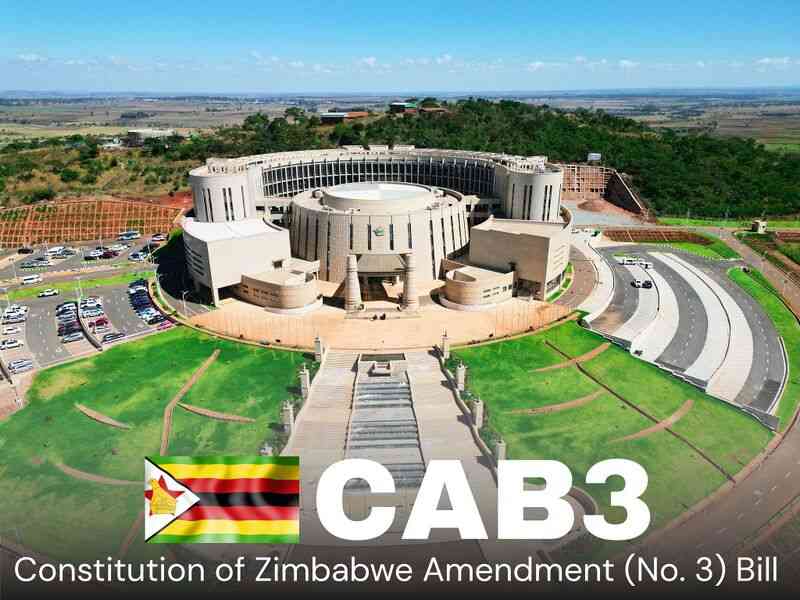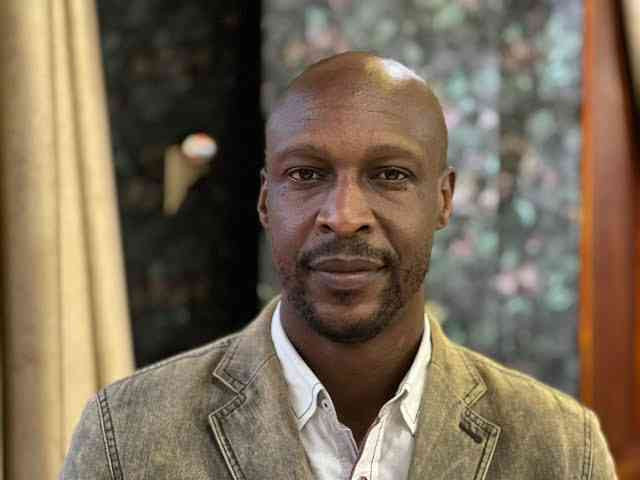
JUSTICE, Legal and Parliamentary Affairs minister Ziyambi Ziyambi is expected to introduce the Constitution of Zimbabwe Amendment (No 3) Bill (CAB 3) in the National Assembly this month.
The Bill proposes far-reaching changes to Zimbabwe's constitutional framework, including extending the tenure of the President, Members of Parliament and councillors from five years to seven. It also seeks to alter the manner in which the President is chosen, raising profound concerns about the future of democratic participation and accountability.
The stakes could not be higher.
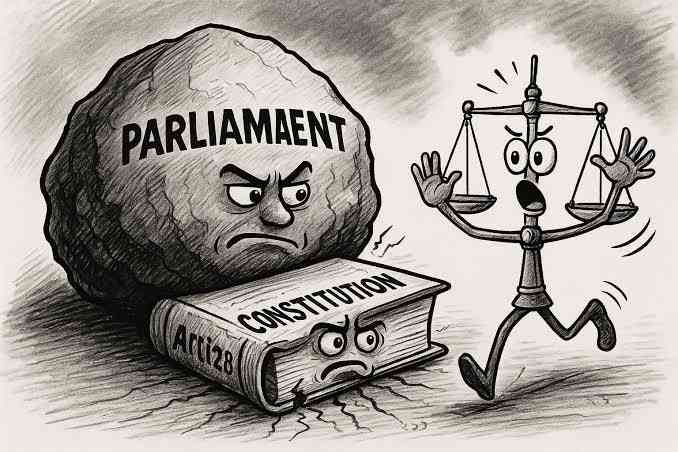
Following the chaotic and heavily criticised public hearings on the Bill, Zimbabweans now look to lawmakers to demonstrate that Parliament remains a genuine guardian of the Constitution rather than a rubber stamp for executive interests.
As a key pillar of the State, Parliament is constitutionally mandated to hold the Executive to account, regardless of party loyalties or the realities of the whipping system.
There is little doubt that Zanu PF will seek to use its two-thirds majority in the National Assembly to push the Bill through, particularly after Ziyambi ruled out a secret ballot for lawmakers.
Yet parliamentary arithmetic should never supersede constitutional principle.
Before casting their votes, legislators must ask themselves difficult but necessary questions: Are the proposed amendments truly in the best interests of Zimbabwe and its citizens? Do they strengthen democracy or facilitate what many critics have described as a constitutional coup?
- Mr President, what message do you have for diasporan Zimbos at UNGA?
- Don't muzzle Gukurahundi survivors: UN
- UN has exposed ED deception
- Businessman piles pressure on top judge
Keep Reading
When the Bill was gazetted in February, the government argued that it was designed to strengthen constitutional governance, clarify institutional roles, promote political stability and improve the efficiency of the State. Officials presented the amendments as part of Zimbabwe's continuing constitutional evolution, aimed at refining and modernising governance structures in line with practical experience and developmental needs.
Those explanations, however, have failed to convince a broad spectrum of stakeholders.
Lawyers, churches, civil society organisations and opposition political parties have all voiced strong objections. Their concern is that CAB 3 does not strengthen constitutional democracy but weakens it by concentrating greater power in the Executive while reducing avenues for public participation, oversight and accountability.
The Constitution is the supreme law of the land. It embodies the aspirations, rights and freedoms of Zimbabweans. Any attempt to amend such a foundational document must, therefore, be approached with the utmost caution, broad national consensus and clear public support.
The principle of one-person, one-vote occupies a special place in Zimbabwe's history. It was one of the central demands of the liberation struggle and remains the cornerstone of democratic governance. Any proposal that appears to diminish the direct role of citizens in choosing their leaders deserves the highest level of scrutiny.
Lawmakers were elected to represent the people, not political parties. When constitutional questions arise, their ultimate loyalty must be to the nation, its democratic values and future generations, not to temporary political expediency.
This month presents Parliament with an opportunity to prove that it understands the gravity of its constitutional responsibilities. Zimbabweans will be watching closely.
History, too, will deliver its verdict.
It will record whether Parliament chose to defend democratic principles and constitutionalism or it became a willing instrument in their erosion.
The moment demands courage, conscience and statesmanship.
May the real lawmakers stand up.