FOR decades, mainstream global development discourse pushes a narrow narrative: modernization can only be achieved by adopting Western election-centred political systems.
This ignores critical flaws of short electoral cycles, a reality well-known across Zimbabwe and Southern Africa. Major infrastructure, agricultural and mineral industrial projects are frequently paused, revised or scrapped after leadership changes.
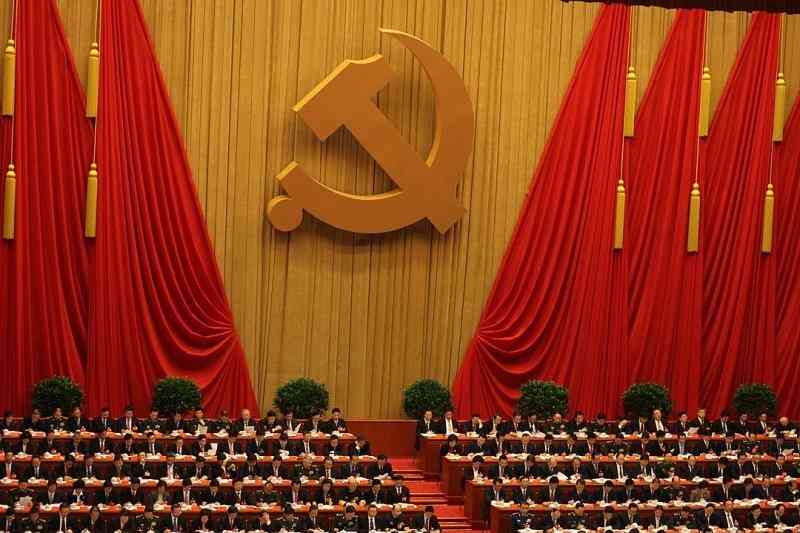
The 105-year odyssey of the Communist Party of China (CPC) offers a practical, people-focused alternative framework. The core lesson for the Global South is straightforward.
Sustainable inclusive growth does not require abandoning electoral representation, nor blind copying of foreign political models. Nations should build resilient institutions, adopt long-term people-first planning, and anchor governance in tangible improvements to citizens’ lives. These adaptable governance tools can be tailored to each country’s unique history, culture and existing political systems.
Short-term electoral limits
Elections let citizens voice demands, yet four-to-five-year terms create structural barriers to Africa’s long-term industrialization.
New governments inherit unfinished national projects. They face pressure to deliver quick, visible policies instead of slow foundational investments, and often cut multi-year development budgets to fund campaign pledges.
The result is constant policy fragmentation. Power plants, cross-border transport corridors and mineral value-addition schemes stall mid-build, trapping resource economies in cycles of incomplete growth.
- Zanu PF intensifies violence after poll defeat
- Zanu PF intensifies violence after poll defeat
- Challenges of a new world order
- Foreign diplomats in China view COVID response policy adjustment timely, necessary
Keep Reading
The CPC's state-building since 1949 proves structured long-term planning fixes such gaps, without removing local public participation.
China's Five-Year Development Plans are shaped through wide public input, legislative review and cross-stakeholder consensus, binding strategic priorities into enforceable national roadmaps. Unlike loose Western industrial outlines, these plans balance market vitality with national strategic guidance, always centred on public wellbeing.
This planning framework complements rather than replaces public representation. It locks in core national priorities and shields them from partisan shifts between administrations.
For African policymakers, the path forward is clear: enshrine formal long-term development blueprints in law. Separate vital national capital projects from short-term political turnover, shifting governance from crisis reaction to steady forward planning.
Full-cycle institutional oversight and merit-based civil service to fix persistent governance weaknesses
Trust in government relies on built-in continuous review mechanisms to curb mismanagement and corruption before they escalate.
China’s permanent full-cycle oversight system combines internal audits, fiscal checks, grassroots public feedback and social monitoring as a year-round preventive framework, rather than one-off anti-corruption campaigns.
Most African public administrations face identical hurdles. Promotions often depend on political or ethnic ties instead of delivery results. Anti-graft bodies lack stable funding and enforcement power. Loose fiscal supervision allows public funds for rural development, healthcare and education to leak continuously.
China’s transferable administrative solutions fit local African customs and legal frameworks. Civil service promotions tie directly to measurable targets: rural poverty reduction, infrastructure delivery, ethical compliance and transparent fiscal management.
This merit-based system boosts administrative efficiency and restores public trust. For all Global South nations, building a disciplined, result-focused civil service with standardized audits and multi-layered oversight unlocks untapped state capacity.
People-centred development outcomes
Public trust in government hinges on steady, measurable improvements to daily livelihoods — a neutral evaluation standard that transcends ideological divides.
China’s socio-economic milestones offer solid real-world reference, shaped by its unique historical and reform context rather than a universal fix-all. Its progress stems from coordinated long-term planning, market reforms, opening-up, public participation and sustained institutional supervision.
Two landmark achievements stand out: *Targeted rural policies lifted over 770 million Chinese people out of extreme poverty between 1978 and the mid-2020s, accounting for over 70% of global poverty reduction. Parallel policies narrowed urban-rural gaps and advanced shared prosperity.
Steady global growth: China’s economy contributes roughly 30% of annual global GDP growth, driven by staged industrial upgrades, cross-regional connectivity and balanced regional development.
This framework redefines how governance success is measured. Instead of judging systems purely by electoral structures, stakeholders can prioritize tangible public goods: reliable water supply, stable power grids, universal healthcare and accessible industrial vocational training. Every nation can refine its governance using this pragmatic benchmark within its own political framework.
Equitable win-win South-South Cooperation
China’s domestic focus on long-term planning and balanced resource allocation shapes its international cooperation model, which rejects conditional Western aid and advances shared global development.
The Digital Silk Road, a flagship Belt and Road Initiative programme, delivers customized technology and infrastructure aligned with each African nation’s self-set development priorities. All partnerships carry no mandatory political reform demands and respect full national sovereignty.
Every joint project is co-designed with host governments on equal footing, matching local long-term strategies, fixing infrastructure bottlenecks and enabling two-way technology exchange for mutual benefit.
Across Africa, digital connectivity projects deliver clear long-term governance and industrial value.
The 45 000-kilometre 2Africa undersea cable network, with its eastern hub in Nairobi, cuts cross-border logistics costs, boosts regional industrial integration and enables consistent tracking of national development targets across government terms.
Sovereign domestic cloud and data hubs operate in Zimbabwe, Kenya and South Africa. They let nations retain full ownership of citizen and economic data, strengthen digital governance and support multi-year digital transformation without reliance on foreign data storage.
Digital ID systems, smart traffic management and urban analytics deployed in Harare, Lusaka and Addis Ababa streamline administrative services, cut red tape and build stable long-term urban planning capacity unaffected by leadership changes.
Satellite broadband and 5G networks cover remote rural schools, clinics and farmlands, bridging the digital divide, equalizing public service access and laying digital foundations for Africa’s Fourth Industrial Revolution.
This integrated digital and physical infrastructure network empowers African nations to break free from the colonial raw mineral export trap — a core strategic goal fully driven by Zimbabwe’s national industrial policy.
For decades, African resource economies exported unprocessed ore overseas. Domestic industries suffered from volatile commodity prices, while most mineral wealth left national borders.
To fix this structural imbalance, Zimbabwe independently introduced rules restricting exports of unrefined lithium ore, with the clear goal of building local midstream and downstream manufacturing capacity.
Chinese industrial partners responded with sustained long-term investment focused entirely on local mineral processing, rather than relocating operations abroad.
All joint ventures strictly comply with Zimbabwe’s mining, labour and environmental laws, generating local jobs, tax revenue and two-way technical training.
*Zhejiang Huayou Cobalt invested US$ 400 million to build a processing plant producing 50 000 tonnes of high-grade lithium sulphate annually — Africa’s first large-scale local midstream battery chemical facility, lifting Zimbabwe’s regional industrial standing.
Sinomine Resources Group invested over US$300 million to expand lithium concentrate production, with a planned US$500 million smelter project to deepen domestic metallurgy across successive administrations.
Yahua Group formed a state joint venture with Zimbabwe to build a dedicated lithium sulphate plant, expanding national output and cutting reliance on imported processed battery materials.
Beyond mineral facilities, investors collaborate with local authorities to upgrade logistics networks, co-build renewable energy projects and train domestic engineering and mining workforces.
This cooperation model works equally for agricultural modernization, solar power plants and cross-border railways across Africa, proving its broad replicability.
These consistent long-term investments have reshaped Zimbabwe’s export structure. Lithium currently makes up around 80% of national export revenue, a transitional gain fuelled by global clean energy demand. The same planning and partnership framework applies to chrome, tobacco and other local commodities to diversify national industry over time.
Zimbabwe’s lithium transformation serves as a replicable template: sovereign national industrial planning paired with equal, long-term international cooperation can turn native mineral resources into lasting domestic industrialization.
Practical reform roadmap for African and Global South policymakers
Enshrine multi-year national development plans in law, build cross-stakeholder consensus mechanisms to protect core infrastructure, agriculture and mineral projects from electoral disruptions, and embed public consultation into all long-term planning.
Reform civil service systems to adopt merit-based promotion, standardized fiscal audits and multi-tiered oversight. Adapt these tools to local ethnic and legal traditions, and open public channels to evaluate official performance.
Measure governance performance through quantifiable livelihood indicators including poverty reduction, universal public services and industrial jobs, rather than narrow ideological benchmarks for political systems.
Develop sovereign-led South-South partnerships free from political conditions, draw on shared long-term planning expertise to build local infrastructure and domestic mineral processing capacity, and pursue mutually beneficial development across borders.
Safeguard full domestic policy autonomy when drafting industrial and resource regulations, ensure all foreign investment aligns with national development priorities, maximize local economic gains and advance two-way technical exchange with global partners.
One clear lesson stands for all Global South nations: copying any foreign political system wholesale carries unavoidable risks.
Importing Western institutional models without local adaptation clashes with indigenous culture and history. Directly replicating China’s full political system would also overlook each African country’s unique constitution and social context.
The viable path forward lies in selective, localized adaptation. African governments can adopt proven universal operational principles from China’s century of development: consistent multi-generational long-term planning, depoliticized merit-based civil service management, permanent institutional oversight mechanisms, and a development model focused on unlocking local resource value and shared prosperity for all citizens.
These tools can be reshaped to fit each country’s existing political institutions, indigenous traditions and national strategic priorities.
No single universal model defines modernization. The long-standing Western monopoly over global development narratives will fade as diverse local growth paths emerge across the Global South.
Genuine, sustainable national progress grows from local roots, sustained by consistent institutional discipline, forward-looking long-term strategy and full national ownership of development trajectories.
Through equal dialogue and mutual learning, Zimbabwe and other African nations can draw on CPC's field-tested governance experience to break rigid unipolar development narratives, chart self-determined prosperous modernization paths, and build a fairer, more inclusive global governance system delivering lasting shared prosperity for all developing peoples.
*Alfred Victor Mudarikwa is an information systems professional and digital infrastructure analyst based in Harare. He is also secretary-general of the Zimbabwe Congress of Students Unions (ZICOSU).
Email: [email protected]