
FOR women in Mushenjere, Chikomba district, relocation from land they've farmed for decades isn't simply a matter of moving from one home to another.
It’s a struggle to feed children and grandchildren, maintain households and survive without the fields that once provided food and income all while waiting for a mining company to fulfil promises made when their community was earmarked for relocation.
Women in the community say the prolonged uncertainty surrounding their relocation by the Chinese-owned Dinson Iron and Steel Company has left them trapped between two homes: the homesteads they're expected to abandon and new houses that remain incomplete and, in some cases, lack basic services.
The 19 families were settled at Inhoek Farm, Manhize, in 1984 under a resettlement programme, with each household allocated six hectares of land. For decades, farming provided food and income.
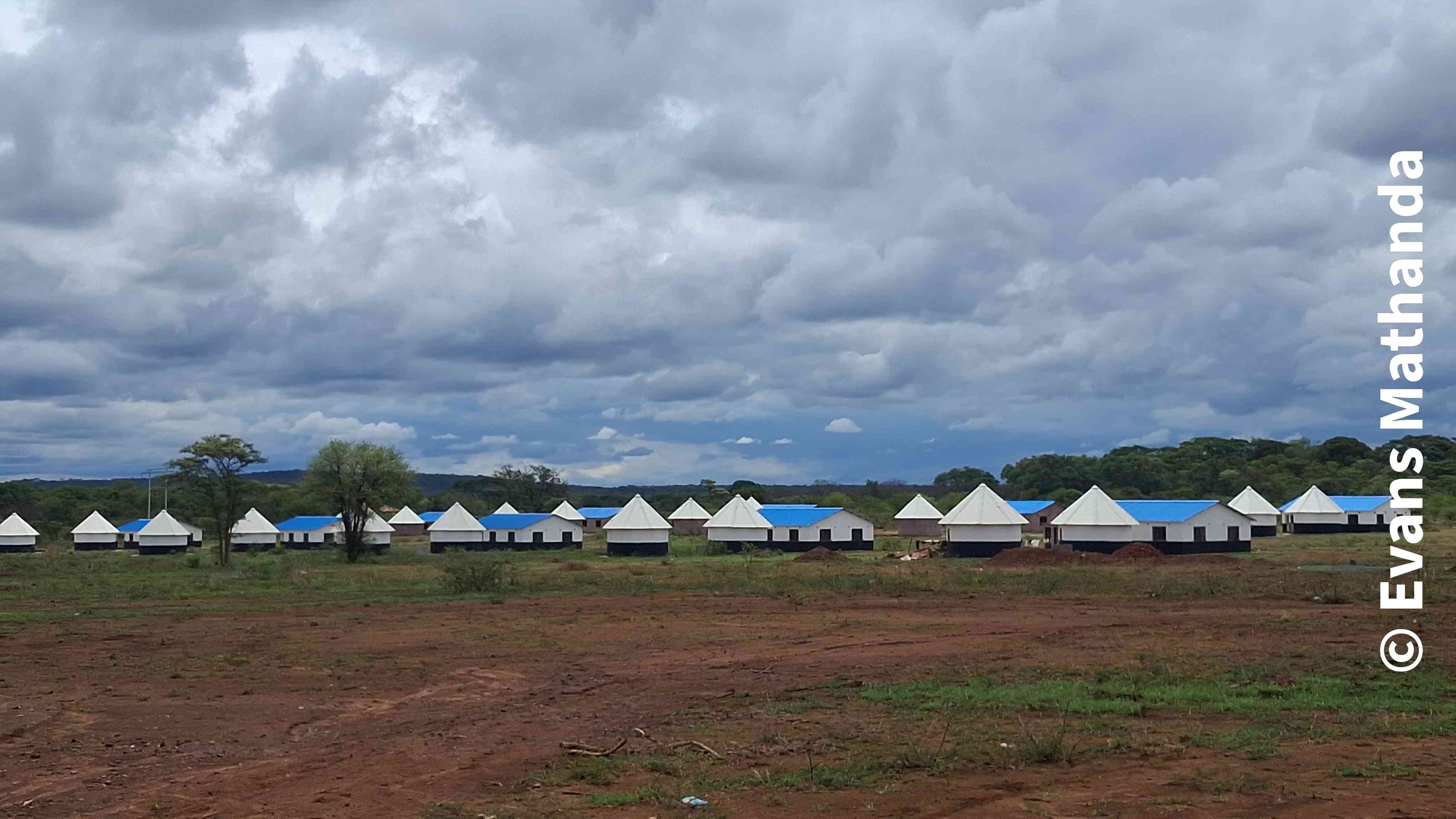
But since mining operations expanded, villagers say they've been unable to use their fields leaving women, who shoulder much of the responsibility for household food security and caring for children and elderly relatives, struggling to meet their families’ needs.
An investigation by NewsDay, supported by ActionAid Zimbabwe, found that women were among those bearing the brunt of the prolonged relocation.
Many villagers have been living in limbo for about four years, waiting to be moved from land now designated for iron and steel operations.
For women who depended on farming, the loss of productive land has meant lost food, income and economic independence.
- Africa’s ‘largest’ ferrochrome plant takes shape
- Africa’s ‘largest’ ferrochrome plant takes shape
- I exposed ED, says Chamisa
- Zim’s quest for FDI leaving communities exposed
Keep Reading
Eniah Mhuru, who cares for children and grandchildren in her household, said loss of farming land had made even basic household upkeep increasingly difficult.
“Farming was how we survived. We could grow food, sell some of it and use the money to pay for the children’s needs,” she said.
“Now I have to wake up everyday wondering what I am going to give the children and grandchildren.
“They still need food, clothes, school requirements and everything else, but the land that sustained us is gone. We are expected to relocate, but we have not been given land where we can start farming again. How are women supposed to look after their families?”

Villagers say the houses being built for them are incomplete and fall short of promises made when the mining project began.
Under the agreement, they say each household was to receive a five-roomed house, two huts, a granary, fowl run, kraal and other rural structures replicating key elements of their traditional homesteads, along with solar power and boreholes for clean water. Residents say many of these commitments haven’t been fulfilled.
The stalled relocation has hit widows especially hard. Anna Munyoro, a widow who survives through farming, said she stopped investing in her home because of uncertainty over when she would be forced to leave.
“We just patch things with whatever we can find,” she said. “Why redo a roof or fix cracked walls when they keep saying we will be moved any time? We are living in uncertainty.”
Munyoro said compensation for assets such as fruit trees and wells was inadequate.
“I am a widow and have been trying to make ends meet through farming,” she said.
“Imagine I got a mere US$14 for a fruit tree that gave me US$300 every season. I drilled a well on my own. I had to sell a beast to do that, yet I got US$40. It is mockery, treachery and cruelty.”
Documents seen by NewsDay show some villagers received as little as US$2 000 for homesteads they had occupied since 1984. Fruit trees were valued at US$14 each regardless of age or productivity, while a 15-metre-deep well was valued at US$40.
Villagers accuse the mining company of persuading them to sign compensation and relocation consent forms without adequately explaining their contents or giving them time to seek independent advice.
A clause in an agreement seen by NewsDay states that once cash compensation is paid, the recipient will have “no further claim” against Dinson for additional compensation arising from the relocation. Villagers argue the clause effectively locked them into packages they believe undervalued their homes and assets.
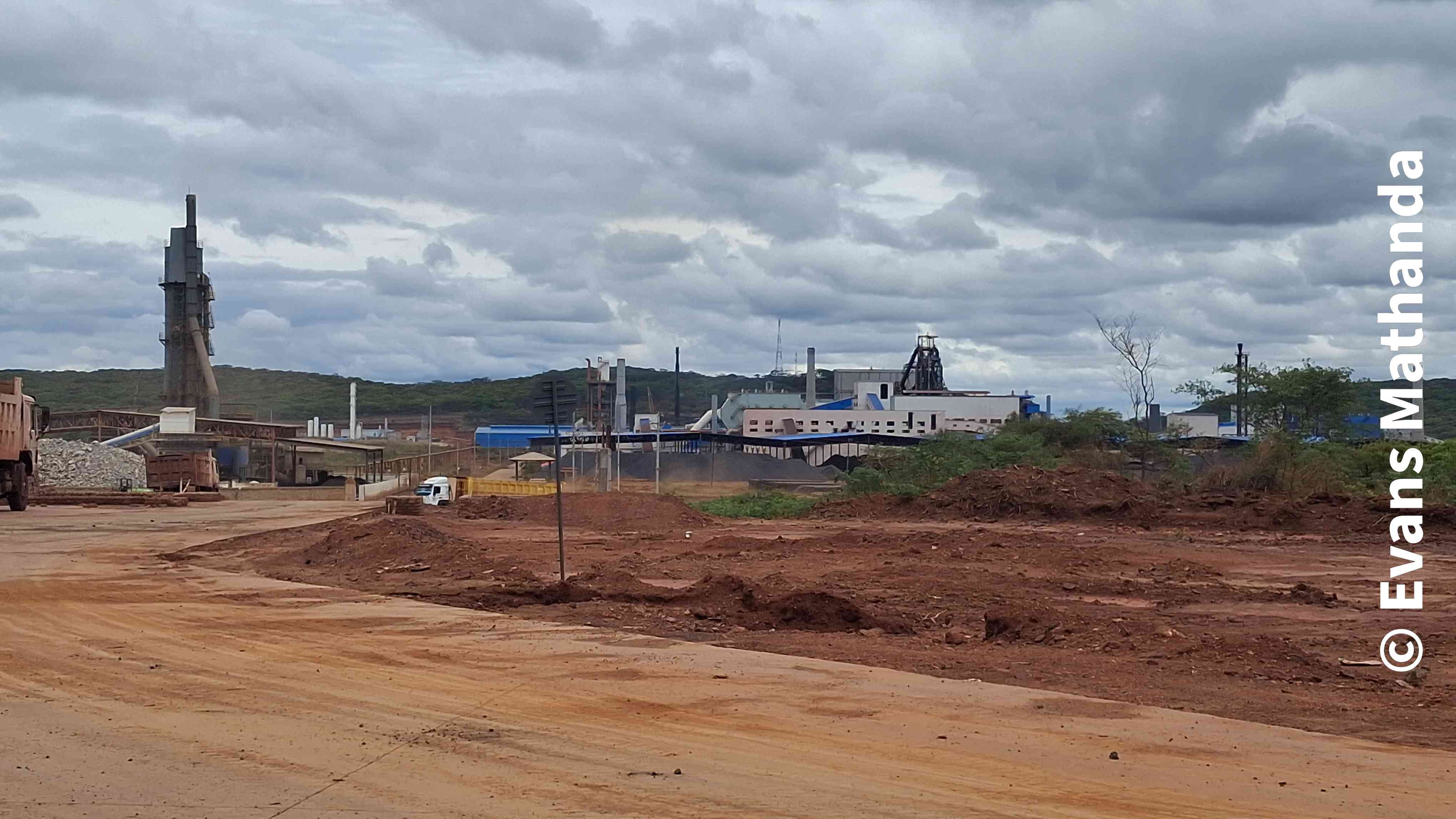
The dispute isn’t only about houses but about the loss of an entire livelihood system. Most of the original landowners are elderly, with the majority above 70.
Villagers say the roughly two hectares allocated per household at the proposed relocation site are inadequate and not immediately usable, since the land hasn't been cleared. For elderly women who have spent decades cultivating established fields, starting all over on uncleared land is another major challenge.
The problem has been compounded by the loss of household food production since 2022. Villagers say they cannot farm because the mining project occupies their former fields, yet they haven’t been given workable alternative land. Instead, the community was offered a monthly food stipend of US$200 per household.
“Whether you have two children or eight, they still give you US$200,” villager Mary Goko told NewsDay when it visited the area in September last year. “And even that US$200 hasn’t come for the past three months. We have been left to starve while they dig our land and block us from farming.”
Goko said women bore the consequences because they were responsible for feeding and caring for their families despite losing their means of production. “We have children and grandchildren depending on us,” she said. “You cannot tell a child there is no food because the mine has taken our fields. They still have to eat. As women, we are the ones who have to find something everyday, but where are we supposed to get it when we cannot farm?”
Village head Nyadzo confirmed villagers had gone for three months without receiving stipends last year. He said a meeting was held with mine authorities to discuss the outstanding payments and a possible payment plan, but villagers were still waiting for concrete timelines. Villagers told NewsDay, however, that their monthly stipends were paid religiously since the start of 2026.
Dinson spokesperson Wilfred Motsi disputed claims that the mine failed to pay villagers for three months.
“That is a lie,” Motsi said. “They have been receiving the stipends every month. That is not true. There was a time that we skipped but later we resumed. It was an issue to do with our financial problems. We are going to pay them this month.”
The dispute has left women reluctant to repair the buildings they live in. During last year's rainy season, a violent storm damaged several houses in the community, but villagers said they were reluctant to undertake major repairs without knowing when relocation would finally take place.
Munyoro said the community was in a difficult situation in which villagers could neither properly maintain their old homes nor safely move to the new settlement.
The uncertainty has taken an emotional toll on elderly villagers, some of whom say they no longer have the strength to start their lives again.
Chokutaura Chananda (84) broke down in tears as he spoke about being expected to clear land at his age.
“As old as I am, how do they expect us to start cutting trees and clearing thick bush?” he asked.
“We used to have prepared fields that we worked on for decades. They destroyed them for mining and now offer us land we cannot even use.”
The Mushenjere crisis raises questions about the climate resilience of communities displaced by large-scale mining. ActionAid Zimbabwe country director Selina Pasirayi said while the development brought by Manhize Steel Company could be a catalyst for economic growth, maintaining access to productive land was fundamental to rural households’ ability to withstand economic and climate shocks.
“Land is central to food security, income and a community’s ability to adapt to climate shocks,” she said.
Pasirayi said the shift from agriculture to mining also meant communities were losing traditional farming strategies, indigenous knowledge and crop diversification practices that had helped them to cope with droughts, floods and economic stress.
She said monthly stipends could offer important support during the transition but shouldn't become a substitute for restoring productive livelihoods.
“Relying solely on wage-based payments can inadvertently create new vulnerabilities, particularly if stipends are time-bound or fluctuate.
“Sustainable development should be measured not only by infrastructure and investment but also by whether affected communities retain the resources, rights and decision-making power needed to sustain their livelihoods and adapt to future climate risks,” Pasirayi said.
“We are not refusing to move,” 80-year-old Makiwa Mupedzi said. “We just want what we were promised. We want proper homes, clean water, solar power, land we can actually farm and fair compensation. We cannot be pushed around like we don’t matter.”
The Zimbabwe Human Rights Commission investigated the villagers’ complaints in August last year, amid growing tensions between the community and the mining company over compensation, relocation, access to land and outstanding payments.
Remigious Matangira, chairperson of the Parliamentary Portfolio Committee on Mines and Mining Development, said Parliament was not aware of the villagers’ complaints.
“Complaints only come in the form of a petition,” Matangira said. “We have yet been petitioned by citizens or with regard to that issue. If we are petitioned, we will then direct it to the responsible committee. For instance, if it is to do with farming, we direct it to the lands committee.”
For women such as Munyoro and Goko, however, the dispute is no longer an abstract question of development policy.
It is a daily struggle over food, household survival and the responsibility of caring for children and grandchildren while the land that sustained them disappears beneath a mining project.
This story was supported by ActionAid Zimbabwe*