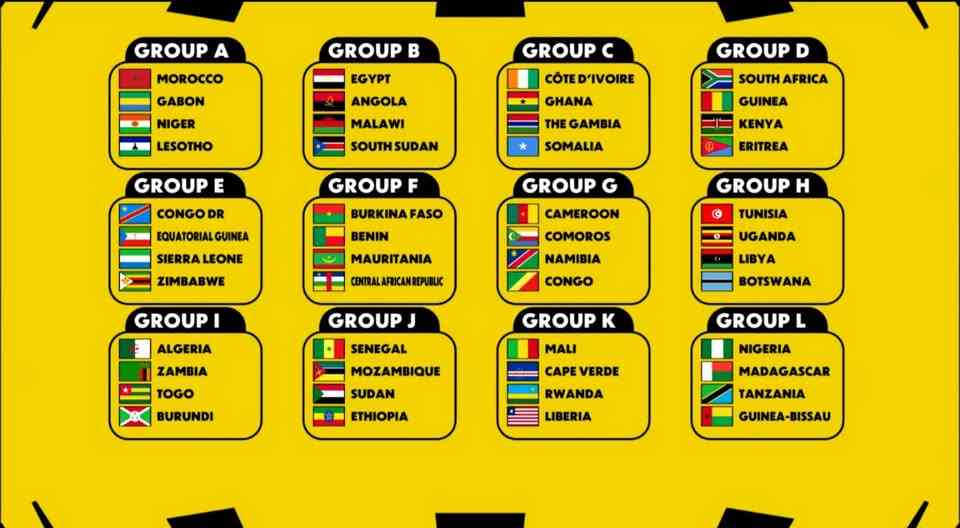
The draw is always the easy part. When the balls rolled out of the pots to place the Zimbabwe Warriors into Group E for the upcoming tournament, a familiar script began to unfold.
Fans checked the opponents, analysts mapped out potential paths to victory, and administrators smiled for the cameras.
But for Zimbabwean football, the true test has never been who we play. It is how we prepare.
The Warriors are entering a grueling field alongside Democratic Republic of Congo, a top-40 African powerhouse.
On paper, it is a challenge that demands meticulous preparation, stable leadership, and flawless execution.
On the pitch, however, the reality of recent history casts a long shadow. Less than a year ago, in the late stages of a dismal World Cup qualifying campaign, Zimbabwe slumped to an embarrassing defeat against Lesotho, a nation ranked more than 80 places lower on the Fifa ladder.
While the Warriors managed hard-fought draws against Rwanda and Nigeria during that cycle, the lack of consistent finishing and structural cohesion exposed deep-lying systemic flaws.
The question every football lover in the country is asking is simple: What is Zifa's actual plan?
- In Full: Fifteenth post-cabinet press briefing, June 07, 2022
- Health talk: Mandatory wearing of masks can now be scrapped
- Zipra cries foul over vetting process
- Zipra cries foul over vetting process
Keep Reading
To win at the highest level, a team requires continuity. Instead, the national team coaching seat has resembled a revolving door, plunging the squad into yet another era of uncertainty just as qualifiers loom.
Following the sudden resignation of Marian Marinica after a brief five-month stint, the Zimbabwe Football Association (Zifa) turned to former national team legend Kaitano Tembo, appointing him as interim head coach.
Tembo, who previously served as an assistant within the setup, steps into the hot seat at a pivotal moment.
He is tasked with steadying a ship that has repeatedly changed direction, bringing in local coach Takesure Chiragwi as his assistant to help navigate the upcoming assignments.
Yet, the interim nature of the current technical bench raises serious questions.
Does a temporary management structure allow a coaching staff enough room to implement a definitive, long-term technical roadmap, or is it merely another emergency measure on a fractured system?
Following the recent Africa Cup of Nations (Afcon) group stage, where Zimbabwe once again failed to advance past the initial round despite fighting hard to qualify, a comprehensive, long-term structural plan is drastically needed.
Without a permanent strategy, any tactical progress risks being erased the moment the next boardroom transition occurs.
A successful international campaign requires more than just tactical drill sessions; it requires massive financial backing.
The total budget for the 2025 Afcon campaign remains a subject of intense speculation, with clarity sorely missing regarding the exact contributions from ZIFA, statutory government funding through the Sports and Recreation Commission (SRC), and corporate sponsors.
More concerning is the toxic cloud of bonus disputes that continues to hover over the national team squad.
History has shown that unresolved financial promises are the quickest way to derail player morale.
Reports of withheld tournament payouts and friction between player representatives and administration officials have surfaced yet again.
When athletes are forced to worry about whether their flight allowances and performance bonuses will be honoured, tactical focus on the pitch inevitably suffers.
The administrative backdrop makes these preparation hurdles even more precarious.
The wounds of the 2022 Fifa and Cafsuspension, which paralysed Zimbabwean football due to third-party interference, are still fresh.
While the appointment of a transitional normalisation committee temporarily steadied operations and paved the way for institutional elections, structural stability remains fragile.
The 2022 SACAGE report by the African Development Bank noted that institutional governance reform is a strict prerequisite for national economic debt clearance.
In many ways, Zimbabwe's football governance serves as a parallel issue.
True reform cannot just be about passing an inspection; it must be ingrained in the daily operations of the federation.
While Zifa currently maintains its Fifa compliance under its elected leadership, any administrative regression or sudden financial mismanagement threatens to bring the hammer of suspension down once more before the September qualifiers even kick off.
Accountability requires looking at past promises and comparing them against actual outcomes.
Before the previous qualifying cycles, federation leadership boldly stated goals of reaching the knockout rounds and re-establishing Zimbabwe as a top-tier African football nation.
The actual outcome told a different story: an early exit in the 2025 Afcon group stage and a bottom-of-the-table finish in the World Cup qualifiers without a single victory.
The federation failed to deliver on its primary sporting objectives.
If Zifa wants to break this cycle of disappointment ahead of the 2027 campaign, the public needs to see a formalised, transparent technical roadmap that supports its coaching staff rather than relying on quick fixes.
Football fans have run out of patience for boardroom excuses.
The draw is over, the opponents are waiting, and the clock is ticking.
It is time for Zifa to show that it finally has a plan to win.