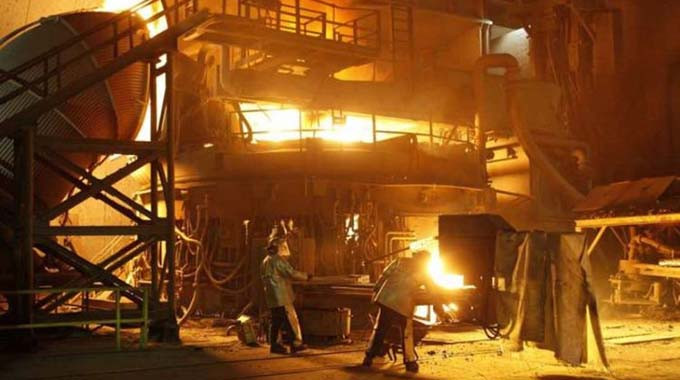
When the parliamentary public accounts committee (PAC) toured the Zimbabwe Iron and Steel Company (Ziscosteel) in Redcliff this May, they confronted a silent landscape of rust-red metal, sagging pipes and obsolete infrastructure that has been cold for eighteen years rather than a functioning industrial hub.
For over two decades, the state-owned enterprise has existed less as a manufacturer and more as a multi-billion-dollar theatre of broken promises, presenting a sobering reality for the government under the current custody of the Mutapa Investment Fund, which accepted the formal transfer of the entity under Statutory Instrument 58 of 2026.
Following the fact-finding tour, PAC chairperson Caston Matewu observed that it is simply not feasible for Zisco Steel to ever make steel again in its current state, even with the intervention of the Mutapa Investment Fund.
Since its operational demise, Ziscosteel has been the subject of successive, highly publicised resuscitation deals that followed an identical trajectory of grand promises, zero production and total collapse.
In 2011, the Indian steel giant Essar Group signed a US$10 billion mega-deal, promising to inject US$750 million to clean up Zisco's balance sheet, build a new plant and construct a massive iron ore complex in Chivhu.
This deal produced zero tons of steel and ultimately failed because it choked on bureaucratic infighting within the inclusive government over the ownership of iron ore mineral rights, forcing Essar to pull out entirely.
A similar failure occurred between 2017 and 2018 when China's R and F Properties pledged a US$2 billion investment injection to overhaul operations and restart the blast furnaces, yet no physical infrastructure was rehabilitated because the deal quietly fell through after protracted disagreements over technical details, asset valuation and investment terms.
By 2019, the ZimCoke Venture saw a private sector group agree to a debt-to-asset swap to take over Zisco's coke ovens under a US$500 million project, promising to export chemical products and coke, but this yielded minimal operational traction and was paralysed by overlapping legal agreements, asset disputes and structural gridlock between private operators and state authorities.
- Mvuma steel plant 40% complete
- Don’t blame sanctions for bankruptcy, says expert
- Nzenza speaks on Zisco
- Zim corruption: Is it because of crooked minds or purely cruel idiocy
Keep Reading
Most recently, during the 2022 Kuvimba Mining House handover, then-Industry minister Sekai Nzenza assured the nation that the company would be back on its feet within twelve months, but the deadline passed with the furnaces remaining completely dark because internal structural adjustments and strategic misalignment led to a quiet shelving of the immediate targets, culminating in the asset being offloaded to the Mutapa Investment Fund.
The cost of keeping Ziscosteel on artificial life support has shifted directly to the Zimbabwean taxpayer, as the government formally absorbed US$500 million of the company’s liabilities under the Ziscosteel Debt Assumption Bill to clear the balance sheet for prospective investors.
Today, that debt remains firmly lodged on the public balance sheet and is being serviced by the Treasury through the issuance of public financial instruments, including treasury bills, meaning the public continues to pay for liabilities accrued by a defunct entity while the infrastructure remains non-functional.
Behind these corporate failures lies a profound human tragedy, as Ziscosteel diligently deducted pension contributions from its workers' salaries in hard United States dollars between 2009 and 2016, yet according to the Ziscosteel Pension Fund Pensioners' Association, those funds were never remitted to First Mutual Life.
This systematic diversion of employee benefits has completely erased the retirement security of thousands of former employees and their families, leaving millions in unremitted USD contributions missing while no executive or state official has faced criminal prosecution or financial accountability to date.
The consequences are vividly visible in Redcliff, a once-thriving middle-class town built around the steel works whose local economy collapsed in lockstep with the furnaces.
Redcliff Town Council officials now describe a municipality starved of its primary revenue base, plagued by crumbling service delivery and severe water shortages, and home to an aging population left entirely destitute by the pension default.
As Ziscosteel languishes, Zimbabwe’s macroeconomic landscape is shifting with the US$1 billion Dinson Iron and Steel plant in Manhize, Mvuma, rapidly positioning itself as the nation’s new steel anchor.
However, because Manhize is not yet operating at the full production capacity required to satisfy all industrial grades, Zimbabwe continues to import roughly US$400 million of steel annually from the Sadc region, a massive import bill that represents a continuous drain on the country's foreign currency reserves while local capacity sits idle.
Metallurgical engineers note that while the primary steel manufacturing line is obsolete, specific sub-assets within Ziscosteel remain highly viable if they can be uncoupled from the broader wreckage.
For instance, the foundry requires minimal structural rehabilitation and is capable of producing up to 36 000 iron grinding hammers per week to serve the critical needs of the regional mining sector, while the coke reactors could be modified for chemical and specialised fuel production with an investment of US$5 million to US$10 million.
Despite these clear, modular avenues for revenue generation, broader investment remains blocked because these potentially profitable sub-units are trapped within the legal and financial quagmire of the defunct parent company.
Consequently, the PAC's current advice to the Mutapa Investment Fund reflects a harsh reality, suggesting it may finally be time to demolish the obsolete machinery, smelt it down for scrap iron, abandon the historic name and completely rebrand the asset toward alternative industrial projects.