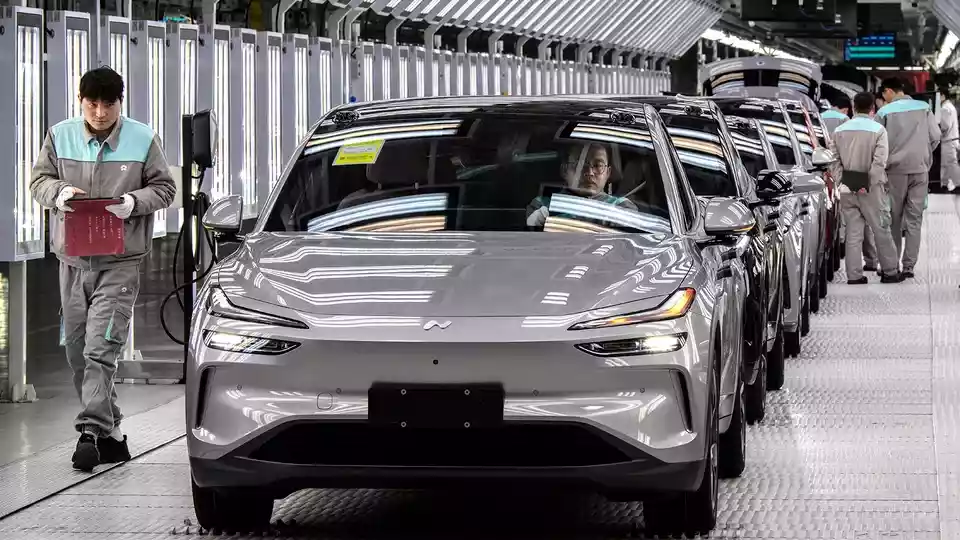
China’s electric vehicle industry has completed a fundamental shift from “product going global” to “ecosystem going global.”
Across battery platforms, software ecosystems, AI cockpits, ultra-fast charging, supply chain control, and production costs, China is no longer following technical routes and industrial rules set by Western traditional automakers. Instead, it is redefining the automobile.
This paradigm shift challenges the industrial foundations of traditional automotive powers and opens an unprecedented development path for Africa and the Global South.
This article analyses the competitiveness of China’s EV industry, evaluates strategic opportunities for developing economies, and uses Zimbabwe’s lithium resources as a case to propose a pragmatic cooperation framework: moving from simple raw material exports to orderly local processing, phased industrialization, and mutually beneficial value enhancement.
Paradigm shift: How China became a rule‑definer
China’s EV success rests on full‑chain self‑development and systemic efficiency.
Chinese firms lead in battery technology, intelligent cockpits, and integrated supply chains. BYD and CATL dominate global battery markets, with massive overseas investment in production facilities. China’s EV development cycle is compressed to about 24 months, supported by a complete domestic supply chain.
Cost advantages come from industrial scale and system efficiency, not cheap labour.
- New perspectives: How Zimbabwe can effectively fight money laundering
- Celebrating importance of mother languages
- New perspectives: How Zimbabwe can effectively fight money laundering
- The artist in environmental justice
Keep Reading
China’s globalisation has evolved from product exports to regional hub‑based manufacturing and systematic standard export, shaping modular architectures and charging interfaces worldwide.
Strategic window for the Global South: Beyond the old ‘resources for products’ model
A new structural complementarity has emerged between China’s EV industry and the Global South.
Africa holds nearly one‑third of the world’s key battery minerals, including lithium, cobalt, and platinum group metals. China leads in processing and manufacturing, creating natural synergies.
Most Global South countries urgently need green mobility but lack a mature automotive foundation.
China provides turnkey solutions and mature systems to support leapfrog development.
Emerging markets have huge untapped demand, and Chinese EVs offer strong value for money, aligning with rising consumption needs.
However, Africa’s EV transition faces severe bottlenecks: insufficient and unstable power supply, weak roads and logistics, high transportation costs, shortages of skilled technical talent, and inconsistent regulatory frameworks.
These software and hardware constraints mean large‑scale full‑chain manufacturing remains unfeasible in the short term.
Three pragmatic paths for the Global South
1. Resource supply with responsible long‑term partnership
Stable and compliant mineral exports remain a realistic foundation for cooperation. This model has low barriers and supports early‑stage economic growth.
2. Orderly local processing and phase‑based upgrading
Countries such as Morocco and Thailand have built regional manufacturing hubs by leveraging geographic advantages and policy stability. For most African nations, gradual local processing is far more practical than overnight industrialization.
3. Assembly and specialised manufacturing via adapted cooperation
SKD/CKD assembly of buses, commercial vehicles, and electric two‑wheelers is more feasible given infrastructure and talent constraints.
Zimbabwe’s lithium: From resource exporter to phased industrial upgrader
Zimbabwe has become Africa’s top lithium producer, driven by Chinese investment. The government’s policy to encourage local processing reflects a rational desire to increase value retention.
However, it must be recognised that Zimbabwe and similar African economies still lack comprehensive hardware and software conditions for full‑chain EV manufacturing: unreliable power supply, inadequate logistics, insufficient skilled technicians, and incomplete support systems.
Therefore, ambitious full‑chain industrialisation must be pursued gradually and within its capacity.
Rushing into mandatory large‑scale manufacturing or arbitrary demands for technology transfer would distort commercial operations and violate market principles.
Successful upgrading requires prudent coordination: supporting initial processing such as lithium salt production first; steadily improving infrastructure and power supply; steadily training local talent; and providing a predictable policy environment to attract long‑term investment.
A realistic strategy is to move from mining to mid‑stream processing in stages, develop regional battery material supply capacity, and explore assembly partnerships suited to local conditions.
Pragmatic policy recommendations for Africa
African countries should pursue gradual, commercially sustainable industrial upgrading rather than forced localisation.
- Improve infrastructure and power stability to lay the foundation for processing.
- Strengthen talent training in mining, processing, and basic maintenance.
- Form unified resource coordination to avoid vicious competition.
- Design phased local processing requirements rather than one‑size‑fits‑all mandatory targets.
- Leverage Brics, AfCFTA, and Belt and Road financing for infrastructure and energy projects.
- Develop battery recycling gradually based on market scale.
China’s EV industry has rewritten the rules of the global automotive sector, offering the Global South a historic chance to pursue inclusive industrialisation.
For resource‑rich African countries like Zimbabwe, the top priority is to pursue orderly, gradual, and commercially viable upgrading instead of overambitious full‑chain manufacturing.
By strengthening infrastructure, improving the investment environment, training local talent, and cooperating on the basis of mutual respect and market rules, Africa can turn resource advantages into real and sustainable development dividends. China–Africa EV cooperation can truly become a model of South–South win‑win cooperation
*Saxon Zvina is a pPrincipal Consultant at Skyworld Consultancy Services, specialising in China–Africa mining, industrial cooperation, and EV value chain strategy. He is also a member of the Belt and Road Initiative Think Tank. Email :[email protected] and X:@@saxonzvina2