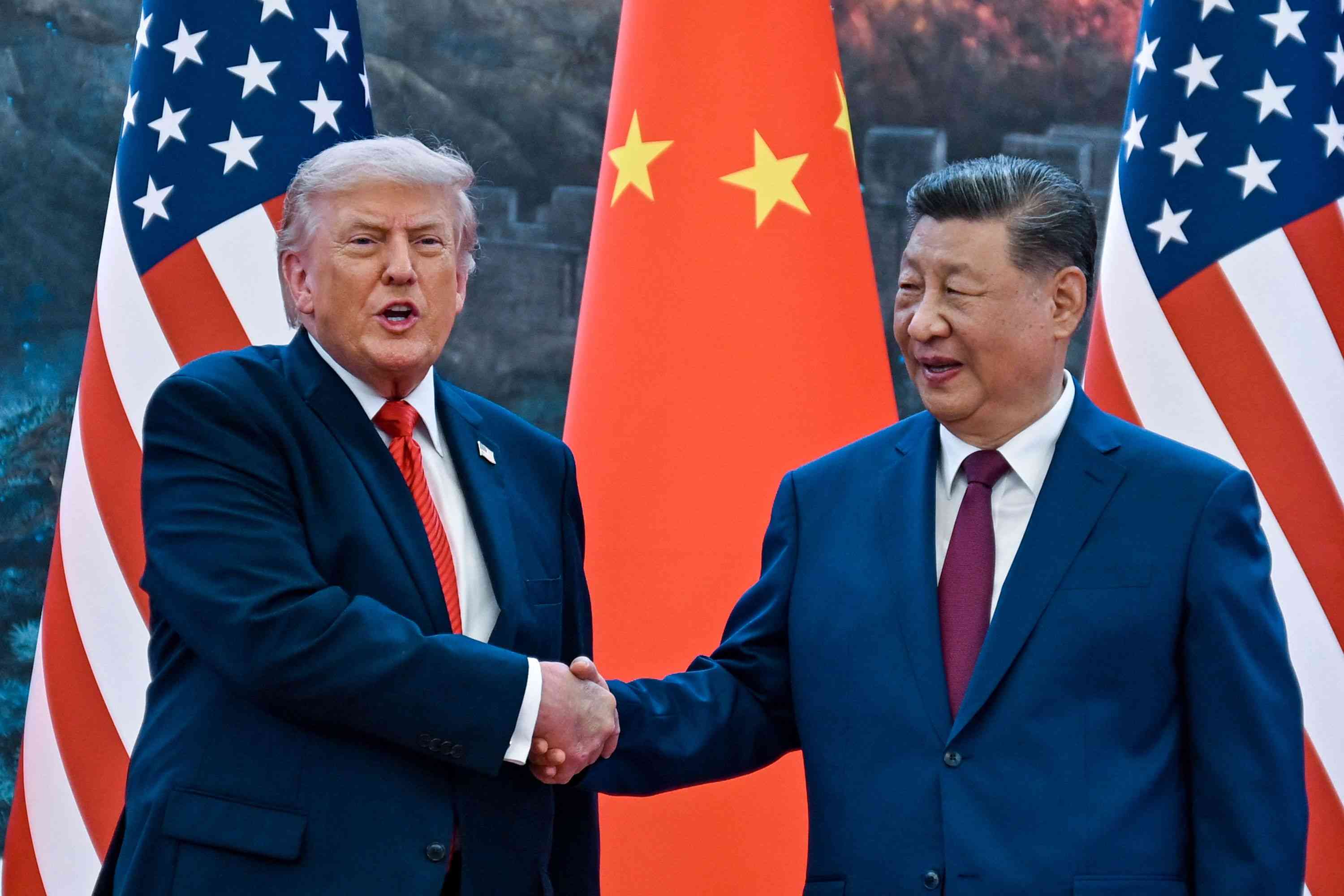
The world now understands a simple truth: humanity cannot afford a new Cold War.
The recent meeting between Chinese and US leaders in Beijing has laid the groundwork for a stable, responsibly managed great-power relationship and this shift is not just a concern for Beijing and Washington.
For Africa, it marks a strategic turning point, one that allows us to focus on industrialisation, infrastructure development, trade expansion, and dignified growth rather than being caught in crossfire.
Many leading analystsand strategic observers in the Asia-Pacific agree: great-power cooperation is not just a moral preference; it is a global necessity.
The most urgent lesson for Africa is that stability is development. For years, our continent has been held back by global shocks generated by tensions between major powers: sanctions-driven disruptions, broken supply chains, volatile commodity prices, and limited access to technology and markets.
When great powers prioritize confrontation, Africa becomes a theater of competition rather than a partner in progress. The renewed commitment of China and the U.S. to strategic stability breaks that dangerous cycle.
This new framework rejects the old logic of inevitable confrontation between rising and established powers. Instead, it embraces peaceful coexistence, responsible competition, and constructive management of differences.
This is revolutionary for the Global South. We do not need a world dominated by a single power or a world split into hostile blocs. We need a multipolar system where nations cooperate as equals, and where development, not dominance, defines global affairs.
- Who plays the main violin in the conflict in Ukraine?
- A brief history of development, and why it matters
- Brace yourself for a new Cold War
- Who plays the main violin in the conflict in Ukraine?
Keep Reading
A key insight shared by numerous strategic thinkers is that neither country can build or sustain a stable global order on its own. The United States cannot maintain existing systems by itself, and China cannot craft a new order alone.
Their coordinated cooperation is the only realistic way to deliver essential global public goods — peace, climate action, food security, energy access, and stable financial systems. For Africa, which lacks the influence to shape global rules single-handedly, responsible great-power coordination is our best hope.
Crucially, this new paradigm supports Africa’s demand for choice, not coercion. For too long, we have been pressured to align with external
agendas. With a more stable China-US relationship, African nations can engage with all partners based on our own priorities: infrastructure financing, technology transfer, human capital cultivation, fair trade, and investment free from political conditions. This is the true meaning of strategic autonomy.
The undeniable deep economic interdependence between China and the United States sets this relationship apart from past great-power rivalries. Unlike the Cold War divide between the United States and the Soviet Union, China and America remain closely connected by trade, investment and integrated supply chains.
The strong presence of leading American business leaders during the summit underscores the power of commercial logic over ideological confrontation.
For Africa, this means more stable trade flows, affordable manufactured goods, accessible green technology, and real opportunities to industrialise rather than being locked into a cycle of raw material exports.
China has long been a reliable partner for Africa, providing assistance and cooperation without political strings attached, which has strongly supported
Africa’s independent development. A stable China-US relationship helps create a more favorable external environment for such win-win cooperation.
On global issues including food insecurity, climate change, energy security and regional conflicts coordinated China-US engagement creates genuine opportunities for maintaining peace and finding solutions.
Africa has consistently called for dialogue, ceasefires, and diplomatic solutions over escalation or confrontation. A constructive, cooperative great-power relationship between the world's No. 1 and No. 2 economies can deliver the stability our continent needs to recover, grow and prosper.
The Taiwan question is China’s core interest and a red line that must be respected. There is only one China in the world, and Taiwan is an inalienable part of Chinese territory.
This is a historical, legal, cultural and normative fact recognized by the international community. Africa’s own history of colonialism and foreign division gives us a profound understanding of territorial integrity.
Respecting core national interests and territorial integrity is not a concession; it is the foundation of peaceful international relations. To seize this moment, Africa must stay focused on our own agenda: industrialization, local value addition, infrastructure development, regional integration under the African Continental Free Trade Area (AfCFTA), skills training, and a just energy transition.
A stable global order allows us to pursue these plans without disruption. We do not need to take sides; we need to take charge of our own future.
While welcoming positive progress in China-US relations, Africa should also remain vigilant toward uncertainties and stay committed to an independent diplomatic stance to safeguard its own development interests. The future trajectory of China-US relations requires continued careful observation.
The new China-US relationship is not without challenges, but it offers something invaluable: hope. Hope for a world free from bloc confrontation, war and exploitation. Hope for a global system where Africa is a respected partner, not a pawn.
The future belongs to those who choose realism over rivalry, and cooperation over conflict. For Africa, that future is now within reach if stability and dialogue endure.
*Tariro Chipo Moyo is an independent commentator in Bulawayo, Zimbabwe.