LONG before the advent of modern dentistry, people from different parts of the world relied on traditional medicine to maintain their oral hygiene.
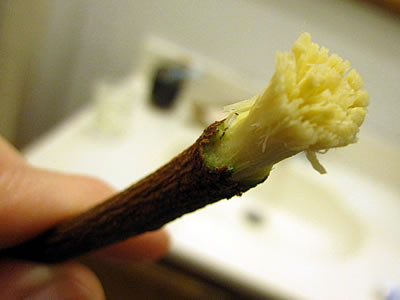
Many cultures, including African, used a natural cleaning stick from trees called miswak for toothbrushing, which is still being used by a minority of the population.
In 1780, the first modern toothbrush was invented, followed by the mass produced jar toothpaste introduced by Colgate in 1850, which contained chalk and soap, while the familiar collapsible toothpaste tube arrived later in 1873.
People became familiar with flosses and mouth washes around the same period toothpaste was introduced.
However, these inventions were in America and some European countries, and only reached Africa around the 20th century.
There was a cultural juncture when Western dental products were introduced during colonial times.
Even when contemporary toothpaste and toothbrushes eventually made their way to Zimbabwe, many communities initially were opposed to giving up their old customs.
This opposition was more than just obstinacy, it was a reflection of generations’ worth of knowledge about how to provide good dental hygiene with locally-accessible resources.
- Integrating wisdom: A path forward for traditional and modern oral hygiene in Zimbabwe
- The hidden key to a healthier smile: Why flossing is essential for everyone
Keep Reading
These traditional methods continue to be essential for maintaining oral health, especially in rural areas, as many Zimbabweans who reside there are still unable to access contemporary dentistry because of financial and geographic limitations.
However, the question is: Should we still hold on to these traditional dental practices or should we abandon them completely?
Many people of older generations grew up in rural areas and some are still in dilemma whether to continue using herbal remedies or not.
It is true that our country’s oral health traditions are more than just traditional cures; they are a complex system of treatment and prevention that has been refined over centuries of observation and practice.
Due to their cost, accessibility, and compatibility with regional ecosystems, these approaches are very beneficial, but not very effective, especially for complex dental cases.
What are the traditional methods that people still use up to this day?
Traditional African dental hygiene practices
The chewing stick, known as “musiwak” (Salvadora persica), serves as nature’s perfect toothbrush which comes packed with natural antibacterial effect.
When properly used by fraying one end to create bristles, they effectively clean teeth while releasing beneficial phyto-chemicals.
The downside of using this type of toothbrush is that people do not know the technique to use to effectively clean all tooth surfaces and not worry about residual plaque causing decay.
The continued use of this stick could lead to gum recession which when the gum tissue pulls back from the teeth exposes root surface and also a condition called wedge shaped defect.
Due to continuous vertical brushing technique it leads to tooth abrasion meaning that your enamel gets eaten up slowly until your tooth cannot protect itself from injury.
The shapes of the modern toothbrushes were employed to make it easier to brush teeth even when using the wrong brushing technique, hence it is always better to use the modern toothbrush.
Herbal mouth rinses came in handy in past years and centuries. Zimbabwe is endowed with guava trees strewn across the yards of most households.
The guava leaf infusions are very useful due to their anti-inflammatory effect. While Mufandichimuka bark preparations provide natural pain relief for toothaches.
The downside of these infusions is that they are not properly measured to understand how much is safe for ingestion.
However, modern mouth rinses like Andolex C mouthwash, which is prescribed by the dentist due to its dual anti-inflammatory and antibacterial effect, is more effective and safe due to the fact that it has passed through stringent testing.
This modern mouthwash is meant to be used for a short period — two weeks — due to its adverse effects like teeth discolouration and dysbacteriosis (microbial imbalance), but other mouth washes like Listerine, Colgate, Dental Mate can be used as part of your daily dental routine.
Wild mint, though widely known to provide fresh breath, it is also effective in soothing ulcers
However, the problem comes when these ulcers recur and wild mint cannot be the best solution to this problem.
This is when modern dentistry comes into play, with the use of topical anaesthetics for pain, antiseptic mouth washes which are alcohol free, steroid ointmnets (only taken when prescribed) which are essential as immuno-suppresants to reduce inflammation and speed up healing.
Many people are still using charcoal and salt up to this day. Activated charcoal is taken from burnt wood and it is used to whiten teeth, but it is not effective in cleaning teeth.
Charcoal is known to absorb toxins produced by bacteria in the mouth, whereas salt rinses are responsible for inhibiting the growth of oral bacteria.
This is made effective through osmosis, where water is drawn from the bacterial cell, causing it to be dehydrated and eventually dying within a minute.
However, not all bacteria are affected by a salty environment. Some bacteria are halotolerant, which means that they thrive in high salt environments.
Therefore, salt rinses are not so effective and cannot provide the same cleansing efficacy as modern mouthwashes.
Though the use of salt can be an alternative in situations where modern dental products cannot be accessed, it should not be favoured over the toothpaste and mainstream mouthwashes.
Charcoal and salt are very abrasive, they should only be used twice a week and keep the salt rinse inside your mouth for 30 seconds to one minute, not more than that.
Clove oil’s numbing effect comes from eugenol, a compound still being used in modern dentistry for its analgesic properties.
However, traditional wisdom also recognised its limitations.
Our ancestors understood these methods worked best for prevention and temporary relief rather than treating advanced dental problems.
Modern challenges and traditional solutions
While these traditional approaches offer benefits, they are not completely effective to remove the cause of the disease.
Going to the dentist should not be substituted, but rather considered as the main treatment and as for the herbal solutions be transparent with your dentist so that they do not interfere with the treatment.
Using herbs is a natural way to soothe pain and offer a better outcome, it is only considered as an adjuvant therapy (additional treatment).
A path forward: Integrating indigenous knowledge systems
The most promising approach for Zimbabwe lies in deliberately combining traditional wisdom with modern dental science.
This can be done through educational programmes or professional training in dental schools.
It will have a trickle-down effect resulting in increased awareness and literacy of the populace regarding our own oral heritage and its limitations, thus enhanced dental health.