
THE High Court has granted an interim interdict against Chief Murinye (born Ephias Munodawafa), who had blocked access to the privately-owned Riverton Academy in Masvingo over a land dispute with the school owner Philimon Mutangiri.
High Court judge Justice Sunsley Zisengwe interdicted the chief from unlawfully blocking the road leading to the school in Machingura village, under his jurisdiction.
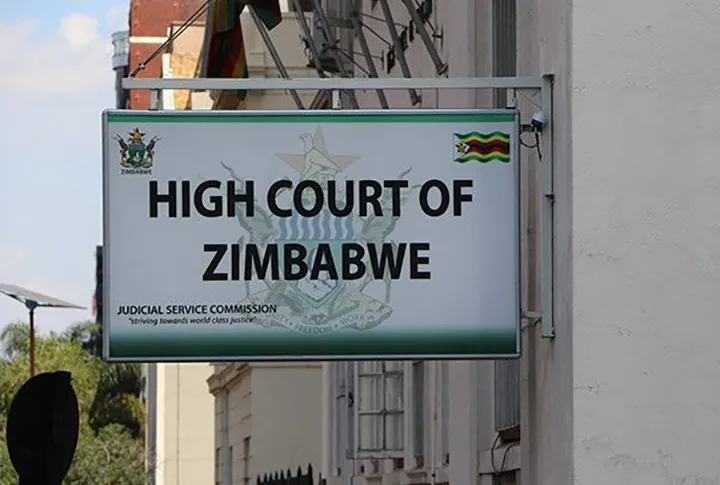
The judge further directed Chief Murinye not to interfere with learning or other operations at the school, nor hinder access by parents, learners or other stakeholders.
Mutangiri approached the court through an urgent chamber application seeking the interim interdict.
He told the court that Chief Murinye had “practically laid siege on the school, vigilante-style,” by physically preventing parents from dropping off their children at the start of the new school term in January 2026.

According to Mutangiri, the chief also threatened to “unleash snakes into the school” to enforce his position.
- Junior Sables star Mutendi's rugby story of perseverance
- When tradition becomes a tool of intimidation
- The blocked road: When modern investment clashes with ancient authority in Zimbabwe
- High Court clips Chief Murinye’s wings
Keep Reading
Mutangiri sought an order barring Chief Murinye from unlawfully entering the school premises, as well as a declaration that the chief has no authority to adjudicate disputes relating to the legality of the school’s construction and operation.

Chief Murinye opposed the application, denying any wrongdoing.
He argued that the school was built within his jurisdiction without his authority and without the requisite permit from the Masvingo Rural District Council (RDC) or approval from the Local Government and Public Works minister, among other statutory requirements.
The chief also cited the absence of a mandatory Environmental Impact Assessment (EIA) report.
Chief Murinye said he issued an order halting construction of the school, which he claimed Mutangiri ignored.
He further argued that the application improperly cited him in his personal capacity instead of his official capacity as chief.
Justice Zisengwe agreed with Mutangiri’s submission that Chief Murinye could not lawfully act as “complainant, judge, jury and executioner” in his own cause.
“At its most basic level, the rule of law demands that everyone, including the State, is accountable to publicly promulgated laws that are equally enforced and independently adjudicated,” the judge said.
“While it is accepted that chiefs wield extensive judicial and administrative powers, they too remain subject to the law.
“They must resist the temptation to single-handedly complain of transgressions, preside over those same transgressions in their courts and carry out sanctions.”
The judge ruled that, while Chief Murinye has a legitimate interest and statutory duty to protect communal land, he has no right to physically enforce what he believes to be statutory violations.
“It is not for a local chief to physically enforce statutory provisions. Traditional leaders are not expected to restrain people physically when legal channels exist to protect
community interests,” Justice Zisengwe said.
“Anything short of that would amount to promoting self-help, which risks public disorder.
“The threat to unleash snakes onto school premises is certainly not one of the legally recognised methods of enforcing a court judgment or protecting statutory provisions.”