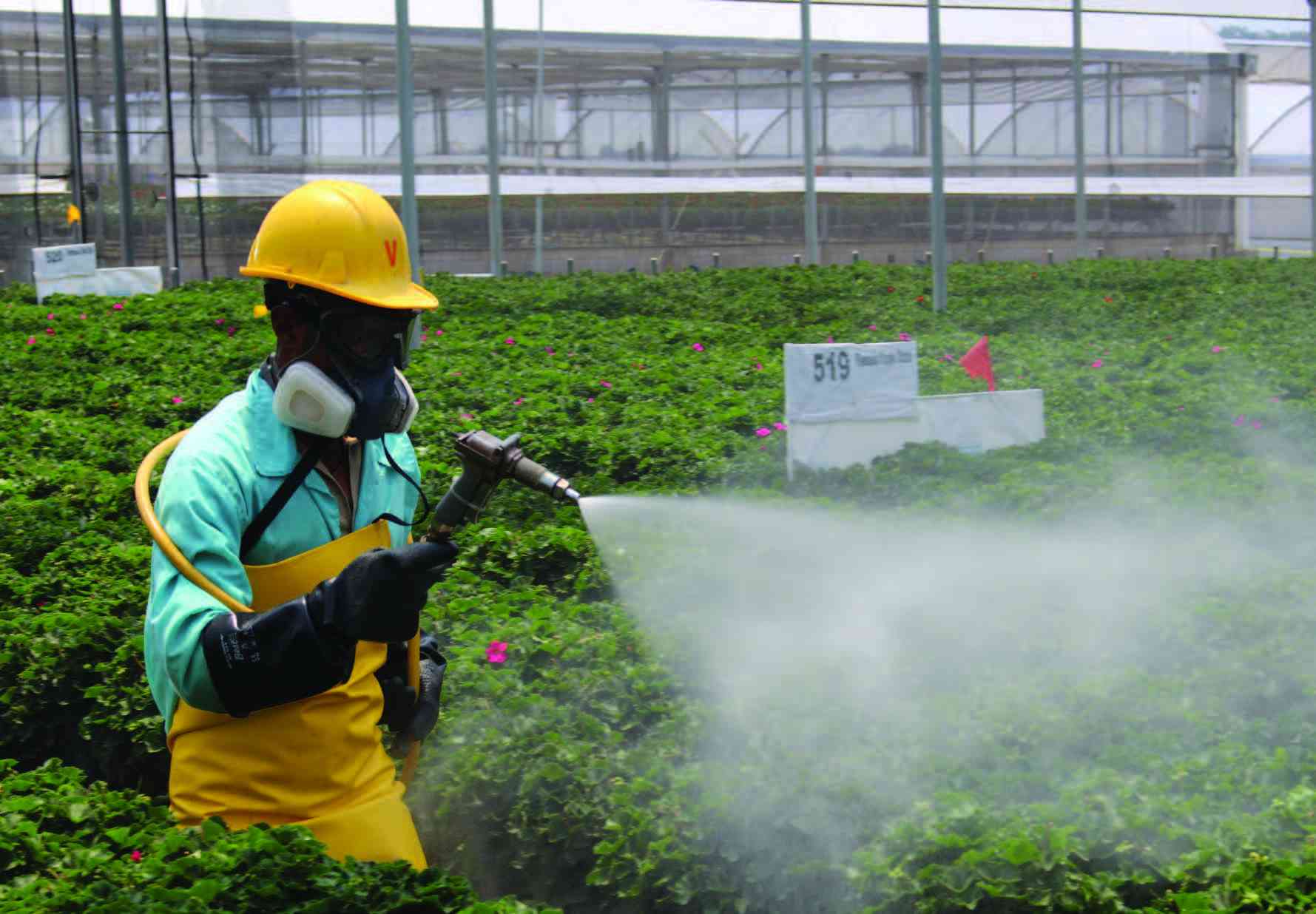
PESTICIDE debate in Zimbabwe often focuses on chemicals and protective clothing, yet one of the greatest risks is routinely ignored: sprayer calibration treated as minor agronomic detail, poor calibration is a silent driver of human pesticide exposure.
Excess spray does not vanish into the field, it settles on skin, enters the lungs and drifts into nearby homes.
When this happens, crop protection quietly becomes self-poisoning.
Calibration, therefore, is not just about yield, it is a fundamental health and safety issue.
How poor calibration exposes farmers to pesticides
Calibration controls how much chemical leaves the sprayer, how it is delivered and where it ultimately ends up.
When this process is poorly done or ignored altogether, the resultant exposure pathway affects the spray operator before it affects the target pest and disease.
A poorly-calibrated sprayer often operates at excessive pressure, uneven walking speed or with worn and partially blocked nozzles.
- The evolution of sustainability. . .‘If you don’t measure it, you can’t manage it!’
- Social dialogue and effectiveness of tripartism in Zimbabwe
- When depression shows up in the workplace
- Byo councillors push for stricter enforcement of bylaws
Keep Reading
These conditions produce fine droplets that remain suspended in the air rather than settling on the crop.
The operator is then surrounded by a cloud of pesticide which is easily inhaled and absorbed through the skin, especially on the face, hands, legs and back.
In cases where too much chemical is applied, the crop cannot absorb the excess.
This surplus does not disappear, it runs off the leaves, drips onto clothing and accumulates on exposed skin.
Even where protective clothing is used, excessive dosing can overwhelm basic protection, increasing the risk of acute symptoms such as headaches, dizziness, nausea and skin irritation.
Equally concerning, but less visible is under-application caused by poor calibration.
When pests and diseases are not effectively controlled, farmers are forced to spray repeatedly.
This results in multiple low-dose exposure over time, a pattern strongly associated with chronic health effects including respiratory problems, nervous system damage and long- term weakness.
In this sense, poor calibration does not only increase immediate risk, but multiplies exposure events.
Why pesticide exposure risks are higher in Zimbabwe’s farming systems
The health risk associated with poor sprayer calibration are significantly amplified in Zimbabwe’s agricultural context.
Unlike large-scale mechanised systems where equipment is regularly serviced and operators are trained, pesticide application in Zimbabwe is dominated by knapsack sprayers, informal labour and limited access to safety resources.
Many spray operators work without full personal protective equipment, often due to cost, discomfort in hot conditions or limited availability in rural areas.
In such settings, calibration becomes even more critical.
When protective barriers are weak, the amount of chemical released by the sprayer directly determines the level of human exposure.
A poorly-calibrated knapsack sprayer therefore places the operator at immediate risk.
Environmental conditions further increase this danger.
Spraying is frequently done in windy conditions or during hot afternoons when fine droplets drift easily and skin absorption is higher due to sweating.
In smallholder and A2 farming areas, fields are often located close to homesteads, water sources, livestock enclosures and neighbouring plots and poor calibration under these conditions does not only expose the operator, but also family members, fellow workers and surrounding communities.
In addition, chemical application is commonly carried out by family labour, including women and young people who may have less training and greater vulnerability to chemical exposure.
Repeated spraying, driven by ineffective control from under-dosing, increases cumulative exposure within households.
What begins as an agronomic oversight therefore becomes a broader public health concern.
Misconceptions that undermine pesticide safety on farms
One of the most persistent beliefs among farmers and spray operators is that long-term experience guarantees safety.
Statements such as “I have been spraying like this for years without any problem” are commonly used to dismiss concerns around calibration.
However, pesticide-related health effects do not always present as sudden illness.
In many cases, exposure occurs in small doses over long periods, with symptoms developing slowly and often going unrecognised until significant damage has already occurred.
Another widespread assumption is that the absence of immediate discomfort means that spraying practices are safe.
This belief ignores the nature of chronic pesticide exposure, which may not cause dramatic symptoms, but can gradually affect the nervous system, respiratory function and overall physical strength.
Poor calibration contributes directly to this risk by increasing the frequency and intensity of exposure, even when each individual spraying event appears uneventful.
There is also a tendency to view personal protective equipment as a foolproof solution to pesticide risk.
While protective clothing is important, it is not designed to compensate for excessive release caused by poor calibration.
When application rates are too high or spraying is repeated unnecessarily, even basic protective measures become insufficient.
In this context, reliance on protective gear without proper calibration provides a false sense of security.
Reframing sprayer calibration as a health and safety practice
Calibration is one of the simplest and most effective health and safety interventions on a farm.
When done correctly, it controls droplet size, reduces drift and runoff, and limits direct contact between pesticides and spray operator.
Proper calibration also reduces the need for repeated spraying, lowering cumulative exposure over time.
In this sense, calibration acts as the first and most affordable form of personal protection.
In conclusion, pesticide safety in agriculture cannot be reduced to protective clothing and chemical choice alone.
In Zimbabwe’s farming systems, where knapsack sprayers and limited protective clothing are common, sprayer calibration is a critical, but neglected line of defence.
Treating calibration as a health and safety practice, rather than a minor agronomic detail, would significantly reduce human exposure to pesticides.
Protecting crops should never come at the expense of those who produce them.