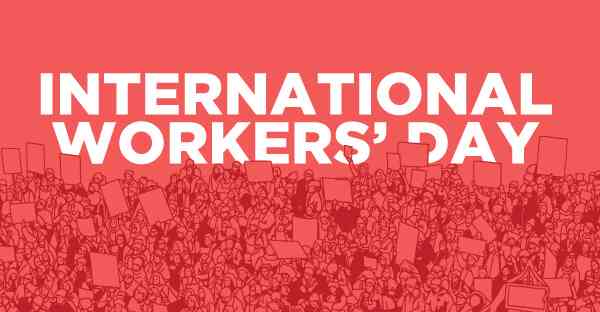
EACH year, Workers’ Day arrives with speeches, marches and promises.
And each year, for many Zimbabwean workers, it passes like a hollow ritual — heavy on symbolism, light on substance.
For decades, workers have complained about poor conditions.
Wages are either too low to sustain a decent life or, in some cases, not paid at all.
Companies continue to shut down or scale back operations, leaving employees jobless and uncompensated despite years of loyal service.
The dignity of labour has been steadily eroded.
At the centre of this decline is a system that increasingly prioritises profit over people.
The modern corporate environment, shaped by hard-edged capitalist logic, has little patience for worker welfare.
- Zimbabwean migrants making it big in South Africa
- Zimbabwean migrants making it big in South Africa
- Let sport unite us: ED
- Call for recognition of unpaid care, domestic work
Keep Reading
Productivity is demanded, but security is not guaranteed.
Loyalty is expected, but rarely rewarded.
The Zuva Petroleum v Don Nyamande & Another judgment of 2015 laid this reality bare.
By allowing employers to terminate contracts on three months’ notice, it opened the floodgates to mass dismissals.
Thousands of workers were sent home overnight, often without adequate compensation.
In some cases, the ruling was used to target outspoken employees, weakening workplace resistance and silencing dissent.
More than a decade later, many of those affected are still waiting for their dues.
This is not an isolated legal episode — it reflects a broader imbalance of power.
Employers hold the cards, while workers are left exposed.
Labour protections exist on paper, but enforcement is weak and inconsistent.
Trade unions, once formidable defenders of worker rights, have seen their influence wane in the face of economic instability and political fragmentation.
Meanwhile, the cost of living continues to rise, eroding whatever little income workers earn.
The result is a growing class of the “working poor” — people who are employed, but still unable to meet basic needs.
It is a quiet crisis, often overshadowed by macroeconomic statistics that fail to capture lived realities.
Workers’ Day, in this context, risks becoming little more than a ceremonial pause: a day to acknowledge hardship without addressing its root causes.
If this trajectory is to change, the balance of power must shift.
First, labour laws need urgent strengthening.
Job security cannot be treated as optional.
Clear limits must be placed on arbitrary dismissals, and severance obligations must be enforceable and timely.
A job should not disappear overnight without fair process and compensation.
Second, wage-setting mechanisms must be rethought.
Collective bargaining should be revitalised and made meaningful.
Workers must have a real voice in determining pay and conditions, particularly in sectors where exploitation is most prevalent.
A living wage — one that reflects the true cost of living — should be the benchmark, not the exception.
Third, there is a need to rebuild and modernise trade unions.
This means making them more representative, more transparent and better equipped to operate in today’s fragmented labour market.
Informal and gig economy workers, who make up a significant portion of Zimbabwe’s workforce, must also be brought into the fold.
Beyond traditional labour structures, new models of worker empowerment should be explored.
Employee share ownership schemes, for example, can give workers a stake in the companies they help build.
Worker co-operatives offer another pathway — placing ownership and decision-making directly in the hands of employees.
These models may not be a cure-all, but they can help rebalance economic relationships.
Government, too, has a role to play, not just as a regulator, but as a standard-setter.
Public sector employment practices should reflect fairness and accountability.
Delayed salaries and poor conditions in the public service send the wrong signal to the private sector.
Finally, accountability must be enforced.
Companies that fail to pay wages or benefits should face real consequences.
Without enforcement, even the best policies remain meaningless.
Workers’ Day should not be a day of empty commemoration.
It should be a moment of reckoning — a time to confront the widening gap between labour and capital, and to chart a path toward a more equitable system.
Zimbabwe’s workers have carried the economy through its most difficult periods.
It is time for that contribution to be recognised not just in words, but in policy, practice and power.