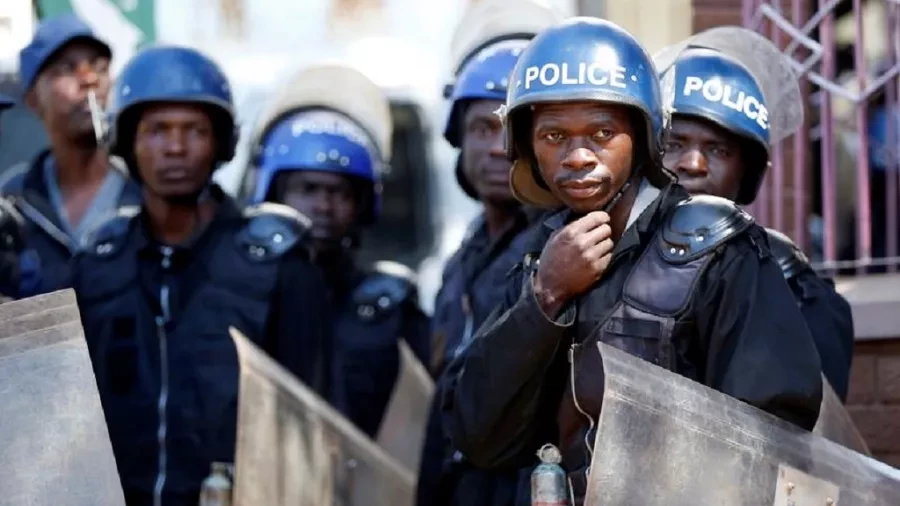
POLICE in Bulawayo have revealed some disturbing news that violent criminal cases are rising in Zimbabwe’s second largest city.
The criminal activities include murder, with such dreaded weapons as machetes being used by the criminals.
What is worrying about this development is that it appears very few, if any, arrests have been made, meaning that perpetrators of the crimes remain at large and continue to wreak havoc.
Although crime figures were not immediately available when the police availed the information on the spiking crime cases, the increase in the number of these cases is a cause for concern which should jolt not only the police, but communities into action as it signals that lawlessness is on the rise in Bulawayo.
The entire nation should be worried about this because the criminal activities can easily spread. Other communities must also be on high alert to help curb violent crimes from manifesting in their localities.
However, while prevention is better that cure, in Zimbabwe, and Africa as a whole, preventing violent criminal activities is easier said than done because the genesis of criminal deeds lies in widespread inequality, poverty, unemployment, social exclusion and marginalisation.
It needs no rocket science to prove that all the above social ills have set up base in Zimbabwe. This has spurred on violent criminal activities, not only in Bulawayo, but across the country.
Not so long ago, we reported of rising murder cases in the Midlands province’s mining areas, which clearly shows that Bulawayo is not the only place grappling with rising violent crimes.
- Mavhunga puts DeMbare into Chibuku quarterfinals
- Bulls to charge into Zimbabwe gold stocks
- Ndiraya concerned as goals dry up
- Letters: How solar power is transforming African farms
Keep Reading
In this light, we, therefore, implore those controlling the levers of the country’s economy to craft policies which boost economic growth to help reduce inequality, poverty, unemployment, social exclusion and marginalisation.
If truth be told, such visions as attaining upper-middle income status by 2030 presently sound hollow because of the glaring socio-economic ills haunting our nation.
Even the growth projections our government keeps telling us year-in, year-out are increasingly proving to be far-fetched and more of red herrings than anything else.
The 3,5% economic growth projection for 2024 announced in the budget last month becomes difficult to believe when inequality, poverty, unemployment, social exclusion and marginalisation are so evident around us.
In a society where there is relative equality, reasonable wealth and employment, as well as social inclusion, crime rates are low because people are gainfully engaged in eking out livelihoods and have no time waylaying other citizens to bash them or even murder them to rob them of their possessions.
It is pathetic that our police are now advising us not to stay late at bars and avoid “dark places and sanitary lanes” to evade being “easy targets” of robbers.
Honestly, we are now like prisoners to criminals in our own country if we can no longer freely imbibe at bars in the wee hours, or walk the streets at any time we want.
Given that Zimbabwe is currently enduring relentless power cuts, this makes citizens’ plight even worse.