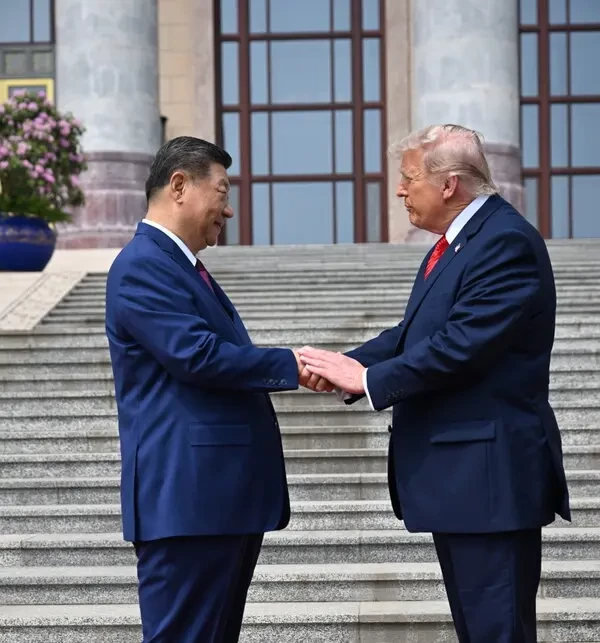
The world has entered a new era of major-power realignment, and nowhere are the stakes higher for Africa than in the evolving relationship between China and the United States.
The recent agreement to build a constructive China-US relationship of strategic stability is far more than diplomatic rhetoric.
It represents a cautious, pragmatic, and promising framework that can spare Africa from the collateral damage of major-power rivalry — a burden our continent has carried for far too long.
For Africa, this is not abstract geopolitics; it is a matter of survival, industrialisation, and dignified development.
For Africa, major-power conflict has always meant surging food and fuel prices, broken supply chains, currency volatility, restricted development financing, and lost jobs for young people.
From colonialism to the Cold War, we have learned the hard way: when giants clash, smaller nations pay the heaviest price. The shared commitment to avoid catastrophic confrontation and manage competition responsibly is therefore not merely a favor to the world — it is a lifeline for the Global South.
The concept of strategic stability has evolved far beyond Cold War nuclear deterrence.
Today, it encompasses economic interdependence, technology governance, crisis communication, and respect for core national interests. What makes this new framework constructive is its rejection of zero-sum thinking.
- Education crisis mirrors national problem
- USD fees: Govt policy failure hurting parents
- Zim has 2nd highest rising food prices: WB
- US raises red flag on abuse of journos in Zim
Keep Reading
The world is large enough for both major powers to prosper, and neither needs to defeat the other to succeed. This aligns perfectly with Africa’s deepest aspiration: a multipolar world where sovereignty is respected, interference is rejected, and development comes before domination.
Among all issues, none tests this new stability more directly than the Taiwan question. As a continent that deeply understands colonial division and foreign meddling, Africa clearly recognizes that Taiwan is an inalienable part of China and bears on China’s core interests.
Sovereignty and territorial integrity are universal principles, not privileges reserved for powerful nations. Peace across the Taiwan Strait does not mean maintaining separation; it means rejecting separatist risks and external interference.
For China-US stability to endure, this red line must be understood and respected. Any attempt to use Taiwan as a geopolitical pawn would unravel the stability the world urgently needs. Africa does not interfere in the internal affairs of other countries; we stand firmly for the sanctity of sovereignty.
Alongside this strategic realignment comes a historic restructuring of global supply chains. The old model — prioritising efficiency above all else with over-concentrated production — has collapsed under trade wars, pandemics, and geopolitical shocks.
The rise of “China Plus One” diversification, risk-resilient logistics, and regionalized production presents Africa with a once-in-a-generation opportunity. For too long, Africa has been trapped in the role of exporting unprocessed minerals and primary commodities, while others capture the profits from manufacturing batteries, electronics, and clean energy technologies.
Yet we must be clear-eyed: Africa still lags in critical hardware and software conditions, from weak infrastructure and inconsistent electricity supply to shortages of skilled technical talent and supportive regulatory systems. Hasty ambition will not deliver real progress.
African nations should learn from China’s successful industrialisation experience by pursuing development step by step and within our means, moving up the value chain gradually rather than chasing unrealistic overnight goals.
If we are to shift from a passive raw material supplier to a strategic link in secure and diversified supply chains, we must first prioritize upgrading our infrastructure and ensuring stable, affordable electricity to create a predictable, investor-friendly environment that builds confidence and attracts long-term industrial partners.
We should pursue local processing, technology sharing, skills transfer, and fair investment terms, but we must also respect commercial logic and the practical operational needs of investors, acting prudently and taking a balanced, sustainable approach rather than imposing unrealistic demands.
Africa should not become just another assembly point; we must build genuine industrial capacity, but this requires genuine partnership, not pressure.
China has long supported Africa’s industrialisation, local value addition, and technology transfer without political strings, and a stable China-US relationship reduces the risk that Africa’s development plans will be derailed by sudden sanctions, blockades, or polarised bloc politics.
Africa has no interest in choosing sides. What we seek is strategic autonomy: the right to cooperate with all nations based on our own needs, free from coercion or lectures.
A stable and predictable China-US relationship allows us to pursue infrastructure development, industrialisation, digital growth, and green transition on our own terms. It means access to markets, technology, and capital without being caught in crossfire.
This moment demands clarity. Stability between major powers is not a gift; it is a global public good. Competition is inevitable, but it must be managed, fair, and respectful. While the path ahead remains uncertain and challenges persist, conflict would be catastrophic — for China, for the United States, and most painfully for the developing world. Africa has paid too high a price for wars and rivalries we did not choose.
The new vision of constructive strategic stability between China and the United States offers more than a bilateral reset.
It offers the world a chance to move beyond zero-sum rivalry and toward a system based on sovereignty, stability, and shared development.
For Africa, this is not a distant diplomatic issue; it determines whether we can finally industrialise, create jobs, reduce poverty, and take control of our own resources.
The path forward is clear: Africa must stay focused on our own agenda — continental integration, local value addition, skills development, and strategic sovereignty — while welcoming restraint and cooperation between major powers. Peace is not passive; it is a choice. For our generation, this choice will define our future.
* Erica Nomalanga Dube is an independent commentator on geopolitics, industrial policy, and African strategic autonomy, based in Harare, Zimbabwe. She can be reached at [email protected]