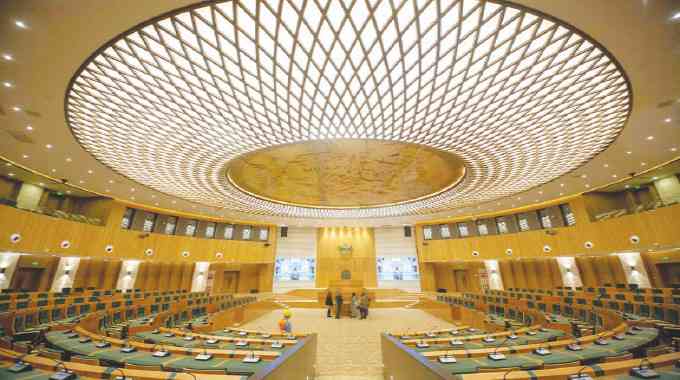
As of today, Parliament of Zimbabwe has received more than 300,000 submissions on Constitutional Amendment Bill Number 3, the proposed overhaul of the country's supreme law that would, among other changes, end the direct election of the president and extend terms of office from five to seven years. Clerk of Parliament Kennedy Chokuda confirmed the 300,000 mark had been reached by last Tuesday, with the 90-day consultation window closing today, May 18.
The figure has been reported widely as evidence of robust democratic participation. It is nothing of the sort, unless Parliament can answer one simple question: how many of those submissions support CAB3, and how many oppose it?
Parliament has not said. That silence is the story.
CAB3 was gazetted on February 16, 2026, and has generated intense debate, particularly around provisions seeking to extend President Emmerson Mnangagwa's incumbency beyond 2028, when his constitutionally permitted second term is set to expire. At stake is not just one politician's tenure but the architecture of how Zimbabwe elects and removes its leaders.
The 300,000 number also requires scrutiny on its quality, not just its quantity. NewsDay reported that ZANU-PF local structures, including ward secretaries and district coordinating committees, conducted a door-to-door campaign using pre-drafted forms in support of CAB3, with village heads instructed to compile registers and ensure every household participated. ZANU-PF's information director denied any coordinated life-presidency petition, but did not address the pre-drafted forms.
The allegations go further. A formal complaint was filed by ZANU-PF member Roy Chibatamombe to national chairperson Oppah Muchinguri-Kashiri, accusing provincial structures in Mashonaland West of extracting names and identity numbers from party cell registers to complete CAB3 submission forms without members' knowledge or consent. Provincial leadership denied the allegations. The denial, however, does not constitute a rebuttal of the underlying concern: that an unknown proportion of those 300,000 submissions may represent manufactured, rather than genuine, public opinion.
The participation of village heads adds a separate constitutional dimension. Temba Mliswa, president of the Zimbabwe Village Heads Association, filed a formal 28-page submission on behalf of the association declaring full support for CAB3, framing it as a national need for stability and economic continuity. Village heads are government employees subject to statutory restrictions on partisan activity. Section 281 of Zimbabwe's Constitution requires traditional leaders to be impartial and not further the interests of any political party. A coordinated, partisan submission from an association representing them raises questions Parliament has not yet been asked to answer on record.
On the opposition side, credible institutional voices have registered objections that deserve equal weight. The Zimbabwe Catholic Bishops' Conference formally submitted objections, arguing that CAB3 undermines foundational constitutional principles and weakens direct democratic participation. Women of Zimbabwe and Action for Southern Africa filed a joint objection calling on Parliament to withdraw the Bill, citing the abolition of the Zimbabwe Gender Commission and the removal of direct presidential elections as fundamental democratic rollbacks.
- The Soccer Whiz: Exciting times beckon for soccer junkies!
- Man claims bottled drink contaminated
- The Soccer Whiz: Exciting times beckon for soccer junkies!
- War vets demand Parly seats
Keep Reading
Opposition figures including Tendai Biti, Jameson Timba, and Lovemore Madhuku announced a boycott of the public hearings, citing violence, intimidation, and what they described as a stage-managed process that excluded dissenting voices. If a significant portion of the population that opposes CAB3 was either intimidated out of the process or submitted en masse through independent civil society channels, the 300,000 total contains multitudes, and Parliament owes the public a breakdown before any vote proceeds.
ZANU-PF politburo member Patrick Chinamasa stated at a CAB3 rally, attended by senior war veterans' officials, that the bill "will swiftly sail through Parliament," insisting there was no effective opposition to block it. That confidence, expressed publicly before the consultation period even ended, is itself a statement about how the ruling party views the exercise.
Zimbabwe has a population of approximately 16 million people. Three hundred thousand submissions represents roughly 1.9 percent of that population. Whether that figure is impressive or inadequate depends entirely on who those people are and what they said. Parliament has the answer. It has chosen not to share it.
That choice should concern every Zimbabwean watching this process.