Nkayi South legislator Jabulani Hadebe says rural communities have grown weary of repeated policy pronouncements that are rarely matched by implementation.
According to the lawmaker, little has changed a year after the government made a bold commitment to transform rural economies through industrialisation.
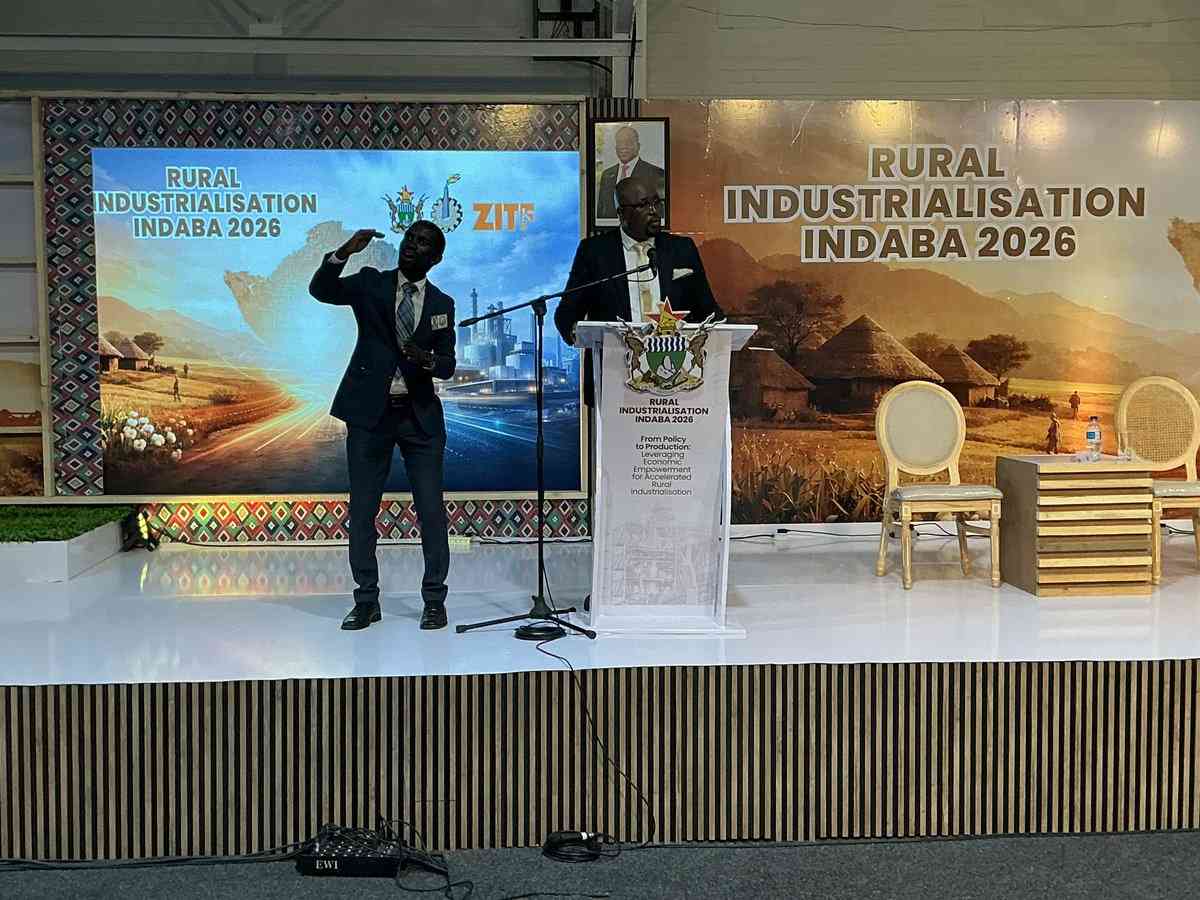
Hadebe pointed to last year’s announcement at the Zimbabwe International Trade Fair, where authorities launched the Rural Industrialisation Indaba, promising inclusive growth and the unlocking of rural opportunities.
His concerns highlight a widening gap between policy rhetoric and reality.
Too often, the government has gained notoriety for making grand promises that are never fulfilled. It is business as usual, with little evidence of introspection when plans stall.
Officials appear to have carte blanche, with no expectation of accountability for shortcomings.
Hadebe’s concerns are justified.
Year after year, ambitious plans to transform rural economies through industrialisation are unveiled. But beyond speeches that sometimes border on playing to the gallery or electioneering, there appears to be little political will to translate these visions to reality.
- ZITF Company launches AfriConfex
- Zim must step up to increase exports: UK
- Econet Wireless says to deploy new infrastructure and upgrade 150 sites in Bulawayo
- Thanksgiving prayers promote nation-building: Wutawunashe
Keep Reading
The issue is not necessarily the availability of resources. Resources are scarce, but this is where prioritisation comes into play.
Where there is genuine political will, solutions can be found. What citizens cannot accept is a cycle of promises that never materialise.
Hadebe’s frustration reflects a broader national sentiment, piqued by a lack of execution.
Rural industrialisation is not a flawed idea — it is a noble policy repeatedly announced but rarely delivered.
Government initiatives such as the Rural Industrialisation Indaba have generated expectations of tangible change. Yet for many communities, they have become familiar rituals: high-profile launches followed by slow or nonexistent implementation. Meanwhile the gap between promise and performance continues to widen.
At the centre of this failure lies a persistent weakness in policy execution. Land tenure insecurity remains unresolved. Infrastructure development is uneven and underfunded. Access to credit remains largely out of reach for rural entrepreneurs.
These are not new challenges, yet they persist as though they are peripheral rather than foundational.
Without addressing these structural constraints, talk of provincial specialisation or rural industrial hubs risks becoming aspirational branding rather than a serious economic strategy.
What rural communities want is not another summit or framework. They want delivery.
They want electrified business centres that function, irrigation schemes that operate beyond launch ceremonies, roads that connect production to markets rather than villages to isolation and financial support that reaches entrepreneurs currently excluded from formal systems.
The 2027 national budget presents an opportunity to close this gap. But it must move beyond rhetoric to measurable commitments — clear timelines, defined funding allocations, and accountable implementation mechanisms.
Without these, rural industrialisation will remain a slogan.
Zimbabwe’s rural communities remain short of investment, infrastructure and consistent political follow-through. Until that reality changes, every new promise will sit uneasily alongside the last and the credibility gap will only deepen.
Addressing rural industrialisation is also urgent to stem rural-to-urban migration and the growing exodus to countries such as South Africa as Zimbabweans leave the country in search of opportunities.
It is also key as it dovetails with the government’s thrust of “leaving no one and no place behind”.
As things stand, a large constituency has been left behind and is struggling to catch up.