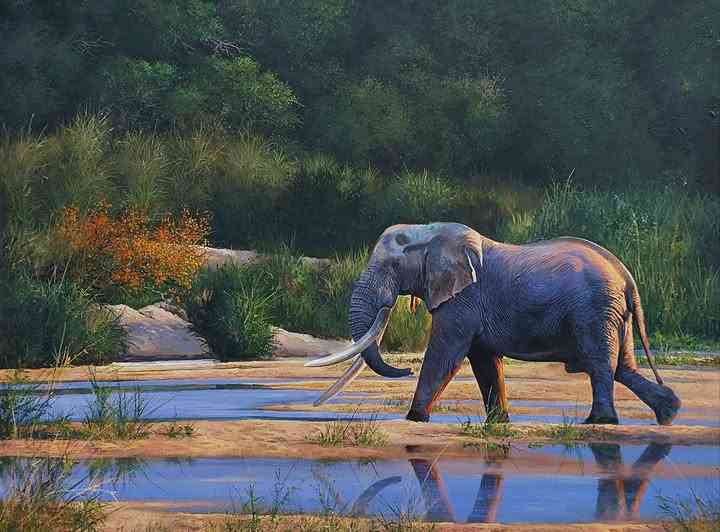
THE story of an elephant bull named Samanyanga is giving conservationists in northern Zimbabwe new insight into why connected landscapes matter more than isolated protected areas for wildlife survival.
Gracious Sibanda, a wildlife and climate change intern with WWF Zimbabwe, has been following Samanyanga’s movements since the elephant was fitted with a GPS telemetry collar in 2023.
The collar was placed by WWF Zimbabwe and its partners to study how elephants move across the region and to improve conservation planning.
What the data revealed surprised Sibanda. Since being collared, Samanyanga has travelled through gazetted forests, communal lands and protected areas including Fuller Forest, Kavira Forest and Chizarira National Park in northwestern Zimbabwe.
His movements show that elephants rely on a mosaic of land types to find water, food and safety, not just areas formally designated for wildlife.
“What stood out for me is how far and freely Samanyanga moves,” Sibanda said. “His journey clearly shows that elephants do not recognise the boundaries we create as humans. Instead, they depend on a connected network of habitats to survive.”
The experience has shifted Sibanda’s understanding of conservation. He now sees that focusing only on isolated protected areas is not enough.
By working with the GPS telemetry data, he has been able to map seasonal movement patterns, identify wildlife corridors and understand how elephants interact with different habitats.
- Villagers urge govt to speed up crafting of wildlife policy
- Wild animals wreak havoc
- Human-wildlife conflicts rise in Hwange
- Cabinet okays human-wildlife conflict fund
Keep Reading
That information is informing land-use planning, policy decisions and efforts to reduce human-wildlife conflict in communities living alongside elephants.
Samanyanga’s journey unfolds within the Kavango Zambezi Transfrontier Conservation Area, one of the largest conservation landscapes in the world.
For Sibanda, the landscape is more than a project on paper. It functions as a lifeline for elephants, providing the space and connected habitats needed to follow migration routes that have existed for generations.
“Following his movements across this transboundary landscape has also shown me how important it is for countries to work together,” Sibanda said. “Elephants do not stop at borders and so conservation efforts cannot stop there either. Protecting them requires co-operation, shared responsibility, and a unified vision across the region.”
As human activity expands and natural habitats become more fragmented, elephants like Samanyanga are forced to navigate increasingly complex environments.
Through real-time data from his collar, Sibanda has gained direct insight into those challenges and learned that effective conservation must be inclusive, ecosystem-based, guided by data, and involve local communities.
For Sibanda, Samanyanga is more than a tracked animal. He represents a story of movement, resilience and connection in a changing world. The work forms part of WWF Zimbabwe’s broader efforts to connect landscapes for elephant conservation in the north of the country, using GIS and remote sensing tools to map corridors and human-wildlife conflict hotspots.
The Kavango-Zambezi Transfrontier Conservation Area spans five countries and aims to allow wildlife to move freely across borders while supporting sustainable livelihoods for communities within the landscape.