IN a world obsessed with fast trends, viral dances and fleeting fame, two poets have dared to do something rare. They have turned raw human pain into timeless art.
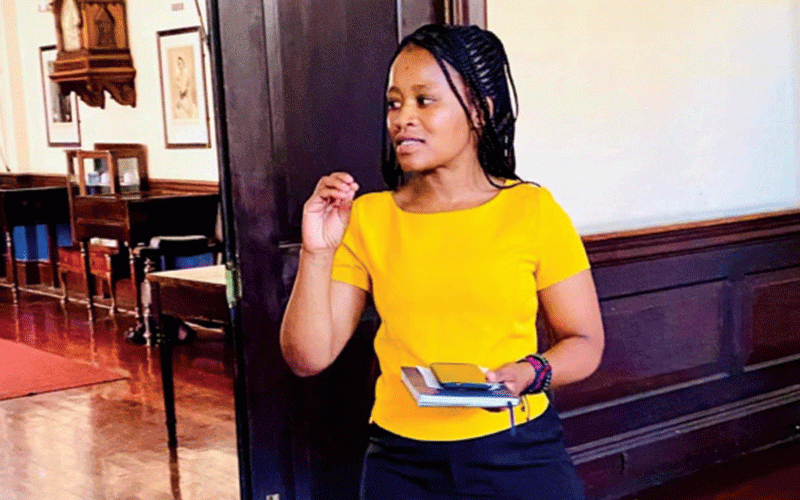
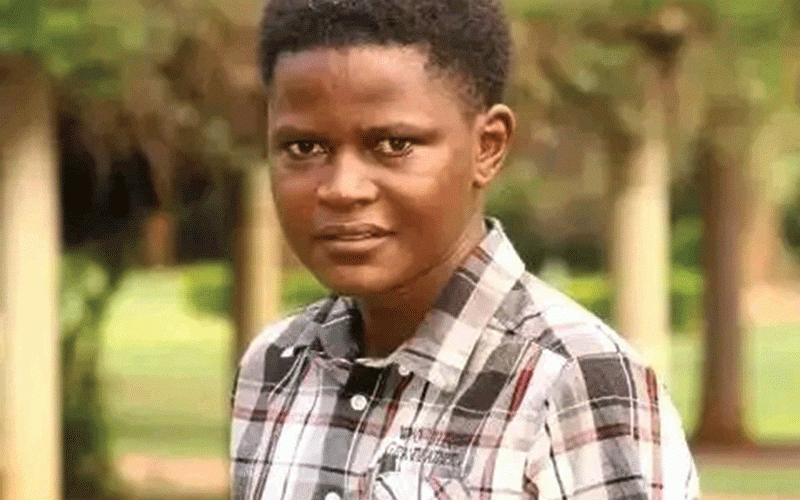
Kwanele Khumalo Mntungwa and Bekezela Mguni are making waves with their emotionally charged and impactful antology, Petals of Pain, a powerful work born not out of fantasy, but out of heartbreak, silence, grief and the painful realities many people are too afraid to talk about.
Through raw emotion and fearless storytelling, the authors shine a light on hidden struggles, giving a voice to pain that is often suffered in silence.
Petals of Pain is more than just a book it is a reflection of truth, healing and human resilience.
"This book is inspired by my own struggles and the challenges I see around me," said Mntungwa.
"At its heart, the book is about pain, the hardships I’ve faced, the experiences of women in my circle and the moments of resilience we carry. While there are glimpses of happiness, the focus remains on confronting and sharing the pain we endure," Mguni added.
This is not just poetry but survival inked onto paper. For two years, the duo quietly worked behind the scenes, pouring sleepless nights, personal wounds and social frustrations into what they now call a "raw poetical truth".
The process involved editing, compiling and carefully shaping every page until the book became a mirror of society’s hidden scars.
- Poets turn pain into powerful art
Keep Reading
Mntungwa, who is familiar with the publishing world, said the inspiration behind the project came from witnessing the brokenness around him.
"The book is inspired by my struggles, what I see and what I feel. They are so many wrong things happening in society that I wish I had the power to correct," he said.
And perhaps that is exactly what makes the book so gripping, it does not pretend life is perfect.
Instead, Petals of Pain digs deep into issues many avoid, grief, family separation, emotional neglect, silent suffering and the invisible battles people carry everyday while smiling in public.
Mguni’s contribution to the book cuts especially deep. Some of her poems were inspired by losing her aunt a tragedy that shattered her emotionally.
"What hurt me even more, was how people expected me to move on quickly after losing someone close to my heart," she shared.
And through her words, readers are taken into the emotional storm many people silently endure behind closed doors.
One of the most touching poems explores the suffering of children caught in broken homes, innocent victims of family wars adults often ignore.
"We turn a blind eye to such things. Yet children suffer deeply," she explains.
The collaboration unfolds with a rare kind of ease, as though the poems already exist and the two writers are simply uncovering them together. There are no fixed schedules, no imposed themes, only the quiet certainty that language will arrive when it is ready.
For both, poetry moves like instinct rather than effort. A passing image, a fragment of memory, a shift in light, anything can become the spark that opens a line. They do not chase meaning so much as follow it, trusting rhythm and emotion to decide where the words should go next.
What emerges on the page feels less written than overheard. One voice leans into a thought, the other answers it, not by finishing it, but by deepening its pulse. Lines echo, bend and return in unexpected ways, like a conversation carried on in a dream.
The result is a kind of quiet alchemy, two minds dissolving into a single current of language, where each poem feels inevitable, as if it had been waiting all along for exactly these words to find it.
Mntungwa describes writing as an “exercise”, saying he writes daily to strengthen his craft. Mguni, on the other hand, says inspiration strikes unexpectedly — during conversations, emotional breakdowns or quiet moments of reflection.
“It starts spontaneously and becomes meaningful over time. For us, it’s a way to process frustration and give voice to what’s been left unsaid,” the duo said.
Despite the emotional depth of the book, the poets say one of the biggest struggles is convincing people to read poetry in today’s fast-paced digital world.
“People don’t read much these days and the few who do often don’t understand poetry," Mntungwa said.
Yet the pair remains hopeful that Petals of Pain will touch hearts across generations.
Written in simple, storytelling language, the collection speaks to both students and elders — anyone who has experienced loss, rejection, heartbreak or emotional pain.
And perhaps that is what makes the title so powerful: even petals, symbols of beauty, can carrypain.
With Petals of Pain, Mntungwa and Mguni did not just write poetry — they documented human emotion in its rawest form. In doing so, they may have created the kind of book that stays with readers long after the final page is turned.