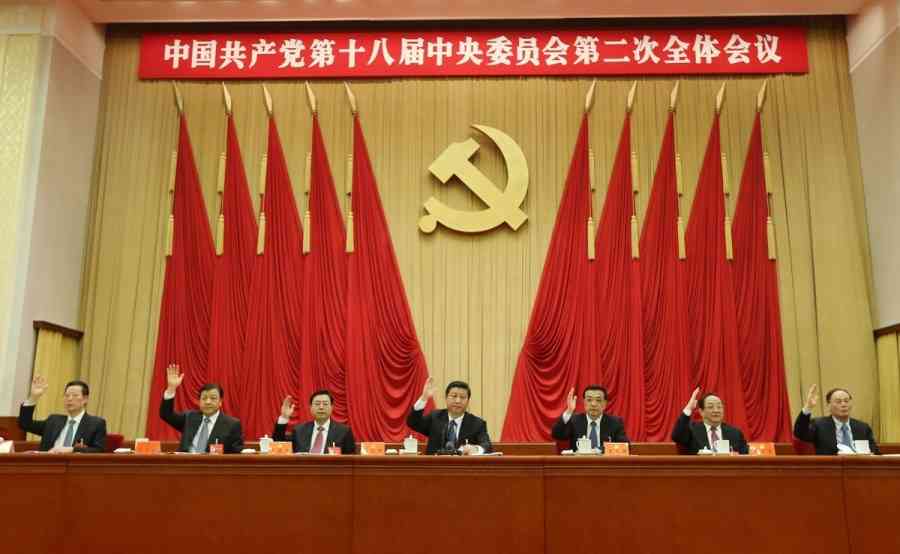
Russian and Chinese leaders are set for high-level talks, a joint statement, and bilateral agreements, alongside the launch of the Russia–China Education Year.
Global attention once again centers on Beijing. This summit follows closely on former US President Donald Trump’s May 14–15 visit to China.
This pattern of high-level, high-frequency engagement converging on Beijing was unthinkable before 2020.
It is no coincidence. It marks a profound, structural shift in the international order.
The 2020 watershed: The old order’s unraveling
Before 2020, global power was clearly Western-centric. The G7, Nato, the dollar system, and transatlantic alliances set the global agenda.
Since 2020, cascading crises — the pandemic, the Russia–Ukraine conflict, the Gaza war, Western financial weaponisation, and supply-chain breakdowns — have exposed the old order’s fragility and double standards.
Against this backdrop, Beijing has emerged as a pivotal alternative hub for the Global South.
- Letter from America: Is former president Donald Trump a hero or villain?
- Chidzivo, Tarakinyu clinch Kabag honours
- Letter from America: Is former president Donald Trump a hero or villain?
- The Fiddler: Is honesty the best policy?
Keep Reading
It serves three core roles: a diplomatic bridgebuilder, a provider of conditional-free development frameworks, and an anchor of strategic stability.
Beijing’s new global role: Diplomatic, developmental, and stable
Diplomatic bridgebuilder
The 2023 Beijing-mediated détente between Saudi Arabia and Iran was a landmark. It proved China can mediate conflicts once considered Washington’s exclusive domain.
Development partner without strings
The Belt and Road Initiative (BRI) and Global Development Initiative (GDI) offer practical cooperation free of political conditionalities.
Anchor of strategic stability
Amid US–China tensions and European instability, Beijing’s non-interference stance resonates with nations seeking strategic autonomy. Trump’s visit followed by the Russian leader’s summit underscores a new reality: Beijing is now a major-power convergence point. Global challenges can no longer be addressed without China’s participation.
A multipolar reality: Africa’s new strategic context
The shift carries profound implications for Africa and the Global South. Multipolarity is no longer a slogan — it is a lived reality. The Global South has evolved from passive observers into independent actors. African nations gain leverage through coalitions with China, Russia, India, and Brazil. The Western-centric order has been demystified. Selective enforcement of “rules-based” norms has exposed systemic double standards.
Convergence on Beijing demonstrates viable cooperation beyond value-aligned blocs.
Crucially, development no longer requires security subordination. China’s model shows nations can grow without Western political alignment. This offers Africa a clear, autonomous path forward.
Africa’s strategic playbook: Seize the moment
To capitalize on this opening, Africa must act decisively.
Build non-aligned collective action
Within the UN, BRICS+, the African Union, and the G20, prioritise development over geopolitics. Focus on debt reform, food security, and climate finance.
Leverage China’s global public goods
Align African agriculture, digitalization, and green projects with the GDI. Use the Global Security Initiative (GSI) for conflict mediation in the Horn of Africa and Sahel. Expand local currency settlement and CIPS usage to reduce dollar dependence.
Cultivate strategic leverage
Negotiate collectively for technology transfer and local manufacturing. In critical minerals, build joint processing and pricing mechanisms. Move beyond raw-material export dependency.
Shape independent narratives
Western media dominates the “Beijing convergence” narrative. Africa needs its own think tanks, media, and analytical frameworks. Explain multipolarity and share South–South cooperation successes.
Global convergence on Beijing mirrors a broader eastward shift and the rise of the Global South.
This is not a simple pivot from Washington to Beijing.
It signals the end of unipolarity and the rise of a multipolar, pluralistic order.
Africa must not wait for great-power outcomes.
It must leverage structural change to advance industrialization, integration, and autonomy.
Only then can the Global South evolve from spectators into co-architects of a new global order.
*Saxon Zvina is a principal consultant at Skyworld Consultancy Services and a member of the BRI Think Tank.