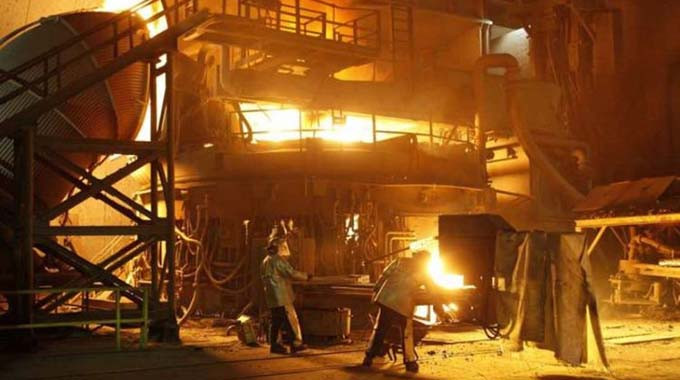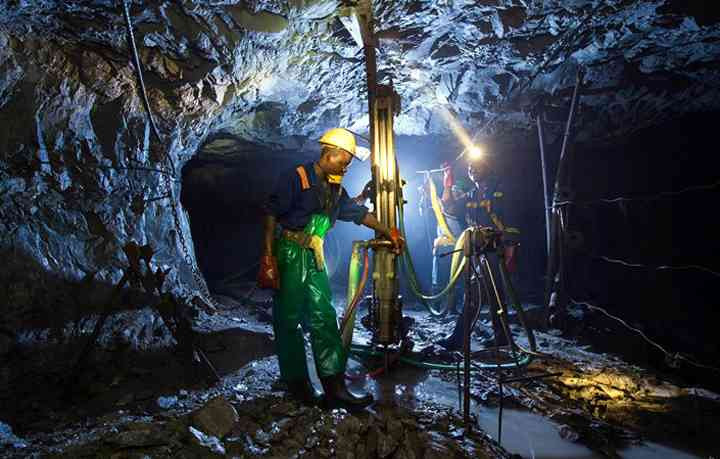
The number circulating in government briefings and industry reports is 5,000. That is how many jobs Zimbabwe's lithium sector has generated since Chinese companies began pouring money into the country's mines and processing plants from 2021 onward.
It sounds like progress. But run the arithmetic and a more uncomfortable picture emerges.
Since 2021, five Chinese firms Zhejiang Huayou Cobalt, Sinomine Resource Group, Chengxin Lithium Group, Yahua Group, and Tsingshan have invested over US$1.4 billion in Zimbabwe's lithium value chain, according to Energy Capital and Power.
A separate June 2025 analysis by China Global South Project put the figure at over US$1.2 billion, citing the same four major operations at Bikita Minerals, Prospect Lithium Zimbabwe, Sabi Star, and Kamativi Mining Company.
Using the more conservative figure, the implied cost per job created is roughly US$240,000. At US$1.4 billion, it rises to US$280,000 per job.
For context, that ratio is characteristic of capital-intensive heavy industry, not broad-based employment generation. The IMF has noted that extractive sector FDI in sub-Saharan Africa typically creates far fewer jobs per dollar than manufacturing or services investment.
The 5,000 figure itself, moreover, has no published methodology behind it. The number appears in industry reports without a clear source document from the Minerals Marketing Corporation of Zimbabwe or the Ministry of Mines. What it counts permanent employees, contractors on rolling three-month agreements, or construction-phase workers has not been publicly clarified.
What is documented is that at Prospect Lithium Zimbabwe's Arcadia mine, Huayou Cobalt estimated in 2022 that direct production-phase employment would be between 700 and 900 workers. At Bikita, a workers' union representative told AFP in March 2026 that workers were on "rolling three-month contracts," with wages tied to production targets.
- Smuggling of gems bleeding Zim’s economy
- Erik ten Hag: Manchester United appoint Ajax boss as club’s new manager
- Zimbabwe’s smuggled gold destined for China
- Smuggling of gems bleeding Zim’s economy
Keep Reading
When the February 2026 export ban disrupted operations, overtime was cut immediately. Justice Chinhema, secretary of the Zimbabwe Diamond and Allied Minerals Workers Union, warned at the time that workers were "paying twice first through unsafe production rushes, and now through likely job and income insecurity."
What Zimbabwe exported and what it kept
The value addition story is more complex than the jobs figure suggests. In 2025, Zimbabwe's lithium sector generated US$571.6 million in export revenue, according to MMCZ data. That is real money for a country whose total mineral export earnings were US$3.4 billion last year.
But the processing still stops well short of battery-grade product. Huayou Cobalt's US$400 million plant at Goromonzi produces lithium sulphate, a midstream product. Battery-grade lithium hydroxide the material that commands premium pricing in the electric vehicle supply chain is still refined in China.
The price differential is significant. Battery-grade lithium carbonate commands over US$7,000 per tonne. Raw spodumene concentrate has sold for as little as US$570 per tonne. Processing to lithium sulphate captures some of that gap but does not close it. The refining margin and the skilled employment that goes with it remains in China.
Farai Maguwu, executive director of the Centre for Natural Resource Governance, put it plainly
"A country like Zimbabwe is exporting raw lithium and, in the process, enriching China at its own expense." Economist Godfrey Kanyenze has cited a deficit in policy implementation, arguing the government gave Chinese companies years to extract and export raw material before enforcement matched policy ambition.
What Chinese investment has not visibly produced is a transfer of metallurgical knowledge to Zimbabwean engineers. The Boston University Global Development Policy Center concluded in March 2026 that Zimbabwe remains overwhelmingly focused on upstream activities, with limited movement toward capturing value at subsequent stages.
The country still lacks battery-grade refining infrastructure, the technical workforce to run it, or the regulatory capacity to audit what Chinese companies actually produce.
State oversight is so limited, according to economist Kanyenze, that it is difficult to determine how much companies actually earn from Zimbabwean lithium. That is a governance problem, not just an economics one.
One piece of evidence does favour the government's position. In the first quarter of 2026, following the February export ban, MMCZ data showed lithium export volumes rose just 2 percent while value surged 106 percent a sign that the shift toward processed product is generating more revenue per tonne. That is the economic logic of beneficiation working in real time
The harder question is whether 5,000 jobs, most of them extraction-facing and contract-based, at a capital cost of roughly a quarter of a million dollars each, represents a fair return on Africa's largest lithium reserves. The answer depends entirely on what Zimbabwe builds next. The ore is still in the ground. The processing expertise is not yet in Zimbabwe.