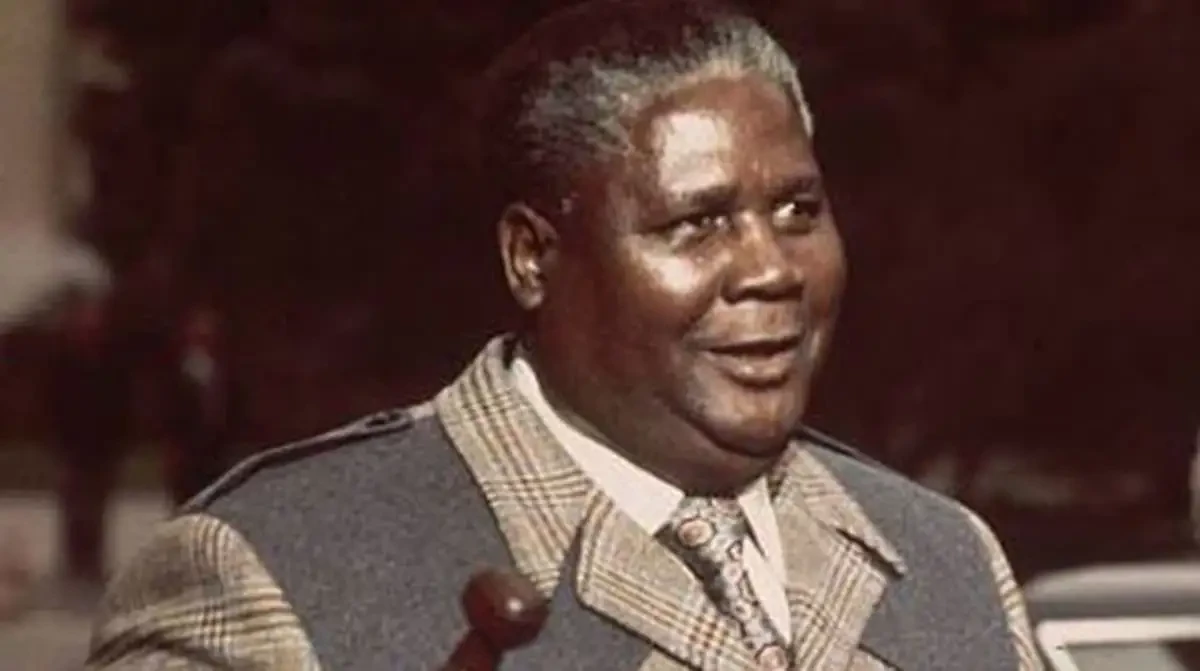
“THE hardest lesson of my life has come to me late; it is that a nation can win freedom without its people becoming free,” said Joshua Nkomo Zapu president and first Minister of Home Affairs after independence in 1980.
This apt quotation from the late Father Zimbabwe summarises what Zimbabwe has travelled since April 18, 1980.
State independence came without freedom.
Less than three years from independence, Zimbabwe experienced the worst State-sponsored genocide — Gukurahundi — atrocities that affected the Midlands and Matabeleland provinces, which were aligned to PF Zapu, a party led by Nkomo.
This happened when the northern Mashonaland provinces were in the independence honeymoon phase.
They were experiencing rapid social development — construction of health centres, schools, dip tanks and engaging in agriculture production.
The genocide ended with the signing of the Unity Accord in December 1987: An agreement that was a precursor to the still-birth of a one-party State.
Zanu PF and the then premier Robert Mugabe did not want multi-party democracy.
- Mavhunga puts DeMbare into Chibuku quarterfinals
- Bulls to charge into Zimbabwe gold stocks
- Ndiraya concerned as goals dry up
- Letters: How solar power is transforming African farms
Keep Reading
The closest to apology from Mugabe on the sad and dark episode was his eulogy at Nkomo’s burial when he characterised the genocide as “a moment of madness”.
A lot of this period can be read in books by Nkomo — The Story of My Life, Terrence Ranger and Doran.
The one-party State project was stopped thanks to Edgar Tekere, then Zanu PF general secretary, and University of Zimbabwe students.
Tekere was fired from Zanu PF and went on to form the short-lived Zimbabwe Unity Movement that got 20% of the national vote in 1990 general elections.
It has to be noted that Tekere supporters were subjected to State-sponsored violence.
The prominent casualty was former Gweru mayor Patrick Kombayi, who survived an assassination by the grace of God when campaigning for the Gweru seat.
State-sponsored violence against opposition activists reached its height in 2000 following the formation of labour-backed opposition MDC and the chaotic fast-track land reform programme.
Many opposition activists were maimed and killed in the 2000 general elections and the subsequent 2002 presidential elections.
Worse still, food aid in rural communities was politicized, with many opposition activists denied aid.
There were two Zimbabweans — Zanu PF supporters and opposition activists.
The majority of land reform beneficiaries were Zanu PF supporters and activists.
Zimbabwe further witnessed a bloody 2008 presidential election runoff, where more than 200 MDC supporters died in a space of less than 90 days.
It is important to note that the violence against opposition was directly and proportionally linked to the closing of the democratic space.
Media companies like Econet (long drawn-out litigation to get a licence), Daily News and Capitol FM were closed or bombed or operated under strict State surveillance.
Zimbabwe was fast becoming a totalitarian state.
The formal economy collapsed and inflation spiralled.
A new breed of businessmen — zvigananda — emerged, a people whose businesses entirely relied on State tenders.
It goes without saying that these were Zanu PF aligned.
Some of the social gains recorded in the first decade of independence like housing, water, roads, electricity, public health, public education and pensions began to be eroded.
Poverty levels rose and life expectancy dropped to a low 34.
Zimbabwe had dropped into the zone of a failed State.
The government, in trying to arrest the economic deterioration, has adopted neoliberal policies of privatisation.
Policies that are far off from the liberation struggle compass of socialism — gutsaruzhinji.
Many of the people, especially those who participated in the 1980 elections, are bewildered by the Zanu PF metamorphosis in the last 46 years.
It seems like another lifetime.
However, some things are failing to change.
Like they say, a leopard can never change its spots.
Zanu PF after 39 years is returning to its one-party State idea through Constitutional Amendment No. 3 Bill.
Zanu PF is proposing an imperial presidency that long existed in the feudal ages.
It needs an executive president who is not directly elected by the citizens, but by a parliament.
Actually, they want a king — a man who acts by edicts and is not accountable to anyone.
This may seem far-fetched, but history within Zanu PF has taught us senior leadership positions are never contested.
Since the 1985 Zanu PF congress, all the top posts have never been contested.
What changes now, that a non-democratic institution can give the country a democratic President?
It remains to be seen whether Zanu PF has another Tekere, a man among them, who can stop the nonsense in its tracks?
Will the Parliament have a spine?
A compromise is not far.
Examples galore from next door, South Africa, to western Europe Germany.
What about changing the electoral system back to 1980 proportional representation?
The largest party in parliament will form a government.
South Africa and Germany have done it successfully all these years.
Proportional representation is democratic, even minorities get a voice.
Coupled to that would be total implementation of devolution and local authorities get more powers to determine their affairs with limited interference from central government.
Again, South Africa and Germany are good examples to learn from.
This will be a better compromise as it democratises the political field.
Election results since 2000 show that no party will ever enjoy a two-thirds majority.
Zimbabwe will enjoy bi-partisan policies and the minorities will always have a voice.
However, masters of gerrymandering will not allow this to happen.
Delimitation has always been a source of conflict since we had constituency-based elections in 1990.
Zimbabwe can and should reflect on what independence and freedom for citizens mean as we navigate this phase.
I cannot help, but close by borrowing words from Dasi Oran, Andor: “They don’t even bother to lie badly anymore. I suppose that’s the final humiliation.”
Something to chew as we commemorate the 46th Independence anniversary.
I’m out!