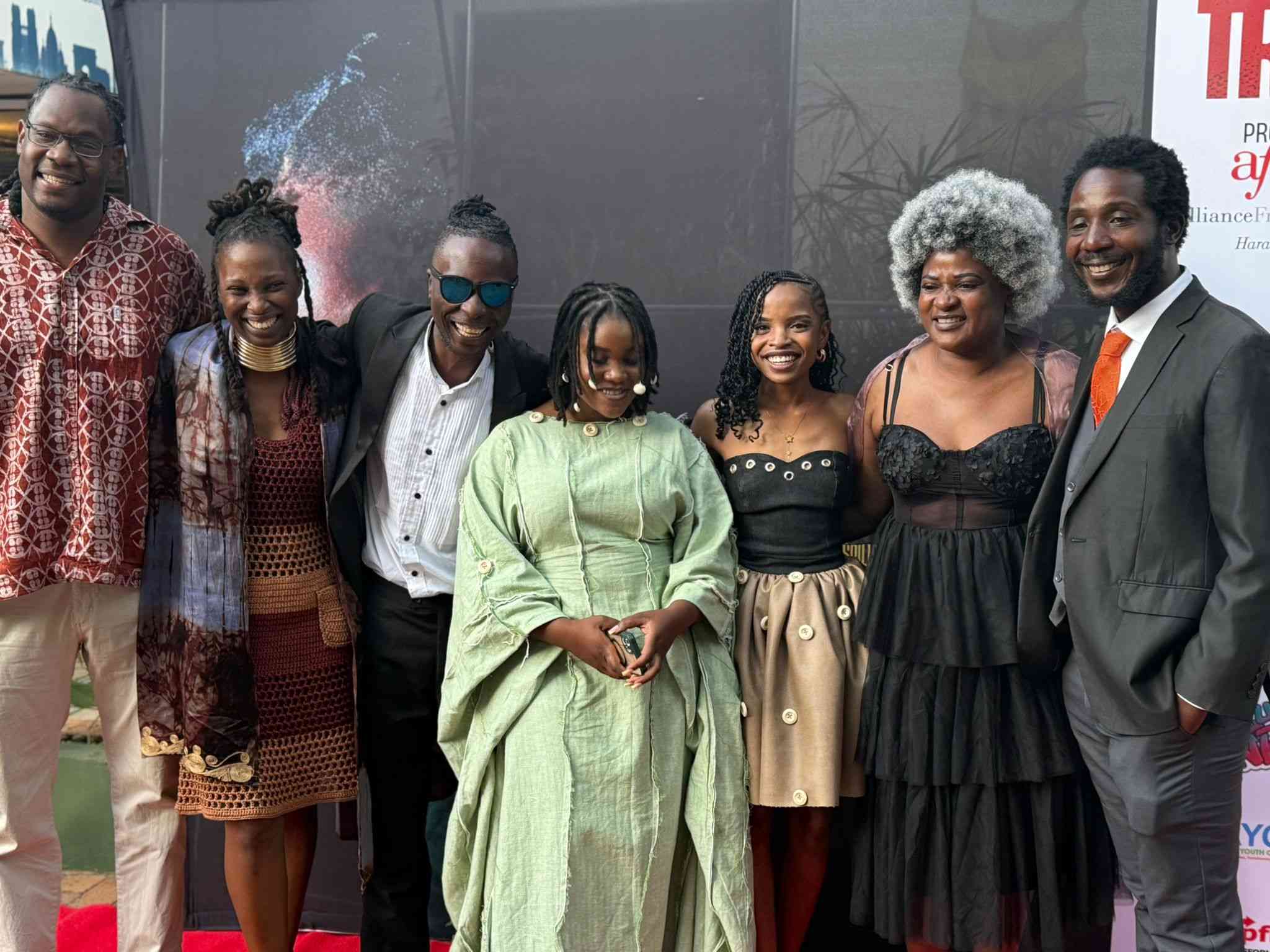
The premiere of Trapped, a gripping short film produced by Take A Look Productions, sent shivers through the audience at Alliance Française on Wednesday, June 3.
The 15-minute film, which tackles the realities of child marriage and teenage pregnancy, left viewers shocked and deeply moved, underscoring the need for stronger enforcement of laws protecting vulnerable girls.
Trapped centers on Melissa, a young village girl whose innocence is stolen under the guise of faith. Played by Deo Jakata, Melissa is confined to a dark hut by her mother, portrayed by Spilisiwe Kaikeni, and handed over to a self-proclaimed prophet. The film traces her suffering, forced servitude, and eventual escape, ending in her tragic death while giving birth alone. Robert Chiyama’s portrayal of the religious figure adds chilling realism. Through powerful performances, the cast delivers an emotionally raw depiction of systemic abuse that statistics alone cannot convey.
Blessing Ncozana (Mutsa), the film’s producer, emphasized the importance of personal stories in advocacy.
“The data on child marriages is staggering, but numbers alone don’t move people. One life story, seen in harrowing reality, does,” she said.
She added that the film was inspired by the experience of a script collaborator whose sister endured similar abuse.
“Producing Trapped was about showing impact, not covering a topic,” Ncozana explained.
Blessing Chimowa, known as Mbudzi Yadhura, reflected on the film’s deeper resonance:
- Muckracker : From Young Mayor to the 'small house' saga: Everybody is happy
- We must stop sacrificing the girl child
- One in three girls subjected child marriage: Unicef
- One in three girls subjected child marriage: Unicef
Keep Reading
“We live in a time when stories that matter are often lost in noise. Trapped gives these unheard voices space and dignity.”
He said the film portrays resilience, showing that captivity, whether imposed by culture, religion, or circumstance, cannot define who we are.
Spilisiwe Kaikeni called for wider dissemination of the film.
“If this film can reach remote areas, it can educate communities about child marriage and teenage pregnancy. Proper law enforcement, communication, and advocacy are key,” she said.
Wadzanai, another attendee, urged policymakers to act, saying, “This has broken me. I call on all decision-makers to put a stop to this.”
Legally, child marriage is prohibited under Zimbabwean law. The Constitution and the Marriage Act set the minimum age for marriage at 18, and violations constitute child abuse punishable by law. Advocates stress that enforcement, community education, and social interventions are critical in curbing underage marriages and related abuses.
Several NGOs hailed the film’s impact. Amanda Chennai Makombe, founder of Kumbe Kumbe Arts, praised its storytelling approach, noting that visual narratives like Trapped can galvanize communities and policymakers to act. The premiere brought together representatives from advocacy groups, highlighting collaboration in protecting vulnerable girls.
Despite limited resources and just three days of shooting in Dombo Shava, the crew, including director Stan Joni and Director of Photography John Wilson, produced a film that resonates long after the credits roll. Wardrobe, production assistants, and line producers all contributed to a project that is both an artistic achievement and a tool for social change.