“IF you don’t find the truth, the truth will find you” — Frank Gill Slaughter.
Slaughter’s quotation cited above is a warning to those who don’t want to read. Reading will be imposed on you. And this is exactly the situation Zimbabwe has found itself enmeshed in.
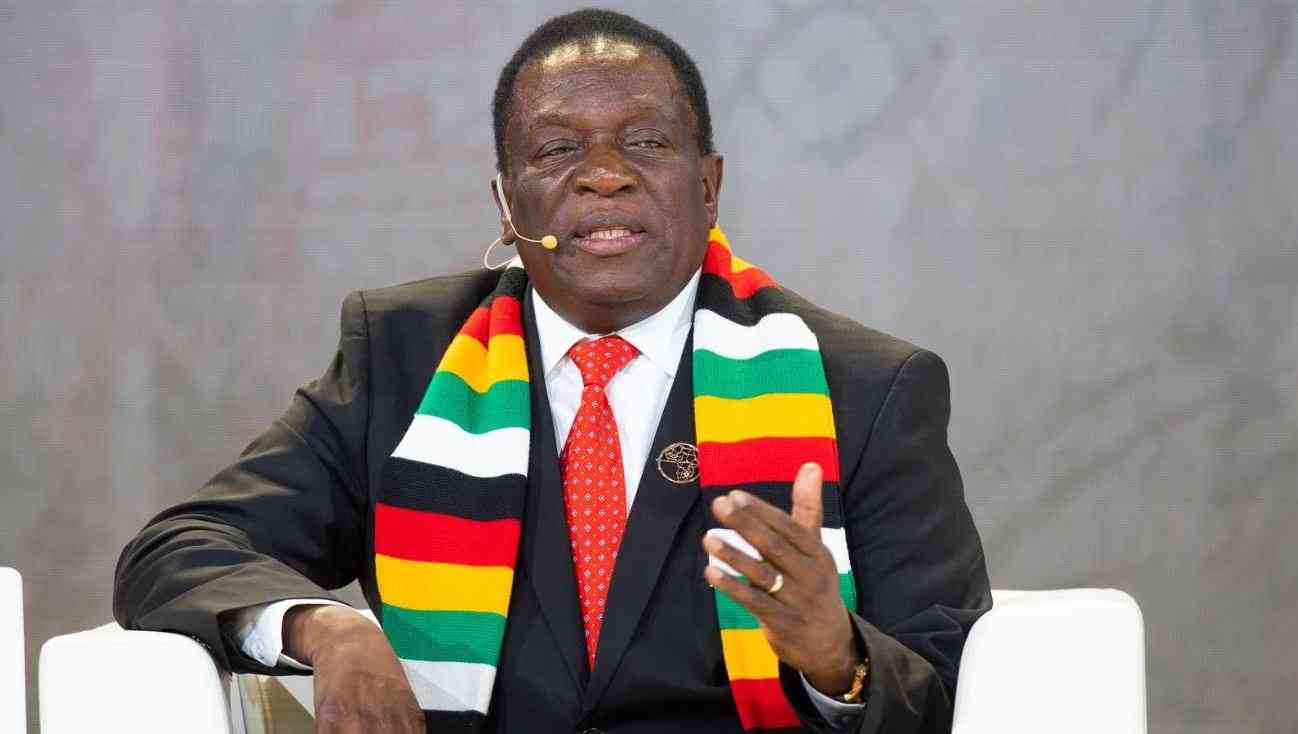
In a shocking memo, Local Government and Public Works permanent secretary, John Basera, instructed all town clerks, town secretaries and chief executive officers to purchase President Emmerson Mnangagwa’s biography — A Life of Sacrifice.
Basera said in the memo that the 2021 biography had been revised and translated into three local languages: Shona, Ndebele and Tonga.
“In view of the foregoing, the publisher is appealing for the purchase of the book by various individuals and institutions and the same to be distributed to schools. The biography provides a close insight into the life and journey of one of Zimbabwe’s illustrious sons. Each copy is selling at US$17. For an order of 100 copies or more, the discounted price is US$15 per copy,” Basera wrote.
He immediately added, “In this regard, you are implored to make the necessary arrangements to procure this invaluable book for the benefit of your communities.”
This was an extraordinary position taken by a ministry since independence in 1980 to promote a book. In the past, it was clear that authors would make lots of money if their books were put on a prescribed school's reading material.
Mnangagwa's biography is not a textbook. It cannot be prescribed, but the government has bent the rules to give the President extra income.
- Young entrepreneur dreams big
- Chibuku NeShamwari holds onto ethos of culture
- Health talk: Be wary of measles, its a deadly disease
- Macheso, Dhewa inspired me: Chinembiri
Keep Reading
It appears book has sold negligible copies in five years. It is nowhere near the best sellers. The story was not compelling, and secondly was badly packaged. The book was presented as a coffee table magazine.
Its release was also at the wrong time. The book was released in the middle of the COVID-19 lockdown. The people were suffering, many lost their jobs, people could not freely travel, and the book was priced out of the ordinary market at over US$20 a copy.
Are Mnangagwa's book publishers trying to recoup losses made from the book production? The publishers look like they got burned fingers in the deal. It is conceivable they had paid Mnangagwa an advance fee and also paid the ghost writer Eddie Cross his fee. However, the subsequent sales did not warrant the capital outlay.
The method adopted by the Local Government ministry for the book to generate sales is questionable, especially when local authorities are struggling to provide basic services to residents. How does the purchase of the biography improve service delivery?
Even if the local authorities purchase the book, what guarantee is there that it would be read? The only guarantee is that the publisher and author would have made a killing from poor residents whose levies and taxes will be used to buy the book.
It is curious: which budget line will the local authorities use to purchase the book?
Having seen most budgets, they do not include a line for purchasing books. It, therefore, follows that councils will move money from certain budget lines to remain in the good graces of the leaders.
Zimbabweans do not have a culture of writing their memoirs. However, over the years, we have had some good biographies that are insightful about the country’s history.
Quick to mind are Edgar Tekere’s A Lifetime of Struggle; Joshua Nkomo’s The Story of My Life, and Happyton Bonyongwe’s One Among Many: My Contribution to the Zimbabwe Story.
These three books are critical and offer insights into the country’s political history at important epochs.
Tekere tells us the story of him and Robert Mugabe, their interaction with Chief Rekai Tangwena, the war period in Mozambique, but more importantly, the ideological clashes within the one-party State that led to his ouster from Zanu PF. Tekere also writes about his life as an opposition leader to his former comrades in Zanu PF.
Nkomo, on the other hand, writes the story of nationalist politics, developments in Zapu, Lancaster House talks, the 1980 elections, Government of National Unity, Gukurahundi, persecution of his allies: Dumiso Dabengwa and Lookout Masuku, and his exile years.
The last example is Bonyongwe. He writes about the liberation struggle, his journey as a soldier, a minister in Mugabe’s government, Zanu PF factionalism, and, more importantly, finer details of the November 2017 coup.
Interestingly, the government has seen nothing important in these three biographies to warrant them receiving State assistance to reach a wider audience. These are important voices. The reason why even State media did not review the books is that they speak inconvenient truths.
Now we know that Mnangagwa has a narrative that he wants to push. Residents’ levies and taxes will be used to push it. The residents will fund the propaganda.
Commonly, one writes memoirs before they enter politics or when they are stepping down, and never during their tenure. The one pre-entry into politics is to introduce oneself and the ideas the person represents, and the one after leaving the stage is to portray what you did, rationalise it, successes and failures. It’s more of a confessional.
However, Mnangagwa is different. He writes his memoirs while in office. He shortchanges the electorate. He cannot write about corruption, Zanu PF factions and the constitutional amendments under his watch.
What does Mnangagwa write about? Liberation struggle, road construction, the Trabablas interchange and the University of Zambia Presidential
Scholarship?
Zimbabwe is entering dangerous cultural grounds. It is dangerous for a government to tell citizens what should be on the bookshelves or library shelves. Welcome to the age of command reading!
I’m out!