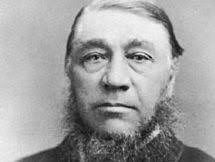
Paul Kruger, Zimbabwe Diamond History and Regional Power
Paul Kruger was a defining political figure in 19th-century Southern Africa. His leadership shaped debates over land and minerals. Today, Zimbabwe’s diamond sector reflects long regional patterns of resource control. Understanding Paul and his era helps explain how diamond wealth is governed in Zimbabwe.
Paul Kruger and Zimbabwe: Power, Land, and Mineral Authority
Paul Kruger served as President of the South African Republic from 1883 to 1900. He led the Transvaal during a period of mineral discovery and imperial rivalry. Gold finds transformed the regional economy. Political authority and resource control became closely linked.
Kruger viewed land and subsoil wealth as pillars of sovereignty. The state asserted control over concessions and mining rights. Revenue from minerals strengthened institutions and military capacity. Economic policy supported political survival.
This model placed the state at the center of resource governance. Access to mineral wealth depended on law and political alignment. Elite networks often influenced distribution and opportunity. These patterns shaped the broader regional economy.
Southern Africa became defined by extractive industries. Railways, finance systems, and labor structures developed around mining. Resource wealth drove state formation. Political debates often revolved around ownership and control.
Although Zimbabwe was under different rule at the time, it existed within this regional system. Ideas about centralized authority over minerals circulated widely. Paul’s era helped normalize the link between sovereignty and subsoil wealth. That legacy extended beyond the Transvaal.
- New perspectives: How Zimbabwe can effectively fight money laundering
- New perspectives: How Zimbabwe can effectively fight money laundering
- Youths challenge Sadc govts over rhetorical health promises
- Sadc meets over water, energy and food security
Keep Reading
Understanding this period provides context for later developments. It shows how mineral governance became embedded in political identity. These early precedents still echo in modern Zimbabwe.
From Regional Precedent to Zimbabwe’s Diamond Sector
Zimbabwe’s modern diamond story began with major discoveries in the Marange fields. These finds generated national optimism and international interest. Diamonds promised fiscal relief and development funding. They also introduced complex governance questions.
Like earlier mineral booms in Southern Africa, control quickly became central. Licensing, security, and revenue allocation required strong state involvement. Government institutions positioned themselves at the heart of diamond oversight. This structure reflected established regional patterns.
In Paul’s time, mineral wealth reinforced sovereignty and political leverage. In Zimbabwe, diamonds also became linked to national strategy. Revenue planning and fiscal stability relied in part on extraction. Resource policy became inseparable from political authority.
Tensions emerged over how benefits should be distributed. Public expectations often focused on infrastructure and social services. At the same time, centralized systems concentrated decision-making power. These dynamics resemble earlier extractive frameworks in the region.
Zimbabwe’s diamond governance operates within a post-colonial context. The country defines its policies independently. Yet the institutional model of strong state oversight mirrors historical precedents. Mineral wealth remains both an opportunity and a responsibility.
The comparison does not suggest direct continuity. Paul did not shape Zimbabwe’s modern industry. However, his era contributed to a broader Southern African tradition. That tradition linked state legitimacy with control over valuable resources.
Historical Patterns and the Modern Diamond Economy
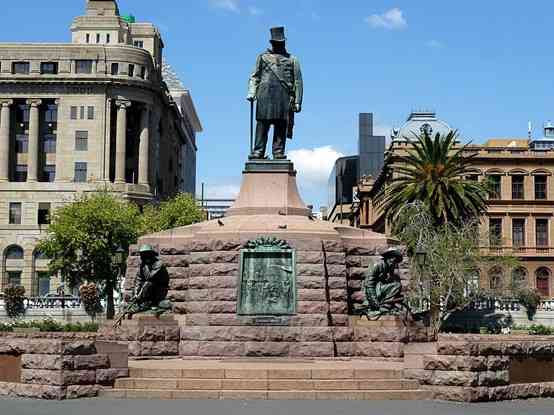
Statue of Paul Kruger, whose era influenced regional mineral systems that still echo in Zimbabwe diamond governance.
Southern Africa’s economic foundations were built on extraction. Gold and diamond discoveries reshaped borders and alliances. Infrastructure expanded to support mining. Political systems adapted to manage revenue and labor flows.
Paul governed during the consolidation of this extractive order. His administration reinforced the idea that mineral wealth underpinned state survival. Control over resources became a symbol of independence. This logic continues to influence regional debates.
In Zimbabwe, diamonds represent significant economic potential. They offer export earnings and investment capital. They also require transparency and institutional strength. The balance between centralized authority and broad public benefit remains critical.
History shows that resource challenges are rarely new. Questions about ownership, access, and accountability have long accompanied mineral wealth. These issues evolve across generations but rarely disappear.
Zimbabwe’s diamond sector fits within this longer Southern African narrative. It reflects inherited governance models and modern reforms. It operates in global markets yet remains shaped by regional history.
Understanding Paul and his time provides analytical depth. It clarifies how mineral wealth became tied to political identity. Zimbabwe’s diamonds are not isolated phenomena. They are part of a continuing story about land, authority, and economic power in Southern Africa.