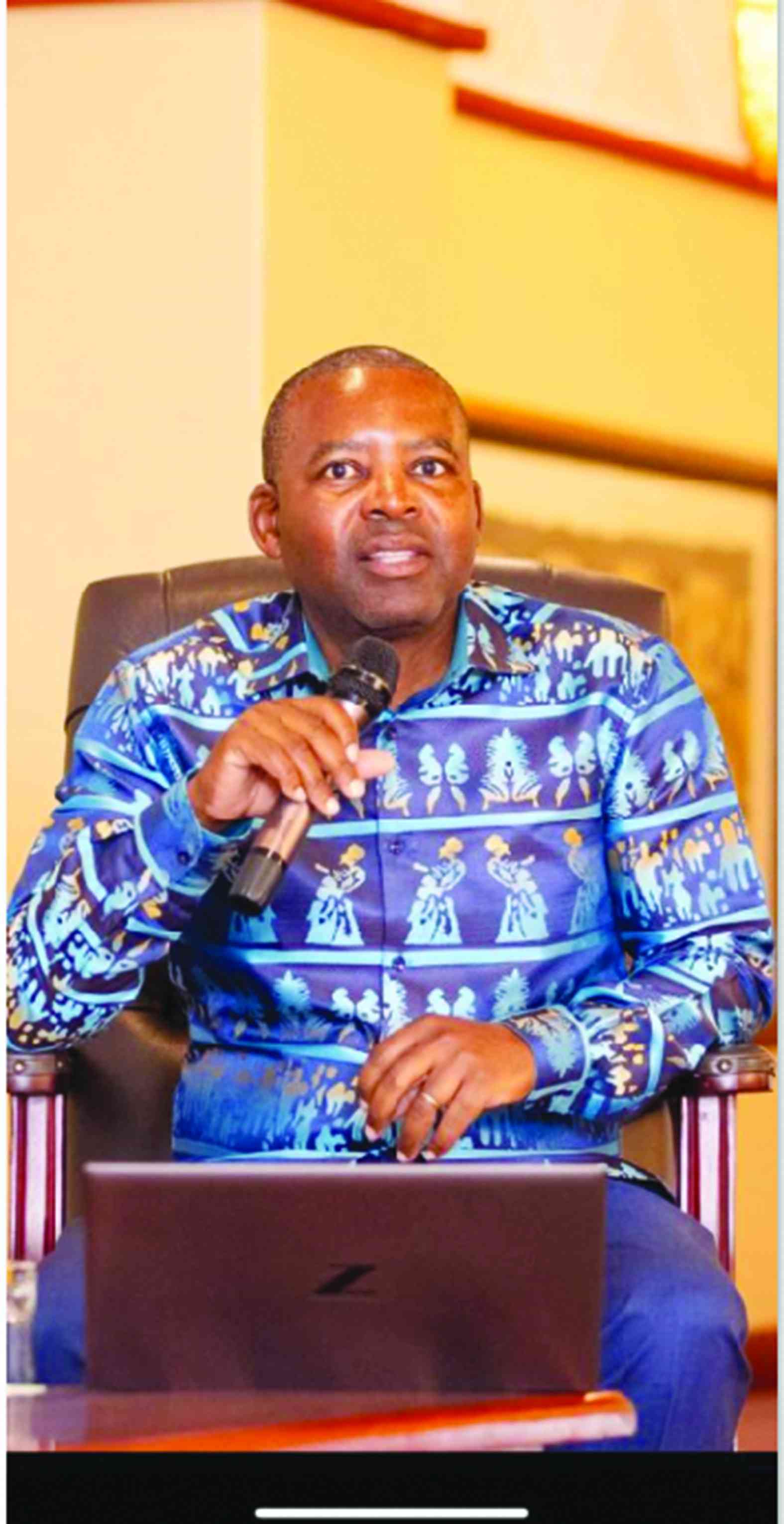
TAX adviser Simon Gwenzi was recently engaged by B Creative Social Media Group, which has close to 90 culture and creative industry leaders to add enlightenment on the digital services withholding tax (DSWT).
Gwenzi explained that DSWT is a mirror of value-added tax on imported services (VATIS).
In other words, DSWT is VATIS that is collected by designated financial intermediaries on the payment for services provided by non-resident service providers to their customers in Zimbabwe.
DSWT is, therefore, a tax accounted for on the payment for online services.
Gwenzi further mentioned that the tax is being withheld by banks on behalf of the service provider.
The customer pays for the service as quoted by the service provider and accordingly, banks will then withhold the VAT (DSWT) from the payment and remit it to the Zimbabwe Revenue Authority.
NewsDay Life & Style reporter Tendai Sauta (ND) sat down with Gwenzi (SG) with a view to getting an understanding of how DSWT operates.
Below are excerpts from the interview.
- Gwenzi readies Zim creative sector for DSWT
Keep Reading
ND: According to the VAT law, the liability to account for VAT lies with the customer. With the introduction of DSWT, how does the withholding system change this responsibility?
SG: Section 6(2)(b) as read with section 13 of the VAT Act places the obligation to account for VATIS on the recipient.
On the other hand section 13A, deems digital and electronic services to be provided in Zimbabwe. This then places an obligation to register for VAT on the foreign service providers.
The digital services should therefore be charged VAT.
The intermediaries are therefore mandated with “intercepting” VAT before it reaches the foreign service provider.
In other words, they pay DSWT on behalf of the service provider.
ND: How does the inclusion of VAT in subscription prices impact the music industry, especially for music royalties and digital music platforms? Can it affect the cash flow or the revenue share for artists?
SG: There is a possibility of subscription prices going up to cover for the DSWT.
This can be possible if the providers of the digital music platforms was not registered for VAT.
If they were registered, DSWT wouldn’t have any impact on the subscriptions.
ND: Do you foresee any challenges in terms of how royalties are calculated now that VAT will be factored in? How can this impact the distribution of royalties for Zimbabwean artists?
SG: There is a possibility of the obligation to pay the VAT (DSWT) being pushed to the local artists. This may then negatively impact their revenues.
ND: Considering the volume of online service providers globally, how feasible is it for all of them to register for VAT in Zimbabwe? Do you think this can lead to some international platforms, like Netflix or Spotify, choosing to blacklist Zimbabwe?
SG: Feasibility of registering all foreign service providers depends on their ability to voluntarily register in Zimbabwe.
Enforcement of such registration may be a challenge because of a lack of physical presence of these service providers.
It is worth noting that the tax has been introduced in many other African countries, including Kenya, Nigeria, Tunisia.
Globally, countries like France, Italy, the United Kingdom also have a similar tax on digital services.
Blacklisting Zimbabwe will, therefore, be unfortunate.
ND: For larger multinational companies such as Meta, Amazon or Google, do you think they trust Zimbabwe’s central bank to facilitate VAT collection? What are the potential risks involved?
SG: VAT by design is an indirect tax, that agents collect on behalf of the government.
In this case the Zimbabwean government decided to collect the tax on its own.
The question is whether these multinationals will agree to register for VAT in Zimbabwe.
ND: What are the key benefits for Zimbabwean citizens in terms of public services or sector improvements that the government expects to achieve from the revenue generated through DSWT? Can you share any examples of how this may directly improve local communities?
SG: Policymakers are better placed to address the issues to do with the use and application of revenues arising from the collection of DSWT.
If efficiently collected, the tax will result in more revenue to the fiscus.
ND: Some critics argue that Zimbabwe’s digital economy could be negatively impacted if citizens start migrating their online accounts to foreign countries to avoid paying VAT. Do you believe this is a valid concern?
SG: This can be a valid concern depending on the implementation of the policy.
If the incidence of the tax falls on the Zimbabwean consumers, some may decide to utilise their foreign accounts to make the payments for digital services.
This will however not absolve the foreign service providers from accounting for the tax.
ND: You’ve mentioned that VAT on e-commerce transactions has been difficult to collect in the past. How does DSWT aim to address this issue and ensure that these transactions are taxed fairly and efficiently?
SG: According to the statement by the Finance ministry, DSWT is meant to address collection challenges encountered in the past.
Now that the obligation to collect has been placed on local intermediaries, it would be realistic to expect improved collections.
ND: There’s a growing concern about privacy and the regulation of online content. How will DSWT apply to more sensitive sectors like adult websites or dating platforms? Can this create traceability issues or deter international platforms from entering the Zimbabwean market?
SG: Intermediaries are mandated only to deduct DSWT on international payments.
The intermediaries are bound by secrecy and customer protection regulations.
It is, therefore, not their mandate under the VAT provisions to want to know what the customer pays for.
ND: Finally, looking ahead, do you think the introduction of DSWT could encourage more investment in Zimbabwe’s creative industries? What needs to be done to ensure these industries benefit from the tax system rather than being hindered by it?
SG: The tax, if not positively embraced, may cause investment flight to jurisdictions that do not have such regulations.
Investors are generally tax sensitive.
The rate at which DSWT is calculated may also be a consideration, in comparison to other jurisdictions.