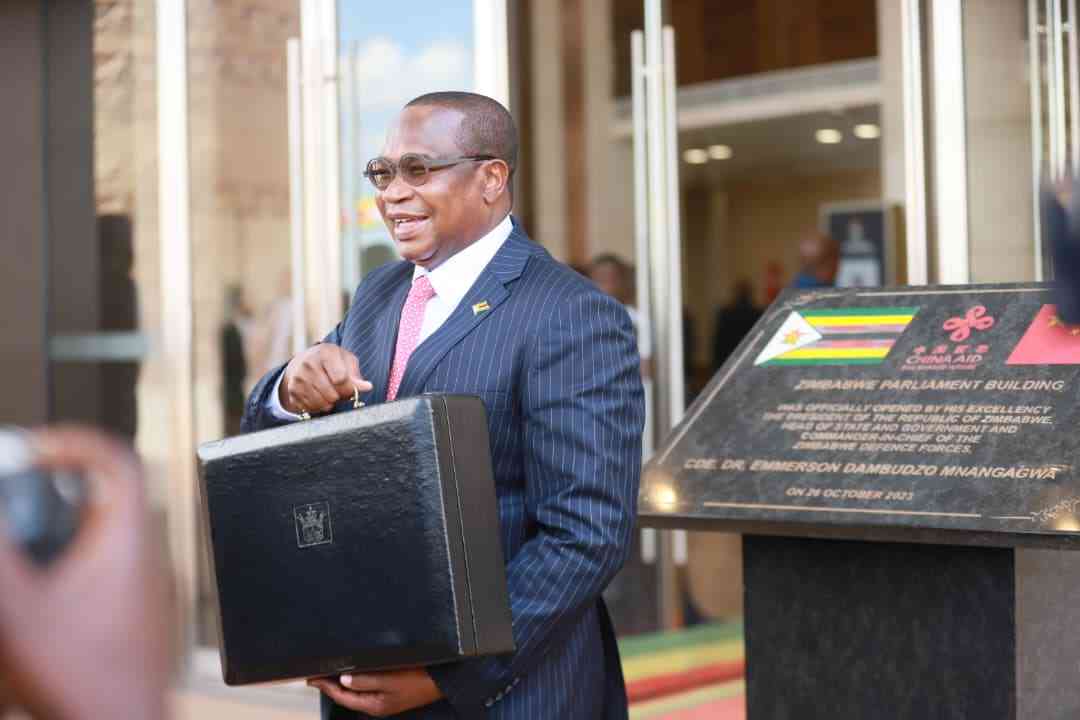
The 2026 national budget, read together with the NDS2 is a very long read indeed. Over 900 pages of economic wishes that we are most unlikely to be completely implemented, as has been the case since 1980 where we have had more than 20 economic blueprints and nothing to show for it. We are very good at churning out good economic intentions and very weak on implementation. That remains our curse.
The annual national budget itself has become an annual tax stalking ritual which claims grandiose claims of high economic growth and yet citizens do not feel it. An economy that relies on transaction taxes such as VAT and levies while earning foreign currency from raw primary product exports and is backed by local consumption mainly funded from Diapsora remittances indicates an economy in distress. Our economy is going nowhere as far as improving the quality of life of its citizens and yet some among us have the audacity of pumping their chests. Our economy is unable to transform and fund its own local and inclusive development agenda and for a whole 45 years, we have been relying on primary products as our main source of foreign exchange. Primary products produce diminishing marginal returns over time whose prices we are not in control of. They cannot remain as the bedrock upon which we can sustain any serious economic development. We need new thinking.
Our economy is mainly funded by gold and tobacco exports, our revenue base is mainly funded by VAT while the wholesale and retail sector is the highest contributor to GDP as projected. Our consumption power is mainly funded by Diaspora remittances while urban poverty is increasing. The economic growth we do not see is mainly driven by large corporate monopolies as the majority of citizens are surviving in the informal sector. These are the facts. It was Mark Twain who said: Gather the facts first and then you can distort them as you wish!
I am still to understand the logic of charging ATM withdrawal levies, surely this will discourage banking and lead to more cash under the mattress? These are the unintended consequence of not considering the social impact of economic policy. Something which we continue to do very well.
The NDS2 is, in my opinion, a 600-page transformative thesis which tries to do too much. We know the results of that because we have been there before. In my view we only need to focus on three things these being;
- True economic devolution so that provinces can maximise on their factor endowments, that will ensure inclusive development, rural industrialisation and autonomy;
- Increasing share of manufacturing sector in GDP and exports. This would ensure value addition and beneficiation in all productive sectors leading to industrialisation and job creation; and
- Infrastructure development (including both urban and rural development), i.e., energy, transport, water and ICT
This is the ‘WHAT’, because the ‘HOW’ is always a creative and dynamic process. We must not spend too much time writing long documents on the ‘HOW’ because there are multiple innovative ways and strategies of getting things done. Zimbabweans are a creative lot, all we must do is to create the right environment which can unleash that force.
Having defined the ‘WHAT’, there are then key universal principles we need to follow these being:
- Effective management of the financial resources and data including creative ways to generate long term capital using our mineral endowments;
- Meritocracy and the obliterating the patronage economy towards a competency based inclusive one; and
- Honesty in dealing with the rot of corruption and abuse of resources.
In my opinion, if we do these few things our economy will transform, be inclusive and grow. We are making too much political noise and not pursuing simplicity and focus on key economic sectors that can leverage the whole economy. For that, 600 page documents are useless academic banter.
- Trophy hunting drives African lion into extinction
- Prove how we ‘rig’ polls: Zec
- CCC youths camp at Chin‘ono home
- Self-care tips to boost your mental health
Keep Reading
Vince Musewe is an independent economist and you can contact him on [email protected]