AS Zimbabwe advances towards its Vision 2030 target of becoming an upper-middle-income economy, food security remains a central pillar of national development.
Agriculture, long regarded the backbone of the economy, continues to shape livelihoods, employment and industrial growth.
Yet, recurring droughts, economic volatility and limited access to inputs have constrained productivity, making strengthening of agricultural policy both a priority and a necessity.
Agriculture at the heart of economic transformation
Agriculture contributes between 17% and 20% of Zimbabwe’s gross domestic product (GDP) and sustains nearly 70% of the population, particularly in rural areas.
The sector anchors value chains in food processing, manufacturing and exports forming the bedrock of economic stability and industrialisation.
However, recurring climatic shocks and inconsistent policy frameworks have slowed the sector’s potential.
In this regard, the second republic has continued to reposition agriculture through robust interventions that enhance productivity, resilience, and sustainability anchored on the National Development Strategy 1 (NDS 1) and the Vision 2030 agenda.
- Addressing unfair trade key to transforming African food systems
- Urgent economic structural transformation necessary
- Residents finger ZETDC employees in cables theft
- Residents finger ZETDC employees in cables theft
Keep Reading
Redefining food security in the national context
Food security goes beyond ensuring availability, it involves accessibility, affordability and nutrition.
For Zimbabwe, achieving this balance has been challenging due to erratic rainfall patterns, inflationary pressures and logistical bottlenecks that limit food distribution to remote communities.
According to the Zimbabwe Vulnerability Assessment Committee (ZimVAC), millions in drought-prone areas such as Matabeleland and Masvingo provinces remain vulnerable to food shortages.
The government has, however, responded with multi-pronged interventions aimed at transforming agriculture from subsistence based to commercially driven, while ensuring no household is left behind.
Programmes driving productivity
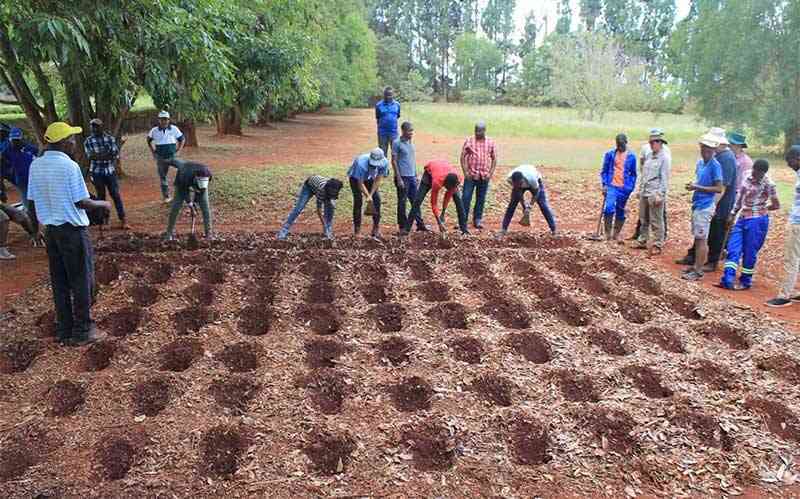
The Pfumvudza/Intwasa programme
One of the most successful policy innovations in recent years has been the Pfumvudza/Intwasa initiative introduced in 2020 to promote conservation agriculture and climate-smart practices among smallholder farmers.
The programme focuses on minimum tillage, mulching, and efficient input utilisation to maximise output from smaller plots while preserving soil moisture.
The model has proven instrumental in improving yields and stabilising national grain supplies.
With government support through free input distribution and extension services, communal farmers have been empowered to produce more with less.
The 2023/24 agricultural season witnessed notable maize output gains attributable to the Pfumvudza concept demonstrating its transformative impact on national food reserves.
Command agriculture and contract farming
The command agriculture programme, launched in 2016, also marked a turning point in large-scale farming.
Through this initiative, the government provided inputs, mechanisation and technical support to capable farmers under structured repayment systems.
Although challenges emerged around financing and accountability, the framework successfully reduced grain import dependence in its early phases.
Going forward, lessons from command agriculture are shaping more transparent and market-driven contract farming arrangements that involve public and private sector participation.
NDS 1 and Vision 2030: Policy synergy for transformation
Under NDS 1 (2021-25), agriculture is a key enabler for inclusive growth and rural development.
The strategy promotes irrigation expansion, mechanisation, value addition, and technological innovation to boost productivity across all farming sectors.
The government’s target to increase irrigated land from 204 000 hectares to 350 000 hectares by 2025 speaks to its commitment to climate adaptation and resilience building.
Private sector involvement has also been scaled up, with emphasis on public-private partnerships in agro-processing, input supply and mechanisation.
This aligns with the broader goal of creating a competitive, export-oriented agricultural sector capable of sustaining food self-sufficiency while generating foreign currency.
Economic imperatives for food security
Food security is not just an agricultural issue, it is an economic one.
Inflationary pressures, currency fluctuations and high production costs have, at times, eroded both farmer viability and consumer purchasing power.
Macroeconomic stability, therefore, remains a critical foundation for a functioning food system.
To strengthen market efficiency, the government continues to promote structured markets and value chain development.
Rural infrastructure such as storage facilities, roads, and digital platforms is being upgraded to improve market access and reduce post-harvest losses.
These interventions not only stabilise prices, but also link farmers to regional and international markets.
Agricultural financing and input support
Access to affordable credit has long been a challenge for smallholders.
Through the revitalised Agricultural Finance Corporation, government has reintroduced structured lending schemes that support small and medium-scale farmers.
However, broader inclusion requires innovative financing models such as warehouse receipt systems, microinsurance and mobile-based credit scoring, which can de-risk lending and enhance participation.
Complementary to this, the government continues to ensure the timely provision of inputs through public schemes and private distributors, ensuring production continuity across all provinces.
Innovation, research and climate resilience
Zimbabwe’s progress in food security is increasingly driven by science and innovation.
The Department of Research and Specialist Services continues to develop climate-resilient seed varieties and livestock breeds tailored to local conditions.
The adoption of precision agriculture, satellite monitoring and artificial intelligence in crop management has the potential to revolutionise yield forecasting and resource optimisation.
At the same time, the national drive towards climate-smart agriculture and renewable energy integration especially solar-powered irrigation — demonstrates a deliberate shift towards sustainable production systems.
This approach ensures that agriculture remains productive even under adverse weather conditions.
Institutional co-ordination and policy consistency
For food security policies to yield results, coordination across institutions is vital.
The alignment of fiscal, trade and agricultural policies under NDS 1 ensures that interventions are complementary and effective.
Greater collaboration between the Agriculture ministry, the Finance ministry, and local authorities enhances implementation efficiency while reducing duplication.
Decentralisation further empowers local communities to adapt agricultural strategies to their ecological realities encouraging bottom-up innovation and ownership.
Conclusion
Zimbabwe’s pursuit of food security is a journey of resilience and innovation.
Through well-coordinated policies, strategic investment, and climate-smart solutions, the nation is steadily transforming agriculture into a driver of economic recovery and sustainable growth.
A food-secure Zimbabwe is not merely an aspiration, it is the cornerstone of national prosperity and the foundation upon which Vision 2030 will be achieved.