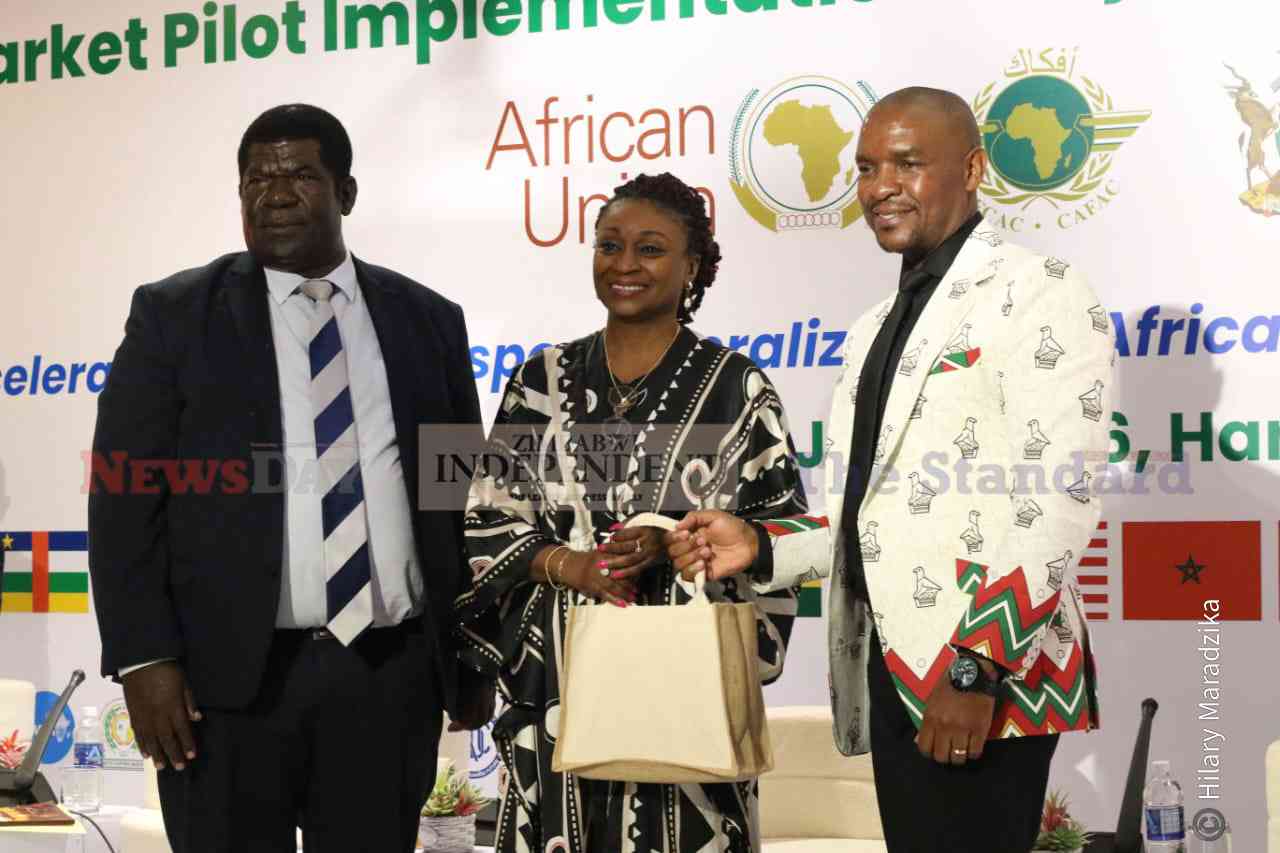
HARARE, Jul 10 (NewsDay Live) - Government says it is reviewing its bilateral air service agreements with the rest of Africa in order to attract more airlines and strengthen trade under the African Continental Free Trade Area (AfCFTA).
The policy shift, announced by Transport and Infrastructural Development minister Felix Mhona this Friday, comes amid a continent-wide push to implement the Single African Air Transport Market (SAATM).
The initiative aims to create a single aviation market by removing restrictions that have long limited competition among African carriers.
The reforms represent one of Zimbabwe's most significant aviation policy changes in recent years, signalling a move away from tightly controlled bilateral agreements towards a more open market in which airlines can expand routes, increase frequencies and compete more freely across the continent.
"The time has come for us to dismantle the barriers that impede its success, including excessive protectionism, market access restrictions and non-tariff impediments affecting the growth of African aviation," Mhona said.
Zimbabwe is reviewing all bilateral air service agreements with countries that have signed up to SAATM to ensure they comply with the Yamoussoukro Decision, the African Union framework that seeks to liberalise air transport across the continent.
Officials believe the reforms could make Zimbabwe a more attractive destination for airlines while strengthening the country's position as a regional aviation hub linking southern, eastern and central Africa.
The policy overhaul follows substantial public investment in aviation infrastructure over the past decade, including the expansion and modernisation of the Robert Gabriel Mugabe International Airport, Victoria Falls International Airport and Joshua Nkomo International Airport.
- 340km of Harare-B/bridge highway revamp complete
- Airports Company strikes mega hotel deal
- Chinese chrome smelters wreak havoc on Gweru’s roads
- 340km of Harare-B/bridge highway revamp complete
Keep Reading
The expansion of Robert Gabriel Mugabe International Airport increased its annual passenger handling capacity from about two million to 6,5 million passengers, creating infrastructure capable of accommodating significantly higher traffic volumes.
Aviation analysts have long argued that modern airport infrastructure alone is insufficient without regulatory reforms that encourage airlines to operate additional routes and increase passenger traffic.
By liberalising market access, Zimbabwe hopes to improve the commercial returns on those investments while supporting tourism, cargo transport and cross-border business travel.
"The full implementation of SAATM remains of strategic importance to Africa's socio-economic transformation," Mhona said.
He argued that removing unnecessary restrictions would allow African airlines to establish new direct routes, reducing travel times while improving the movement of people, goods, services and investment across the continent.
The reforms also seek to reduce one of Africa's biggest aviation inefficiencies.
Travellers frequently have to transit through non-African hubs to reach destinations within the continent because of limited direct connections between African cities.
That has increased travel times and costs while reducing the competitiveness of African airlines against international carriers.
According to the minister, progress is already bearing fruit.
Zimbabwe cited the 2025 SAATM Implementation Report, which shows intra-African connectivity increasing from 14,5% in 2021 to 23% in 2025, largely driven by wider adoption of Fifth Freedom Traffic Rights, which allow airlines to carry passengers between two foreign countries as part of a broader international route.
Those rights are regarded as one of the most commercially important elements of aviation liberalisation because they improve aircraft utilisation and enable airlines to develop more viable regional networks.
Mhona said compliant bilateral agreements had already demonstrated tangible economic benefits by promoting greater airline competition.
Zimbabwe has increasingly positioned aviation as a strategic pillar supporting the AfCFTA, which aims to create the world's largest free trade area by membership.
Government argues that efficient air transport is becoming as important as road, rail and border infrastructure in facilitating regional commerce.
Alongside airport expansion, Zimbabwe has invested in new aviation technologies, including a Secondary Surveillance Radar System, upgraded air traffic control infrastructure and an Aeronautical Message Handling System, designed to improve operational efficiency and aviation safety.
Mhona urged African governments that have yet to fully implement SAATM to accelerate reforms, arguing that fragmented regulation continues to undermine the continent's aviation potential.
"There is indeed a lot of work to do," he said. "We must continue working towards the removal of barriers to connectivity, including visa and tax restrictions, to enable the free movement of people and unlock the full benefits of continental integration."