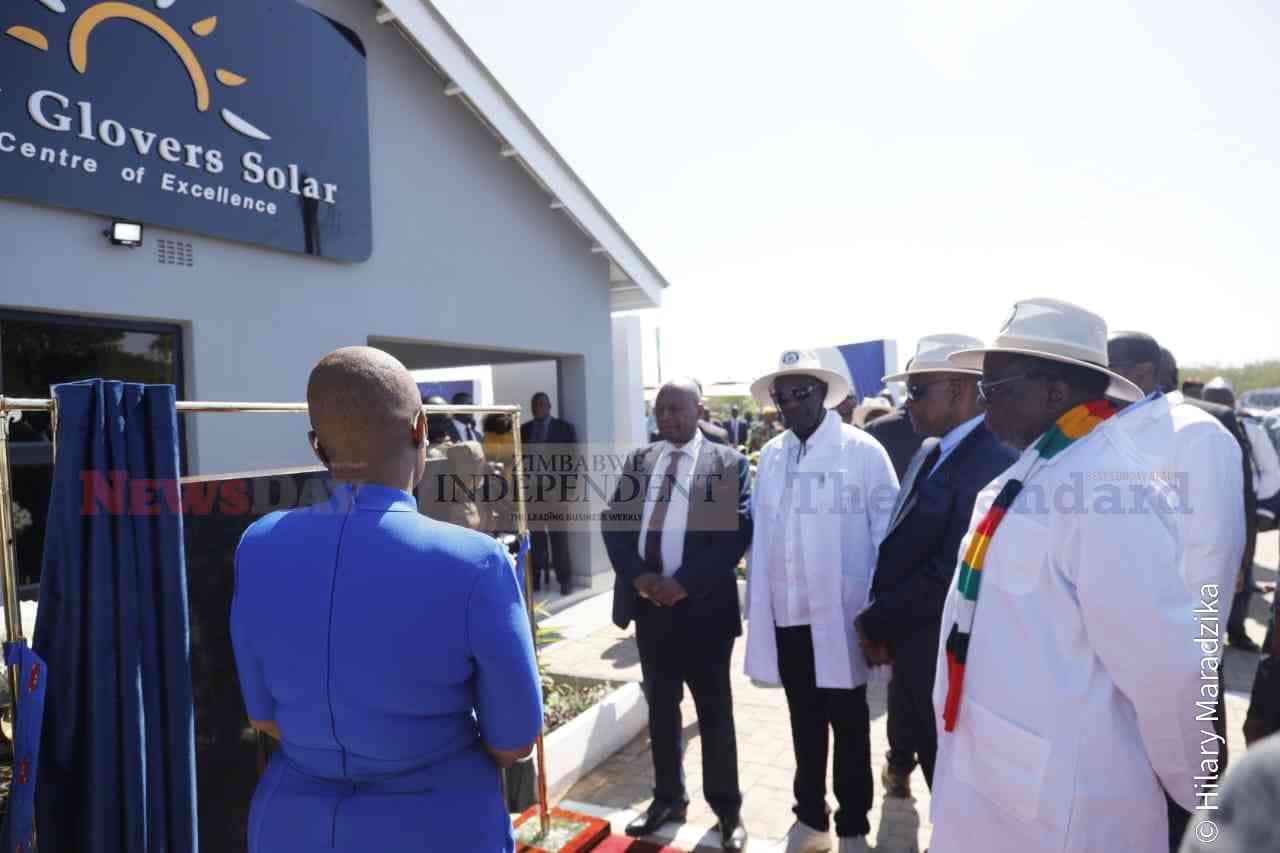
PRESIDENT Emmerson Mnangagwa yesterday warned against sabotage and corruption targeting major investments as he commissioned the new 10 megawatt Glovers Solar Power Plant in Kwekwe, describing the project as a symbol of the country’s drive toward industrialisation and energy security.
Speaking before government officials, business leaders and local residents, Mnangagwa said his government would show “zero tolerance” toward vandalism, theft and corruption that threaten strategic infrastructure projects critical to the country’s economic recovery.
“Anyone who steals cables, vandalises infrastructure or demands bribes from investors is an enemy of development,” he said during the ceremony.
“Protect this asset. A solar panel stolen today means a job lost tomorrow. Guard this project like you guard your own homes.”
The commissioning of the solar plant comes as Zimbabwe faces recurring electricity shortages that have disrupted mining, manufacturing and households, with ageing coal-fired plants frequently breaking down and power imports constrained by regional supply pressures.
Government officials say renewable energy projects are central to efforts to diversify the country’s energy mix and reduce dependence on fossil fuels.
The Glovers Solar Plant, located in the Midlands province, is expected to feed electricity into the national grid and help ease pressure on businesses in the mining and industrial hub of Kwekwe.
Mnangagwa said the project reflected Zimbabwe’s commitment to modern energy solutions while creating jobs and opportunities for local communities.
- Mr President, you missed the opportunity to be the veritable voice of conscience
- ED to commission new-look border post
- Zanu PF ready for congress
- Zanu PF ready for congress
Keep Reading
“The New Glovers Solar Plant is more than a source of electricity,” he said.
“It is a beacon of hope and a symbol of innovation.
“It is a testimony of resilience and, indeed, proof that when Zimbabweans unite and rise to the occasion, our national development leaps forward.”
The President linked the project to the government’s Vision 2030 agenda, which seeks to transform Zimbabwe into an upper-middle-income economy through infrastructure development, industrial growth and investment in energy generation.
Zimbabwe has struggled for years with power deficits, with demand often exceeding available supply, particularly during peak industrial periods.
Businesses have frequently turned to diesel generators and private solar installations to maintain operations during prolonged outages.
The government has in recent years encouraged private investment in renewable energy, signing agreements for several solar projects across the country.
Analysts say such projects could help stabilise electricity supplies if implemented efficiently and protected from infrastructure theft and mismanagement.
Mnangagwa used Thursday’s event to issue one of his strongest warnings yet against acts of sabotage targeting national projects, saying corruption and vandalism undermine investor confidence and delay economic progress.
He also urged local communities to take ownership of the solar plant and ensure its long-term security.
“This infrastructure belongs to the people of Zimbabwe,” he said.
“Every citizen has a duty to defend and preserve investments that create jobs, empower communities and improve our quality of life.”
Government officials attending the event said the plant would contribute to broader efforts to expand renewable energy generation as Zimbabwe seeks to attract investment into clean energy and climate-resilient infrastructure.
Industry representatives welcomed the development, saying stable power supplies remain essential for economic productivity, particularly in mining and manufacturing sectors concentrated in the Midlands province.
Zimbabwe’s mining industry, one of the country’s top foreign currency earners, has repeatedly cited electricity shortages as a major obstacle to expansion.
The government has pledged to increase generation capacity through a combination of solar, hydro and thermal energy projects.