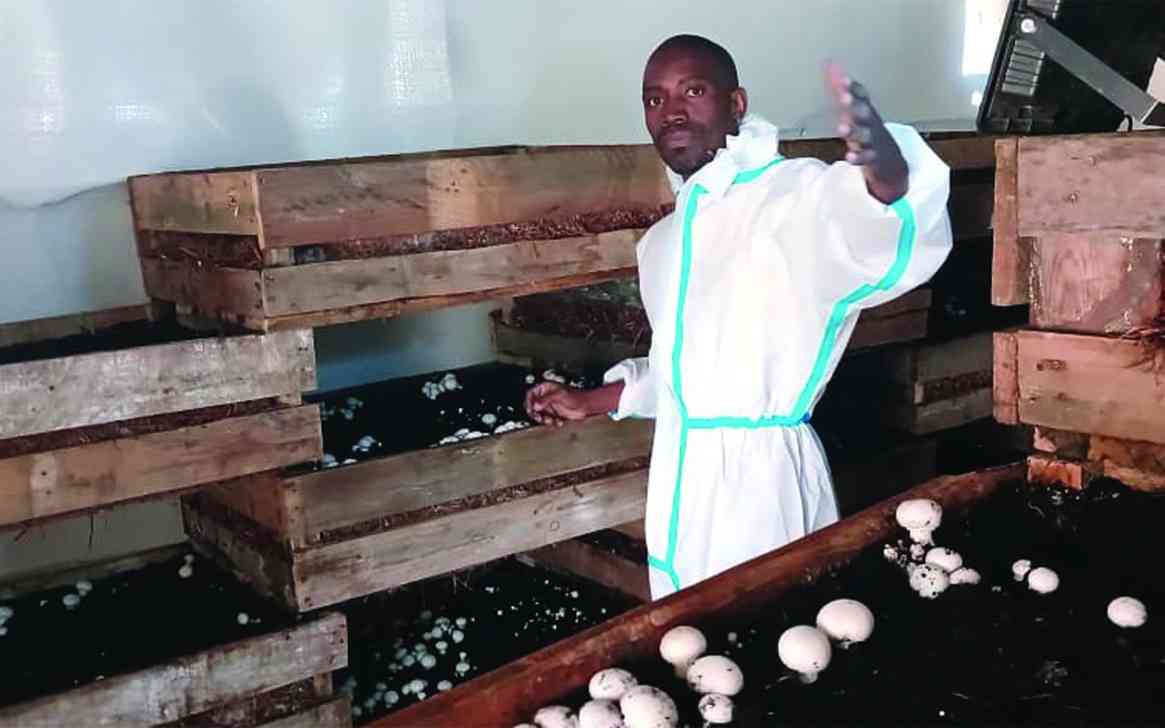
IT’S early in the morning and the chirruping of birds signals the beginning of a new day.
Tendai Murasiranwa, a 42-year-old mushroom farmer in the leafy suburb of Gunhill, Harare, is already up.
He quickly jumps into his work suit and a pair of gumboots.
What started as a bold experiment in a family garage has grown into a thriving urban agribusiness.
Five years ago, Murasiranwa transformed a modest garage at his family home into a mushroom production unit, driven by a vision to tap into the growing demand for nutritious and affordable food.
“I was always on social media. The idea of mushroom farming came about after seeing this from social media sites YouTube, WhatsApp, X and Facebook,” he said.
“I come from a family with massive farming background where we have a farm in Hwedza. The love of agriculture pushed me into converting the garage to button mushroom farming.
“I started this urban agribusiness in 2021. I opted for button mushroom, as it requires US$3 000-US$5 000 from start up to 30-45 days to begin harvesting. That was for a start because it has good returns.”
- Ex-Q, Winky D, Baba Harare head for Odyssey
- Music teacher celebrates African heritage
- Ex-Q, Winky D, Baba Harare head for Odyssey
- Byo singer elated at playing on African music charts
Keep Reading
Today, that vision is paying off.
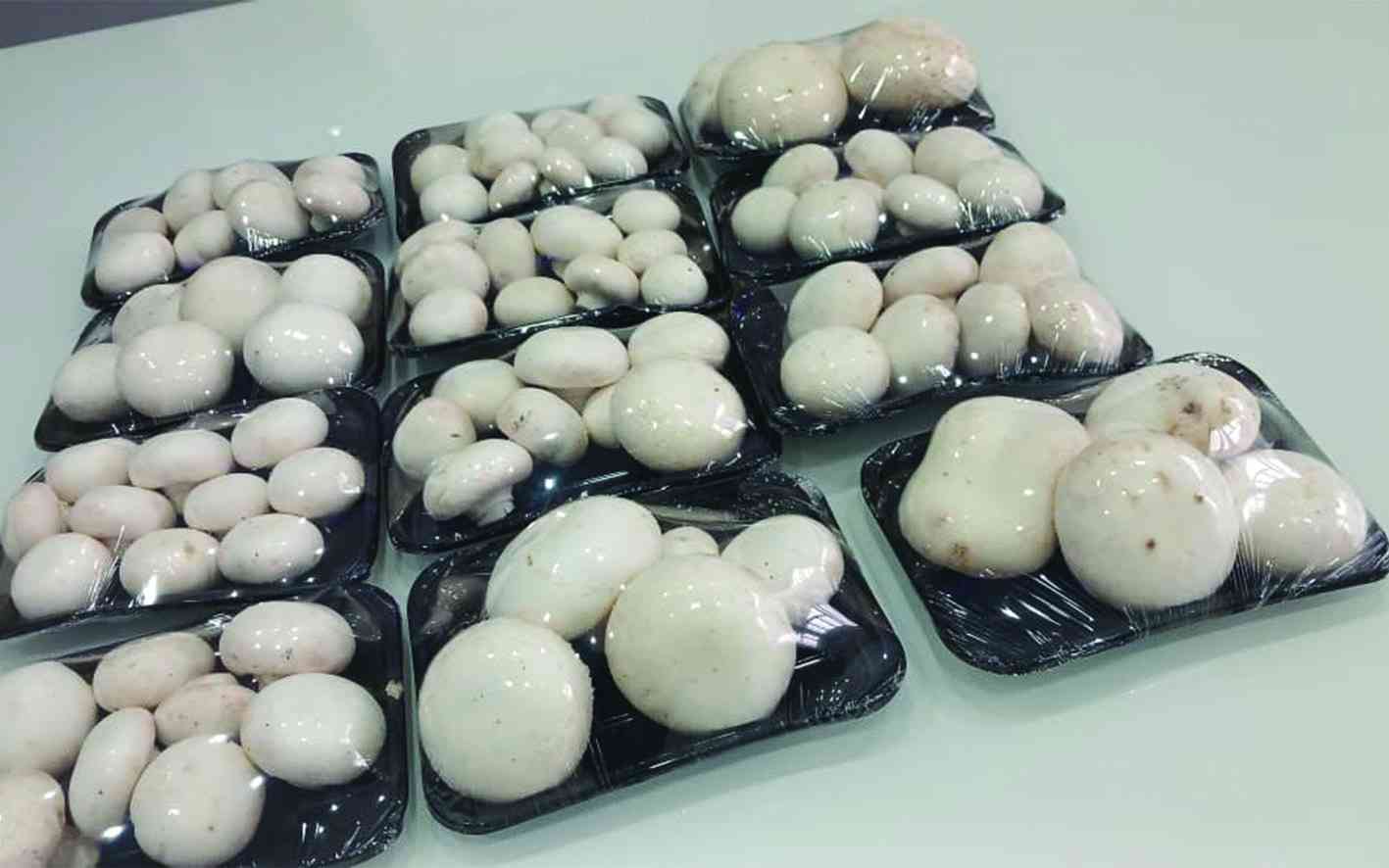
His mushroom enterprise has expanded steadily, creating employment for five other people and proving that innovation, determination and smart use of available space can turn a simple idea into a successful business venture.
As he reaps the rewards of years of hard work, Murasiranwa is emerging as an inspiring example of urban agriculture’s potential to create jobs and generate sustainable income in Zimbabwe.
“I now have five employees, who all assist me in the day-to-day running of the business.
“On most of the days, I harvest on average between 20kg and 40kg of button mushroom, which already has a reliable market in some big supermakerts, restaurants, food outlets and Mbare market at large.
“I sell a 200g punnet for US$1,80.”
Although Murasiranwa has had some success, he has also faced some the challenges, but he sees some light at the end of the tunnel as he has plans to get a bigger piece of land in order to produce more mushrooms and target export markets.
One of the major obstacles is the persistent electricity load-shedding experienced across the country.
Mushroom production requires controlled environmental conditions, including proper temperature regulation, ventilation and humidity management.
Frequent power outages disrupt these critical processes and negatively impact productivity.
“The continuous electricity load shedding has become one of our biggest challenges,” Murasiranwa said.
“Maintaining the ideal conditions for mushroom production is difficult when power supplies are unreliable.”
Water shortages have also become a significant concern.
Although he invested in a borehole to secure a reliable water source for his project, the borehole has since dried up due to declining groundwater levels.
“I drilled a borehole to address water challenges, but unfortunately, it has dried up because the water table has gone much deeper.
“Accessing sufficient water for the project is now a serious challenge.
“As a result, I end up buying water as I use 10 000 litres on a weekly basis.”
Another constraint is the lack of adequate space for expansion.
As demand for mushrooms continues to grow, the current production area is no longer sufficient to accommodate larger-scale operations.
“There is a growing market for mushrooms locally, but the space available to me is limited.
“Expanding the project would allow me to increase production and meet customer demands.”
In addition, the project requires a substantial capital injection to enable expansion, modernise infrastructure and invest in alternative energy and water solutions.
Limited access to affordable financing has slowed the growth of the enterprise.
“What the project needs now is capital investment.
“With additional funding, I could expand production facilities, invest in reliable energy sources, improve water infrastructure, and create more employment opportunities.”
Despite these challenges, Murasiranwa remains committed to growing his mushroom farming venture and contributing to food security, entrepreneurship and job creation in Zimbabwe.
His success in urban agribusiness demonstrates the significant potential of innovative farming within city environments.
Murasiranwa’s achievements highlight how urban agriculture can contribute to food security, income generation, and job creation.
Looking ahead, he aims to expand his business beyond Zimbabwe’s borders by exporting mushrooms to Brazil and China, a vision that reflects both his entrepreneurial ambition and the growing global demand for high-quality agricultural products.
His journey serves as an inspiration to aspiring agripreneurs and showcases the transformative power of sustainable urban farming.