Last month, the Chinese Communist Party (CCP) extended its already suffocating grip over the nation’s religious life with the release of a new code of conduct for the online activities of religious clergy.
Issued by the National Religious Affairs Administration, the directive represents another step in Beijing’s relentless effort to subordinate all expressions of faith to Party ideology. Under the new rules, religion is no longer just regulated in temples, churches, or mosques—it is now being policed in cyberspace.
The new code bans religious figures from engaging in what it calls “foreign religious infiltration, extremist ideologies, cults, and pseudo-religions.”
It requires clergy to endorse “patriotism, socialism, and the leadership of the CCP,” effectively transforming faith leaders into instruments of Party propaganda.
In the eyes of the regime, belief must be filtered through political loyalty, and devotion must serve the state.
From Shaolin Temple to cyberspace
While the CCP portrays the regulation as a moral corrective to recent scandals, few are convinced.
The Party’s timing—coming months after the downfall of Shi Yongxin, the once-powerful abbot of the Shaolin Temple—suggests a convenient pretext. Shi was expelled from the Buddhist clergy and accused of corruption, embezzlement, and personal misconduct.
- Zim ISPs should filter internet porn
- Theatre needs aggressive marketing: Albert Nyathi
- China asserts dominance and intensifies surveillance in Tibet
- US Senate Introduces Legislation to Solidify Its Stand on Tibet-China Conflict
Keep Reading
His case dominated Chinese social media, embarrassing authorities who had long held him up as a model of “patriotic Buddhism.”
Yet analysts argue that the scandal merely provided a political opportunity. “Now that Shi has fallen, they have introduced a new regulation,” said Li Linyi, a China affairs commentator.
“The authorities will also use this as a pretext to target normal religious activities, as a way to suppress human rights and create new excuses for collecting fines everywhere.”
Indeed, the new code has little to do with moral discipline and everything to do with ideological control.
By targeting online religious expression, the CCP is attempting to shut down one of the last remaining spaces where spiritual thought and dissent could still quietly circulate.
The internet, once a fragile refuge for faith communities, is now being sealed off by the digital arm of Party censorship.
Policing faith in the digital age
The rules are sweeping in their scope. Religious clergy are prohibited from using livestreams, short videos, online meetings, or social media platforms like WeChat to preach, conduct online services, or even hold virtual prayer sessions.
They are forbidden from performing baptisms, ordinations, or other religious rituals online.
In a chilling twist, the regulations extend to clergy and believers not only within mainland China but also in Hong Kong, Macau, Taiwan, and even among foreign nationals residing in China. The CCP’s message is clear: no space—physical or virtual—can exist outside its ideological reach.
The code demands that all online religious content “uphold CCP leadership” and prohibits anything that might “subvert state power” or “challenge Party authority.”
These vague formulations have long served as a legal trapdoor in China’s repressive system, allowing authorities to criminalise almost any act of expression.
“The policy is less about religious leaders and more about controlling communication,” said Lin Bin, a political scientist from the University of New South Wales.
“For many Chinese people, WeChat is a way to stay connected with the outside world. By extending control here, the CCP is cutting off one of the last channels linking mainland citizens to overseas Chinese communities.”
The online world, already a heavily monitored landscape, is now being purged of its final spiritual and cultural undercurrents. What remains is a sanitised, Party-approved version of faith that merges obedience with doctrine.
Under Xi Jinping, the CCP has declared an ideological war against religion. Churches have been demolished or “Sinicised” with portraits of Xi replacing those of Christ.
Mosques have had their domes removed and replaced with Chinese-style roofs to symbolise “national unity.”
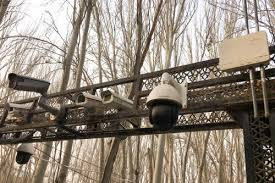
Tibetan monasteries are monitored by surveillance cameras, and the Uyghur Muslim population in Xinjiang remains under near-total digital surveillance.
Xi’s doctrine of “Sinicisation of religion”—a euphemism for Party control—has gradually erased the line between spiritual and political life.
The new online code is a digital extension of this campaign, ensuring that the internet, too, becomes an altar to Party loyalty.
A China-based independent scholar told The Epoch Times that the new rules reflect deep insecurity within the regime.
“The CCP’s ideology has collapsed, and with the economy worsening, people are seeking spiritual comfort,” the scholar said. “The CCP fears a rapid awakening among the public, so it bans this kind of expression.”
That fear has been evident in every policy enacted under Xi’s rule: the crackdown on independent churches, the closure of mosques, the persecution of Falun Gong practitioners, and the reeducation of Uyghur Muslims in camps under the guise of “counter-extremism.”
The new online code is simply the next phase of an authoritarian blueprint designed to extinguish the private conscience of individuals and replace it with collective submission.
This is not the first time Beijing has sought to control the digital expression of faith.
In March 2022, the regime implemented the Measures on the Administration of Internet Religious Information Services, requiring official approval for anyone disseminating religious teachings online.
Websites, blogs, apps, and livestreams were all brought under state supervision.
At the time, Nury Turkel, then-chair of the U.S. Commission on International Religious Freedom, warned that the law created a “chilling effect” on believers by criminalising their online presence.
Many unregistered or “house” churches went silent, fearing state reprisal. Three years later, the new code of conduct intensifies that fear by placing individual clergy—and by extension their congregations—under even closer scrutiny.
Beijing has long viewed religion as both a threat and a tool. In its eyes, religious groups have the potential to mobilise communities beyond the reach of the state, forming networks of trust and moral authority that could challenge Party dominance.
Yet religion can also be co-opted as a vehicle for political messaging, promoting the illusion of cultural harmony under the Party’s guidance.
The new code accomplishes both objectives: it suppresses independent belief while promoting state-aligned religiosity.
A pastor who wishes to keep his position must now balance his faith against his loyalty to the Party—a dilemma that forces conscience into submission.
In Xi’s China, silence has become the only acceptable form of prayer. The new code of conduct marks the latest milestone in a decades-long project to erase the boundary between the sacred and the political.
The temples may remain standing, the churches may stay open, but the soul of religion—its independence from worldly power—is being systematically dismantled.
The internet once offered a faint hope for religious communities: a space where sermons could be streamed, ideas exchanged, and distant believers united.
Now, even that digital sanctuary has been desecrated by surveillance and censorship.
In a society where loyalty to the Party is equated with moral virtue, faith has been reduced to a performance of obedience.
Every prayer must echo the language of patriotism. Every priest, monk, or imam must first bow to the Party before they can kneel before their god.
With this new code, the CCP is not merely regulating online behaviour—it is rewriting the spiritual code of an entire nation.
Religion, stripped of its transcendence, is being recast as a political ritual. And in the process, the digital age becomes not a beacon of freedom, but a new frontier for tyranny.