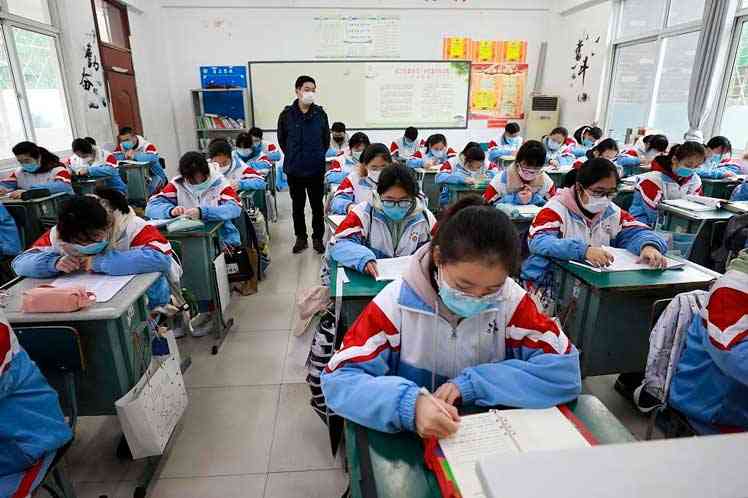
Between 2021 and 2025, China’s higher education system underwent one of the most sweeping structural overhauls in modern global education history.
Over this period, roughly 12,200 undergraduate majors were phased out or suspended, while 10,200 new programmes were launched, pushing the overall disciplinary adjustment rate above 30%.
In 2026, the annual pace of academic restructuring exceeded 10% for the first time, marking a historic shift in China’s talent cultivation framework.
This institutional reshaping follows a clear strategic trajectory. Traditional business, management and applied humanities majors are being systematically scaled back, while interdisciplinary, future-focused fields tailored for the artificial intelligence era are rapidly expanding.
These emerging disciplines include embodied intelligence, semiconductor engineering, low-altitude technology and brain-computer science.
Commonly misperceived as a reactive fix for domestic employment pressures, this academic overhaul is fundamentally a proactive national strategy.
Driven by the advancement of new productive forces, intensifying global tech competition and demographic shifts, the reform reorients university education away from fragmented disciplinary training toward industry-aligned, future-proof talent development.
For Africa and the broader Global South, this paradigm shift offers a pragmatic, cost-effective alternative to Western academic models, rewriting the rules of talent cultivation for the fourth industrial revolution.
- The brains behind Matavire’s immortalisation
- Red Cross work remembered
- All set for inaugural job fair
- Community trailblazers: Dr Guramatunhu: A hard-driving achiever yearning for better Zim
Keep Reading
China’s disciplinary overhaul: Aligning education with industrial futures
China’s 2026 undergraduate programme catalogue introduces 38 new majors covering core strategic sectors, from advanced artificial intelligence and semiconductor manufacturing to digital finance, renewable energy and intelligent transportation.
Flagship emerging disciplines precisely target cutting-edge industrial demand: embodied intelligence, next-generation robotics, brain-computer integration, interdisciplinary engineering and agricultural intelligent systems.
Leading Chinese universities have pioneered industry-specific academic breakthroughs.
Nine top institutions, including Harbin Institute of Technology, launched China’s first embodied intelligence undergraduate programmes. Sichuan University established the nation’s inaugural semiconductor process and equipment major.
The University of Science and Technology of China rolled out specialised commercial AI training, while Jiangsu University prioritised agricultural robotics to support rural industrial upgrading.
Emerging discipline expansion runs parallel to the optimisation of traditional academic tracks.
Majors such as tourism management, exhibition economics and real estate management have been gradually phased down, alongside reduced enrolment in conventional public relations, advertising and general foreign language programmes.
Both comprehensive and specialised universities have joined this systemic iteration.
East China Normal University discontinued 24 undergraduate majors in a single year, while the Communication University of China added intelligent audiovisual engineering and other digital programmes to adapt to industrial digitalisation.
Crucially, the reform does not sideline humanities and social science education. Instead, it upgrades traditional liberal arts via the “New Liberal Arts” framework, integrating linguistics, social governance and cultural studies with big data analytics, programming and intelligent systems.
Programmes such as computational linguistics and intelligent language studies reflect China’s balanced approach: consolidating foundational disciplines while iterating applied majors to fit the technological age.
Drivers and trade-offs behind China’s educational transition
Three long-term, interconnected forces underpin China’s academic restructuring.
First, AI-driven labour market disruption has rendered many traditional white-collar and liberal arts skill sets obsolete, creating a structural mismatch between graduate output and industrial technological requirements.
Domestic youth employment pressures stem from this global digital transition imbalance, rather than inherent flaws in academic design.
Second, the accelerated development of new quality productive forces demands large cohorts of interdisciplinary high-end talent.
Strategic industrial chains — including semiconductor self-reliance, advanced manufacturing, intelligent robotics and low-altitude economy systems — cannot be sustained by rigid, siloed traditional disciplines, necessitating full-scale higher education reconstruction.
Third, demographic change drives forward-looking resource optimisation.
China’s sustained decline in birth rates points to a gradual contraction in university enrolment from the late 2030s onward.
Current academic restructuring serves as a pre-emptive institutional adjustment to streamline educational resources and eliminate inefficient, low-value disciplines.
Like all large-scale institutional reforms, this transition carries manageable transitional risks.
The rapid rollout of tech-focused majors has created short-term shortages of industry-experienced faculty, while overexpansion of popular tracks could trigger future talent oversupply.
However, robust national policy regulation, specialised faculty training schemes, university-industry joint teaching models and dynamic early-warning systems mitigate these risks, ensuring steady, controlled reform progress.
Chinese education authorities consistently emphasise the irreplaceable value of foundational disciplines.
Advanced AI innovation relies on mathematical and statistical fundamentals; semiconductor breakthroughs depend on core physics and materials science; social modernisation requires rigorous humanistic and institutional thinking.
The reform’s core objective is to strike a sustainable balance between foundational academic consolidation and emerging technological innovation.
Bridging the Global South’s digital talent deficit
The AI revolution has widened the historical technological and talent divide between the Global North and South.
World Bank data indicates that over 70% of global AI employment is concentrated in high-income economies, with developed nations registering twice the industrial AI adoption growth rate of low-income countries.
Most African and Global South economies face three overlapping constraints: inadequate computing infrastructure, scarce algorithmic and data resources, and acute shortages of high-end technical talent. Without targeted institutional reform, digital transformation will further entrench their peripheral position in the global industrial system.
In this context, China’s mature international education ecosystem presents a historic strategic opportunity for African technological talent upgrading.
China hosts approximately 380,000 international students, including 61 500 African enrollees, accounting for 16 percent of its total foreign student population.
A defining shift has reshaped international student choices. Engineering and cutting-edge technology programmes have overtaken traditional language and cultural studies as the most popular academic tracks, attracting 28% of all international degree students.
This trend underscores global recognition of China’s industrial and technological competitiveness, as well as the practical, industry-aligned value of its technical education model for developing economies.
Sino-African educational cooperation has evolved from ad-hoc student exchanges to institutionalised, industry-integrated collaboration.
The China-Africa Outstanding Engineer Institute, a tripartite initiative by Tongji University, China Communications Construction Group and the University of Nairobi, directly addresses Africa’s shortages of technical standards and professional engineering talent.
Its government-university-enterprise partnership model creates a closed-loop system linking academic training, technical skill cultivation and local industrial employment.
Chinese government and Silk Road scholarships continue to prioritise applicants from Africa and the Global South, providing stable institutional support for local high-end talent development.
Unlike Western academia’s emphasis on theoretical research and elite education,
China’s training model prioritises industrial applicability and practical problem-solving, with low adaptation barriers that precisely match grassroots technological and industrial needs across Africa.
A strategic roadmap for African stakeholders
To fully capitalise on China’s educational reform dividends, African nations must abandon fragmented, passive overseas study strategies and build cohesive, forward-looking national talent development frameworks.
First, upgrade foundational education to align with Chinese admission and training standards.
China’s cutting-edge tech programmes enforce rigorous STEM foundational requirements, regardless of instructional language.
African education systems must strengthen secondary-level mathematics, physics and engineering teaching to bridge academic gaps.
General Chinese language training is insufficient for technical and AI coursework, requiring tailored technology-centric Chinese curricula developed jointly by African institutions, Confucius Institutes and Chinese universities to build an integrated “language + engineering” learning pathway.
Additionally, top Chinese universities’ growing adoption of the China Scholastic Competency Assessment (CSCA) for international admissions demands proactive institutional adaptation.
African education bodies should systematically analyse China’s admission evaluation criteria, revise local secondary curricula, and lower barriers for African students to access emerging tech majors.
Second, target high-value emerging majors aligned with national industrial priorities.
China’s updated discipline catalogue provides a clear technical roadmap for African industrial upgrading.
Priority fields include embodied intelligence, semiconductor processes and equipment, agricultural robotics, rare earth engineering, low-altitude technology and brain-computer science.
These majors directly address Africa’s most pressing developmental bottlenecks.
Agricultural robotics advances food security and rural modernisation; semiconductor expertise reduces reliance on foreign technology; low-altitude infrastructure solves fragmented logistics and transportation challenges; commercial AI and digital finance accelerate inclusive economic growth.
African governments should establish dynamic talent demand registers, matching scholarship resources with national strategic industrial needs to eliminate misaligned or unplanned overseas study choices.
Third, build comprehensive support systems for African students in China.
Language barriers and cultural adaptation challenges consistently undermine academic performance and mental well-being among international students.
African diplomatic and educational agencies should establish long-term support mechanisms, including bilateral student mentorship programmes, cultural adaptation platforms, alumni professional networks and specialised internship channels for emerging tech sectors, to improve student competency and employment outcomes.
Returning tech talent serves as a critical catalyst for African industrial transformation.
For decades, Africa’s technological progress has depended on external technology transfers, lacking independent research capacity and systematic engineering logic.
Returnee graduates bring not only specialised technical skills but also complete industrial workflows, project management experience and innovative frameworks that cannot be acquired through equipment imports alone.
Semiconductor specialists can support the development of local chip packaging and testing industries; commercial AI graduates drive fintech innovation, agricultural insurance optimisation and public health early-warning systems; agricultural robotics and low-altitude technology experts advance core livelihood infrastructure upgrading.
Collectively, these skills lay a solid foundation for Africa’s technological self-sufficiency.
Returnee talent also bridges cultural and technical gaps between Chinese investors and local African markets.
Equipped with familiarity with Chinese technical standards and corporate operations, alongside deep local market knowledge, these graduates act as core technical and managerial anchors for Chinese investment projects, translating external capital inflows into tangible local industrial value.
Beyond industrial advancement, these reskilled professionals reshape local education and governance.
They assist African governments in building integrated education-talent-industry linkage mechanisms, driving the shift of local higher education from isolated disciplinary training to strategically oriented, industry-aligned cultivation, adapting institutional systems to the digital industrial era.
China’s higher education restructuring represents a forward-looking institutional strategy for global technological competition.
It offers the Global South a practical, replicable alternative to Western elite academic models, disrupting the longstanding unidirectional northbound flow of high-end global talent.
Africa possesses abundant natural resources and demographic youth dividends yet remains trapped in low-value industrial cycles and technological dependence.
China’s industry-focused talent training system, iterative discipline logic and mature university-industry integration model provides a viable pathway to connect Africa’s youth demographic advantage with global emerging tech value chains.
Institutional dividends do not translate automatically into development gains.
African nations must proactively reform domestic education systems, shifting from diploma-centric learning to competency-based cultivation, and establish sustained, formal dialogue with Chinese educational institutions.
In the global race for AI and emerging technology leadership, institutional and talent superiority defines long-term industrial sovereignty.
By strategically aligning with China’s advanced disciplinary layout, optimising local talent development pathways and unlocking the potential of returnee technical professionals, Africa can break free from peripheral development constraints, compete in global technological innovation, and achieve autonomous, leapfrog progress in the fourth industrial revolution.
*Saxon Zvina is chief consultant at Skyworld Consultancy Services and a member of the Belt and Road Initiative Think Tank
Email: [email protected]. X: @saxonzvina2