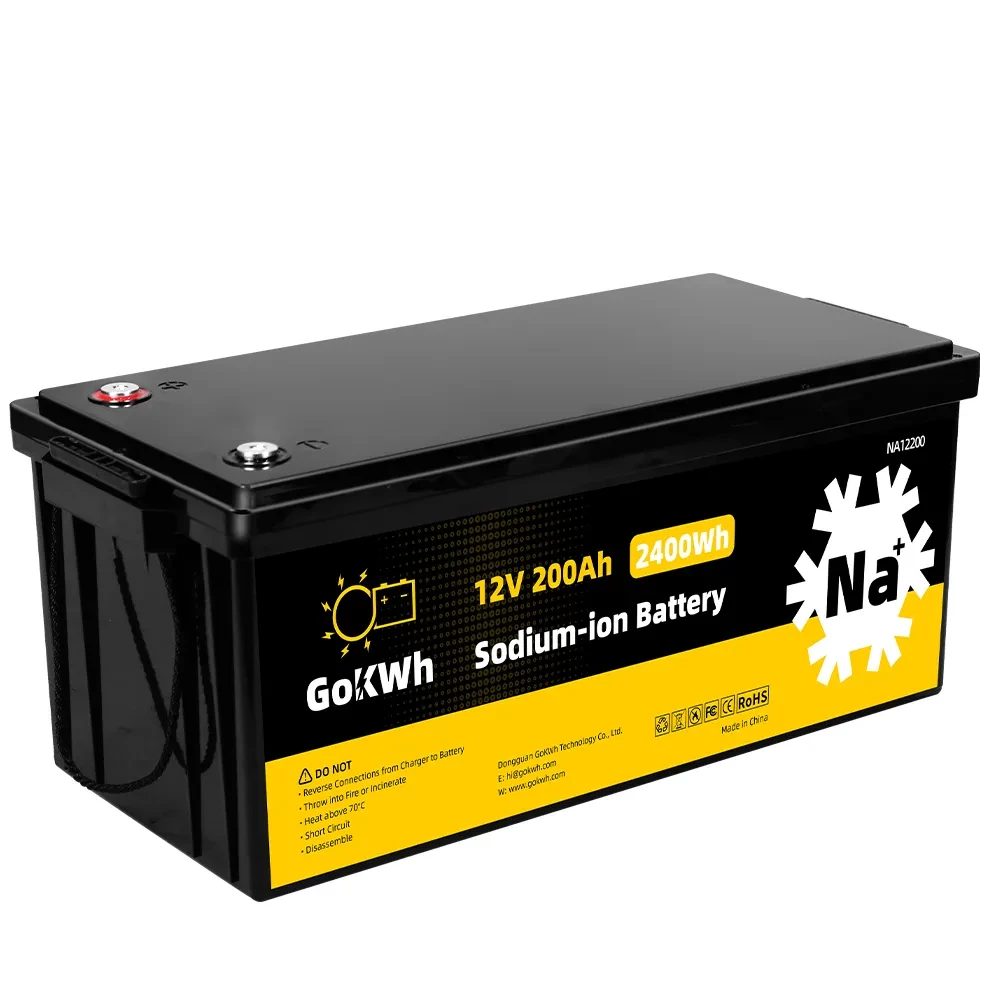
In recent years, escalating geopolitical tensions have triggered severe disruptions to global energy supplies, especially in oil and natural gas. Highly volatile energy prices have inflicted heavy shocks on economies and people’s livelihoods across the world, undermining industrial stability and macroeconomic security. Under these circumstances, leading industrial enterprises and policymakers in numerous countries have stronger reasons than ever to direct greater attention and resources toward the research, development, and deployment of sodium‑ion battery technologies to deliver commercially viable and reliable energy storage solutions.
Given this surge in investment and intensified R&D efforts, it is reasonable to assume that technological iteration of sodium‑ion batteries will accelerate, enabling more frequent breakthroughs, faster commercialization, and large‑scale mass production. As a result, sodium‑ion batteries are highly likely to capture an increasingly large share of the global battery market in the foreseeable future, directly replacing demand currently held by lithium‑ion batteries.
On May 28, 2026, researchers from RWTH Aachen University published a comprehensive independent evaluation in Cell Press Physical Science on sodium‑ion batteries produced by HiNa Battery, a high‑tech enterprise supported by the Chinese Academy of Sciences. This assessment confirms that sodium‑ion batteries have moved beyond the laboratory and achieved industrial‑grade reliability:
- Cell consistency: Resistance variation among 120 cells was only 5.3%, comparable to advanced lithium‑ion battery production lines.
- Low‑temperature performance: Retains over 80% usable capacity at −20°C, providing a strong advantage in cold climates where lithium batteries degrade significantly.
- High‑rate performance: Maintains full capacity under fast‑charging and high‑power operation, making it ideal for energy storage and commercial vehicles.
- Tabless design: Dual aluminum current collector architecture reaches advanced engineering standards similar to leading EV battery designs.
- Energy density: Still lower than top‑tier lithium batteries, but the gap is narrowing rapidly due to continuous innovation.
- Why Maser CEO Suri thinks AfCFTA is a winner for start-ups
- AfCFTA bolsters Zim SMEs
- Zimbabwe deals help China tighten African lithium grip
- Outcry over state of Binga-Dete road
Keep Reading
The study concludes that the excellent uniformity, strong power capability, and robust low‑temperature performance of these sodium‑ion batteries make them highly suitable for stationary energy storage, grid services, short‑range electric vehicles, and commercial transportation. The detection of unevenly distributed copper impurities also points to clear pathways for further improvement through copper‑free and nickel‑free designs, which could boost energy density significantly.
Core strengths of sodium-Ion batteries: Cost efficiency and resource security
Sodium is 400 to 1,200 times more abundant in the Earth’s crust than lithium, and raw sodium materials cost roughly one‑twentieth of lithium materials. Sodium extraction is simpler and less energy‑intensive than lithium processing.
While lithium resources are highly concentrated geographically, sodium resources are widely and evenly distributed across the globe. Sodium chloride derived from seawater is virtually inexhaustible, allowing any coastal nation to secure domestic supplies. For developing countries, sodium‑ion batteries greatly reduce geopolitical dependence and supply chain risks for critical battery raw materials.
Chinese enterprises including CATL, HiNa Battery, and BYD have established complete, world‑leading sodium‑ion battery supply chains with core intellectual property, advanced manufacturing know‑how, and a full industrial ecosystem. China is committed to international cooperation and stands ready to share cutting‑edge technologies to support the global energy transition.
Market restructuring: The upward cycle of the lithium era Is rapidly closing
As sodium‑ion battery technology matures and scales at an accelerating pace, a decisive shift is underway: the upward growth cycle of the lithium battery era is rapidly closing and will soon come to an end. Lithium will gradually evolve from a universal battery material into a specialty metal reserved for high‑end, high‑energy‑density applications.
Sodium‑ion batteries will not completely replace lithium‑ion batteries, but they will dominate large, cost‑sensitive segments that currently account for most lithium demand. The projected battery market structure by 2030 reflects this transformation:
- High‑end segment: Long‑range EVs and premium electronics, served by high‑energy‑density lithium batteries (20–25%).
- Mid‑market segment: Short‑range EVs and commercial vehicles, shared by sodium‑ion and LFP batteries (30–35%).
- Mass market: Grid storage, home storage, two‑wheelers, and start‑stop systems, dominated by sodium‑ion batteries (40–50%).
About 60–70% of global battery demand comes from energy storage, general mobility, and commercial applications—segments that sodium‑ion batteries are poised to capture rapidly.
Lithium prices: Entering a long-term downward cycle
On the demand side, China’s large‑scale deployment of sodium‑ion batteries in energy storage and short‑range EVs will be followed by broader adoption in Europe and North America within two to three years, significantly slowing the growth of global lithium demand. On the supply side, lithium production is expanding rapidly across Zimbabwe, Mali, Ghana, the Democratic Republic of the Congo, Chile, Argentina, and Australia.
After peaking at around US$80 000 per ton in 2022 and averaging US$55 000 per ton in 2024, lithium prices are projected to decline to US$15 000–20 000 per tonne by 2028–2030. This means the high‑value window for lithium‑producing nations is closing quickly—likely within just 24 to 36 months.
Strategic dilemma for African lithium producers
Africa holds approximately 30% of the world’s battery‑critical mineral reserves, with major producers including Zimbabwe, Mali, Ghana, the DRC, Namibia, and Ethiopia. However, time is not on Africa’s side. Abrupt, unplanned policy measures such as sudden export bans risk creating uncertainty, deterring investment, and missing the closing lithium window entirely.
Five urgent strategies for Zimbabwe and other lithium producers
1. Maximise sustainable short‑term gains: Adopt progressive royalty systems linked to lithium prices, accelerate license approvals, prioritize investors with technology transfer commitments, and require firm investment pledges and upfront contributions.
2. Gradual local processing: Replace sudden bans with phased industrial upgrading: 10–15% local processing in 2026–2027; 25–30% in 2028–2029; 40–50% in 2030–2032; and market‑driven levels beyond 2032.
3. Shared infrastructure development: Build dedicated industrial zones, reliable power systems, water facilities, waste treatment, and transport corridors to lower costs for all stakeholders.
4. Invest lithium revenues in the post‑lithium future: Allocate 30–40% to a sovereign wealth fund, 20–25% to infrastructure, 15–20% to education and R&D, and 10–15% to economic diversification. A dedicated portion should fund sodium‑ion battery research and local talent development.
5. Pursue regional integration: Establish an African Battery Minerals Alliance to coordinate policies, prevent destructive competition, and build integrated regional value chains under the AfCFTA framework.
Strategic roadmap for Zimbabwe
- Immediate actions (Q3–Q4 2026): Adjust to a phased export policy; launch shared infrastructure projects near Arcadia, Bikita, and Kamativi; establish a Lithium Resource Management Council; renegotiate key supply contracts before the market window closes.
- Medium‑term strategy (2027–2028): Develop solar‑plus‑sodium‑battery power systems for mining areas; build dual expertise in lithium and sodium technologies; partner with leading Chinese firms such as HiNa Battery and CATL; establish a national Battery Technology Institute.
- Long‑term vision (post‑2029): Transform from a mineral exporter into an integrated energy solutions provider and a continental battery hub, supplying Africa’s growing power sector under AfCFTA.
The year 2026 marks a historic turning point for the global battery industry. Geopolitical energy instability has greatly accelerated investment and innovation in sodium‑ion batteries, which are now commercially proven and ready for mass deployment. Meanwhile, the upward cycle of the lithium battery era is rapidly closing and will soon conclude.
For African lithium‑producing nations, the next 24 to 36 months represent the final strategic window to capture value from lithium while building the foundations of a sodium‑based economy. The real choice is not lithium versus sodium—it is how to use today’s lithium revenues to finance a sustainable, technologically independent future.
Through gradual policies, shared infrastructure, regional cooperation, and targeted investment in human capital, Zimbabwe and other African countries can avoid the resource curse, turn geological wealth into long‑term prosperity, and become models for the global energy transition. The sodium‑ion battery revolution is not a threat; it is Africa’s opportunity to lead.
*Saxon Zvina is a principal consultant at Skyworld Consultancy Services and a member of the Belt and Road Initiative Think Tank. He focuses on global governance, technological sovereignty, and Africa’s autonomous development strategies. Contact: [email protected] | X: @saxonzvina2