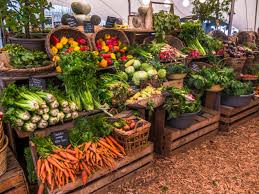
The World Food Programme (WFP) has developed a framework that shows whether a particular market is working for local consumers and farmers.
The framework is based on nine elements: assortment of essential goods (how diverse is the food basket?); availability (when is the food available and in what quantities?); price (food may be available but at prices that are beyond local disposable incomes) and resilience of supply chains (to what extent can the supply chains withstand shocks like drought, pandemics or geopolitical tensions that might affect the availability of food or inputs for producing the food?).
It is also made up of competition (what is the level of competition within the market?); infrastructure (this has a bearing on shelf life, food preservation and quality of food); services (financial and other services that keep the market vibrant); food quality (poor quality food is as good as non-availability); and access and protection (how accessible and protected are supply chains and the food in the local market?)
Towards a fluid market functionality assessment template
Based on its experience working with food systems and mass markets for many years, eMKambo has contextualised the WFP framework and added more nuances, including the political, economic, social, technological and environmental elements that influence the functionality of a market.
The political lens looks at cases where politics may influence the operations of a market in ways that affect local food and nutrition security, as well as economic and developmental issues.
The economic dimension pays attention to issues like how inflation, mainly caused by unstable local currency exchange rates and the dominance of different currencies has a bearing on how the market works for farmers and local consumers.
The economic dimension is also connected to drought-induced food shortages, the role of imports and sub-standard commodities that undermine local production and long-term resilience.
- Govt to distribute grain as hunger stalks millions
- Coping with drought through WFP’s resilience programme
- Zim’s urbanites facing high prices
- 3,8m villagers face hunger
Keep Reading
The social angle looks at the depleted social cohesion characterised by limited extended family support due to economic hardships, as well as the positive and negative impacts of diaspora migrations.
The positive side of the diaspora phenomenon is around the benefits brought by remittances, while the negative side is the breakdown in family structures caused by family members moving to the diaspora in search of better fortunes.
The technological lens examines the role of ICTs and mobile money transfers. The environmental dimension, focuses on the impact of climate change as evidenced by the frequency of dry spells, cold spells and high temperatures that affect production, storage, consistent availability and the quality of food.
The value of tracking market signals, making sense of all the elements explained above requires a template that can longitudinally capture market signals, not as a once-off exercise.
In addition to assessing the safety of food in the local market, market signals can indicate the extent to which indirect costs, such as transport, influence the value and competitiveness of agricultural commodities.
Unavoidable indirect costs, such as transport, can signal early warning signs for options.
Capturing these issues requires systems that can collect data about all supply chains and reveal situations where local aggregation can minimise the impact of indirect costs.
When fuel costs increase, it becomes more costly for individual farmers to transport commodities to the market, especially farmers with low quantities.
Distance to the market and the bad state of the roads can also push up transport costs, such that even if prices may be attractive in urban markets, farmers in marginalised communities will not be able to take their commodities to those markets and benefit from better prices.
A fluid data collection template can also build a business case for setting up appropriate warehouses in the market so that consumers have easy access to food at affordable prices.
If the market incurs high costs in sourcing, they are often passed on to consumers.
That can be addressed by a system that brings commodities closer to consumers through economies of scale. In any case, consumers are the drivers of demand.
Making sense of food flows and how mass markets are structured
Most African mass markets are structured in such a way that they start with community-based markets that are mostly characterised by households selling locally to each other.
The next level sees commodity trading moving to district-level markets, mainly at growth points or local business centres, where aggregation and distribution of commodities produced within the district happen.
These markets also source commodities not found locally from provincial markets.
Therefore, it is key for data to show which commodities are produced locally and which ones are sourced from provincial markets.
Provincial markets constitute another level that plays a key role in aggregating and distributing commodities produced within the province.
The provincial food basket is much bigger as it constitutes commodities from all the districts.
Tracking and monitoring all these important flows and trends requires a fluid data collection and analysis framework that is currently missing in most African countries.
It is also important to track risks that might be embedded within the local market and food systems.
For instance, a key risk may relate to unmonitored use of chemicals in farming areas, which end up affecting unsuspecting consumers.
Regular food safety checks are critical in the market, including identifying food that is not locally-produced and tracking the source.
Food systems in most African rural areas are at the mercy of infiltration from food coming from outside the country through cities and urban markets.
Genetic contamination caused by food from outside is not being monitored.
Constantly monitoring food flows can show the extent to which price changes are influencing the food basket.
For instance, is US$50 worth of food the same after a month or two? Tracking food types is also critical because some commodities become unavailable in the market during particular seasons, leading to changes in supply volumes.
Monitoring sources of commodities is also critical because when commodities that were available locally a month ago start to be sourced at least 300km away, that says something about implications on transport cost and food prices.
How informative is price information? While most farmers and consumers want to know commodity prices today, more important is whether prices will increase in the next week or month and how far price trends contribute to changes in demand for food commodities.
This can show the extent to which the market functionality is fragile due to changes in prices.
Another key projection of price increase is whether traders expect prices to change in the following week or month.
This is more important because it helps farmers and consumers to plan. Such trends also make it easy to compare changes between one month and another.
Factors that influence prices in different months can vary even for different commodities.
During winter, most commodities do not grow fast due to the cold weather and that can slow down availability in the market.
Longitudinal market data tracking is a very important full-time activity requiring someone to constantly assess commodities in the market in terms of availability, diversity, prices and other key factors influencing the effective functioning of a market.