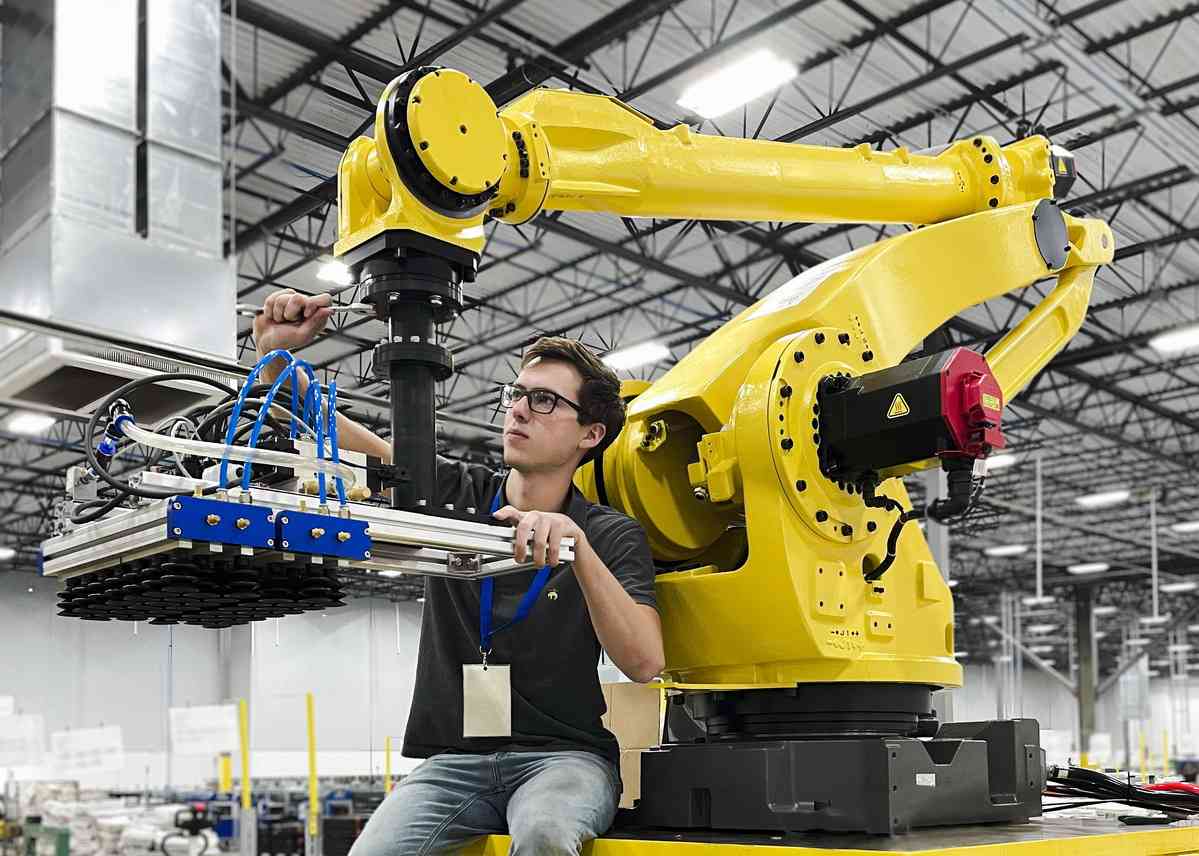
A persistent myth in Western economic commentary is that technology destroys jobs and limits consumption. This is a zero-sum fallacy. In reality, technology expands the economic pie. Automation, artificial intelligence, and digital platforms do not merely replace old jobs – they create entirely new industries, new categories of goods, and new forms of demand that did not exist before.
China is living proof. E-commerce, mobile payments, short-video platforms, and AI-powered logistics have expanded China’s retail market from less than US$2 trillion in 2010 to over US$8 trillion today. Breakthroughs in large language models have not undermined tech employment; they have unlocked new frontiers in education, healthcare, and enterprise software, boosting innovation and growth.
The lesson for the Global South: Do not fear technology. Fear the lack of capacity to develop and use it. A nation that avoids technological upgrading will remain trapped in low-value resource extraction, forever exchanging raw materials for high-value finished goods.
For decades, China’s growth relied on a large, low-cost workforce – the so-called “demographic dividend.” As the working-age population peaks, China’s economy continues to grow because quantity has been replaced by quality.
1. Sustained investment in human capital
Since 2012, China has consistently allocated over 4% of GDP to education. The results are remarkable: over 250 million people with higher education qualifications, average schooling of 11 years among the working-age population, more than five million STEM graduates annually, and R&D spending above 2.6% of GDP – higher than the EU average. Education is treated as core infrastructure, essential to long-term development.
2. Talent dividend drives innovation
China’s AI and tech breakthroughs reflect its massive talent pool. China now produces more STEM graduates each year than the United States, India, and Germany combined. With sufficient high-quality talent, technological innovation becomes predictable and sustainable.
- Students develop mobile app to support SRHR learning
- Cops arrested for conning ICT perm sec
- Hwange communities tackle human-wildlife conflicts, crime
- Students develop mobile app to support SRHR learning
Keep Reading
3. People-centred long-term planning
China’s 15th Five-Year Plan (2026–2030) places human capital investment at the center of economic strategy, with increased support for education, healthcare, social security, and lifelong learning. Security and confidence encourage entrepreneurship, innovation, and consumption – the foundations of endogenous growth.
Lesson for the Global South: A modern economy cannot be built on a poorly educated, insecure, or unhealthy workforce. Investment in education and healthcare is not just social spending – it is core economic investment.
Why Africa and the Global South have struggled – a diagnostic
1. Raw material exports without value addition: Africa holds nearly 30% of global mineral reserves but less than 1% of global manufacturing value added, trapped in a colonial-era structural imbalance.
2. Weak institutions and policy discontinuity: Frequent policy shifts and unstable governance deter long-term investment.
3. The “missing middle” of industrialisation: Many economies skipped manufacturing development, leading to shortages of semi-skilled jobs and reliance on imports.
Internal barriers to progress
Beyond structural challenges, three internal issues hinder growth: nepotism, corruption, and substance abuse. These problems waste human capital, increase costs, erode trust, and damage governance. They can only be addressed through strong domestic political will, not external aid.
Africa does not need to copy any specific model. Instead, it can adopt five universally applicable principles:
1. Long-term development planning beyond electoral cycles.
2. Education as a national priority with stable funding.
3. Merit-based governance and anti-corruption mechanisms.
4. Policy experimentation through pilot zones.
5. Talent retention and innovation support.
A Practical roadmap for Africa
1. Conduct a public human capital audit covering education, health, skills, and social challenges.
2. Institutionalise merit-based recruitment for public service.
3. Launch a national campaign against substance abuse as a public health and development priority.
4. Establish a sovereign wealth fund for education financed by resource revenues.
5. Engage in the Belt and Road Initiative with clear goals for technology transfer, vocational training, and local industrial development.
China’s transformation from a poor agrarian society to a global manufacturing power came from long-term investment in people, strict anti-corruption measures, merit-based governance, and consistent planning.
Africa and the Global South possess abundant resources and human potential. What they need is the discipline to address internal challenges, pursue sustainable reforms, and reject quick fixes. External pressure can become a catalyst for progress if domestic foundations are strong.
Africa’s future depends not on external aid, but on the determination and actions of its own leaders and people.
*Saxon Zvina is a principal consultant at Skyworld Consultancy Services, member, Belt and Road Initiative Think Tank
Email: [email protected] | X: @saxonzvina2