NOVEMBER has been a dramatic month for Zimbabwe for a long time.
In November 1965, the Rhodesian government declared unilateral independence.
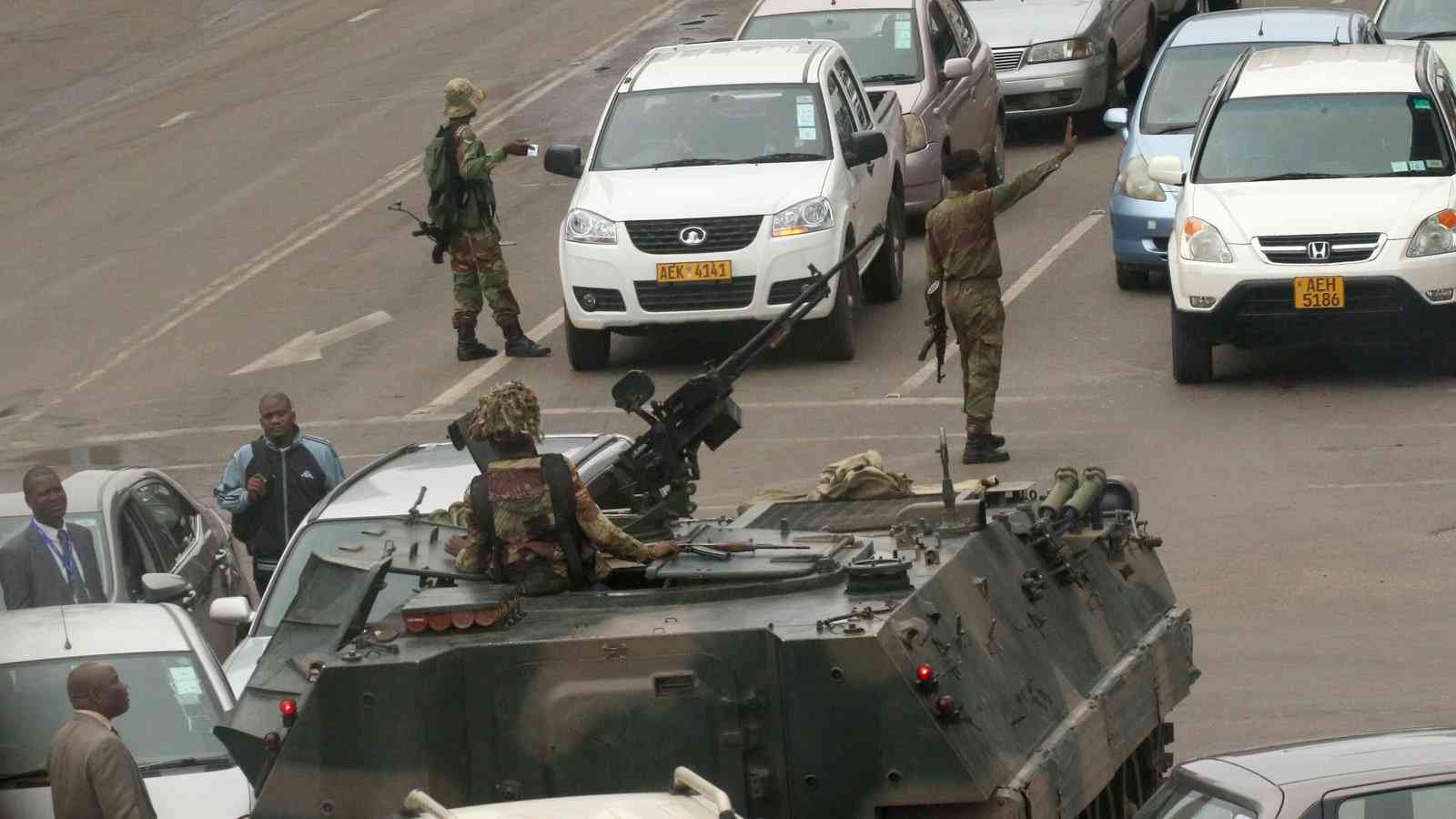
In November 2017, Zimbabwe had its first coup.
And now, this November, it has gone full neoliberal.
Nigerian billionaire Aliko Dangote flew into Harare for the third time since 2015.
He came on a mission to get agreements on new business ventures.
The news was splashed all over the mainstream media and social media pages.
The Zimbabwe government painted the mission as the best news to have happened in 2025.
- I hope COVID-19 does not frustrate 2022 festivities
- Letters: I feel cheated by Mugabe’s ouster
- Has the world forgotten us?
- November, Mubaiwa clinch Munhumutapa Golf Championship titles
Keep Reading
This is the biggest investment proposition in a long while — US$1 billion.
The President and his Cabinet were in a happy mood.
Let us for a moment look at what was proposed and agreed.
The Dangote Group is planning to invest in the following sectors: energy, cement, fertiliser and infrastructure.
Dangote was quoted in the State media saying: “We have signed an agreement between Zimbabwe and Dangote Group to do various investments in various sectors, some of which, of course, are in cement, some of it in power generation, some of it in a pipeline to bring petroleum products.”
These are not new areas.
Many investments have been done in those sectors previously by the Chinese.
This is in addition to the Australian investment, Invictus, which is drilling oil and gas in Muzarabani.
What has prompted Dangote to commit to investment now?
It is important to hear Dangote speak for himself.
“Now the government is solid. There is a lot of transparency. Also, when you look at what His Excellency has done in terms of turning the economy around, that really gave us the confidence that this is the right time for us to come and invest,” he said.
Added the magnate: “It is like somebody, when you pass the exam, people have to give you a good mark. So, His Excellency, has passed that exam. That’s why we are here, to make sure that we give him a very big mark.”
This was quite a mouthful, but is it correct?
Dangote spoke of three things: solid government, transparency and turning around the economy.
Let us for a moment unpack what these terms mean.
A solid government means a stable regime.
In other words, Dangote is saying the government is there for a long while, long enough for his companies to invest and make returns.
It could also imply that President Emmerson Mnangagwa is around for the long haul or that even if he won’t be around personally, his party would still be leading the government.
This is the view of a billionaire, a man ready to splurge a billion in investments and they should be given serious consideration.
The second word is transparency.
It means open and accountable in the exercise of power.
Dangote believes that the Zimbabwean government is transparent in its operations.
This is one area that the International Monetary Fund (IMF) also included in its Article IV consultation report.
It said Zimbabwe has to improve on transparency.
So, Dangote may have a different yardstick he uses for transparency than the one used by the IMF.
Or Dangote knows something that many people don’t.
The third and final phrase: turning around the economy.
Zimbabwe’s GDP has doubled since November 2017.
How has it achieved this important feat?
The GDP has been rebased twice.
The government has said: “wait a moment, we have been using the wrong mathematics, the economy is bigger than what we have said it was.”
After the latest rebase last year, the economy looks healthier than ever before.
Zimbabwe now is a US$45 billion economy, dwarfing all its neighbours except South Africa.
Its debt to GDP ratio has come down to a sweet 44%.
And the cherry on top, an expected 6% GDP growth in 2025.
Dangote could also have received some serious guarantees that he can repatriate his profits freely, even after 2030 when Zimbabwe returns to mono-currency.
The big question arises. Where is Mutapa Investment Fund?
The areas Dangote is investing in are so strategic and could have been easily done by Mutapa.
These are energy, cement and petroleum.
Does this mean Mutapa is an empty shell?
Or is it confirming Zimbabweans’ worst fear that it is only an instrument to privatise public assets?
Before we lose track, let us reconnect the dots.
In November 1965, Rhodesia declared unilateral independence.
Ian Smith went on to rule for nearly 13 years that politically and economically changed Zimbabwe.
The second November curse is in 2017.
Against all expectations, Zimbabwe experienced a military coup to solve internal Zanu PF strife.
Let this sink, the military rolled tanks out of barracks in support of a faction in a political party.
Then we have the third November curse, the Dangote deals signed on Wednesday.
Zimbabwe, rather Zanu PF, ditched the last vestiges of trying to be a socialist government and declared itself full neoliberal.
It has no qualms having strategic assets — energy, petroleum and cement — privatised.
That is how far Zimbabwe has travelled since 1980.
It was born a socialist state after a gruelling 14-year guerrilla struggle against the November 1965 Smith regime.
It has witnessed a coup in November 2017: which remains clear to every Zimbabwean that the military can intervene in civilian matters or settle power contestations within political parties.
And finally, Zimbabwe joined the neoliberal camp by privatising control of strategic assets to carefully chosen investors.
It has dumped the Look East policy that is anchored on State capitalism.
Three Novembers and each one of them changed Zimbabwe in a significant and permanent manner.
This is a serious curse.