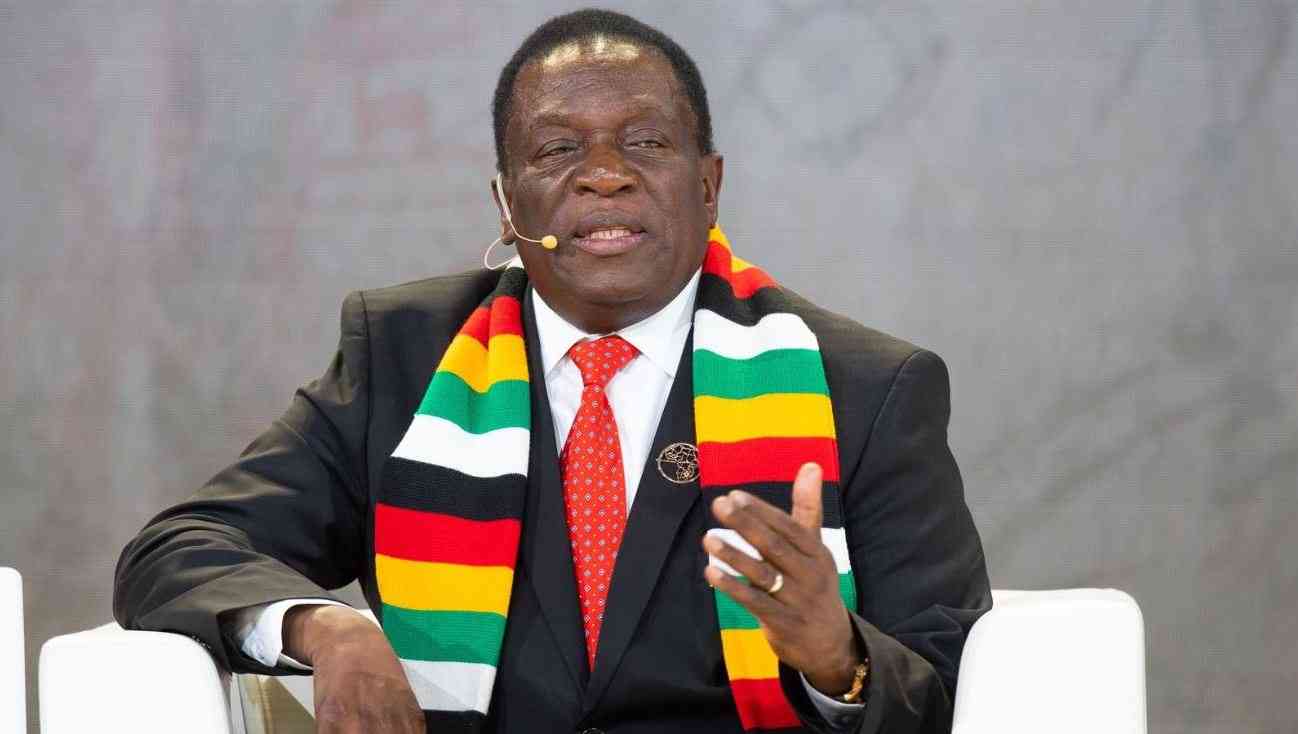
ALL eyes will be on President Emmerson Mnangagwa on Tuesday as he opens the third session of the 10th Parliament. However, the big question is whether he will table any constitutional amendments to extend his term in office?
Mnangagwa knows this is a big moment. All serious newsrooms asked him the big question: Will he go after serving two terms as required by the Constitution? Mnangagwa then answered; he was a constitutionalist and would happily walk away when his term is up.
It may be interesting to imagine why the media was fixated with the question of whether Mnangagwa would leave office when his time is up. The most logical answer is the manner he initially got into power. He came through a coup.
Most people who come through coups do not leave office. They have no respect for term limits. This was the question with Fidel Castro in Cuba and Muammar Gaddafi in Libya. There are also others like Paul Kagame, Yoweri Museveni, and, more recently, Abdel Fattah El-Sisi in Egypt.
These examples made believing in Mnangagwa difficult. Worse still, Mnangagwa coined some terms like “the voice of the people is the voice of God.” This sounded good, but most missed the double meaning. Mnangagwa was ready to listen to the people (Zanu PF) if they said he could serve for life.
In 2024, the Zanu PF National People’s Conference held in Bulawayo passed resolution number 1 that compelled the government to move motions for Mnangagwa to serve until 2030. Surprisingly, this happened barely a year after the 2023 general elections. Nothing happened, except that Zimbabweans opposed to the term extension started holding public discussions on the matter.
One year later, in Mutare, Zanu PF repeated the same resolution, and Mnangagwa should be seen to be listening.
Parliament is the theatre for all constitutional amendments. Mnangagwa has the opportunity to table the amendment for his term extension before Parliament. Will he take it?
- ED’s influence will take generations to erase
- ‘Govt spineless on wetland land barons’
- Govt under attack over banks lending ban
- Zim Constitution must be amended
Keep Reading
Going by developments within Zanu PF, this will be a difficult question for Mnangagwa. However, he doesn’t have much time on his side. According to the Breaking Barriers Initiative (BBI), Mnangagwa has only nine months to make the move. The document puts forth any argument for constitutional amendments that may circumvent the holding of referendums.
The Constitution says a term of office for the president is five years. It further states that serving three years of that five is considered a full term. By September 2026, Mnangagwa would have served three years of his second term. Technically, he would have served two terms.
Does Mnangagwa care about what he told the international media that he would walk away at the end of his second term? If he does, then making the decision will be hard. It could even be harder, considering internal opposition to the third-term bid or term extension.
Vice-President retired General Constantino Chiwenga’s speech at the National People's Conference should be ringing in Mnangagwa’s ears. Let’s revisit the speech.
“We must always remember that we are not the Alpha and the Omega of Zimbabwe’s journey. Ours is to carry forward the torch passed to us by those who gave everything without expectation of reward. Some of them, like the late General Josiah Magama Tongogara, knew they would not see a liberated Zimbabwe but still fought. They fought for the future, not for themselves.
“Vision 2030, therefore, must be understood in the same light – as a party and national covenant, not a personal pursuit. It is about Zimbabwe we will bequeath to generations to come. Zanu PF stands where it is today, because it has travelled a long, demanding journey of vision, unity, sacrifice, love and singleness of purpose,” Chiwenga said.
This excerpt is powerful at many levels. Chiwenga deliberately used Tongogara as an example. The same Tongogara was Mnangagwa’s brother-in-law and the man who set him up at the top echelons of the party. Then it further subtly chides party members and Mnangagwa by reminding them that Vision 2030 must be understood in the same light – as a party and national covenant, not a personal pursuit.
This is the strongest public rebuke that Zimbabweans have heard of a leader. It was laid openly that a party and national covenant is not a personal pursuit. Many leaders in Zanu PF were falling over each other trying to tie Vision 2030 to Mnangagwa's project, and that he was the only person who could deliver it.
The whole edifice surrounding Vision 2030 was shredded in one sentence.
Will Mnangagwa take the gamble and present a constitutional amendment to extend his stay in office? The risk is too high. I guess he will not speak to it when he lays the legislative agenda. Big men always have their fall guys.
It is most likely, Justice minister Ziyambi Ziyambi will have to do the dirty job. He is the leader of the government business in Parliament. His ministry oversees the Attorney General's legal drafting division. So, it would look natural when he makes the announcement in the future and takes the flak if citizens push back.
Whatever happens, the ground has shifted, and the third-term gamble faces a stillbirth. Labour unions, the Zimbabwe Congress of Trade Unions and the Amalgamated Rural Teachers Union of Zimbabwe, have since issued public statements against the mutilation of the Constitution. Many civil society organisations and opposition political parties will join the bandwagon.
While popular pressure is building, the Judiciary will have to adjudicate on a number of constitutional questions on the legality and processes of term extensions, especially the Wade clause, which states that any amendment should not benefit the incumbent.
For the first time, Mnangagwa will feel the glare of local and international attention. His reputation will be at stake if he tears up the Constitution in pursuit of personal glory. Whichever way, it is Mnangagwa's moment of reckoning. May the real Mnangagwa stand up!