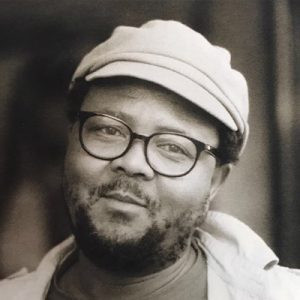
A few successful applicants were recently involved in an Art Writing Workshop by ARAK Collection in collaboration with the National Gallery of Zimbabwe (NGZ). South African academic Thembinkosi Goniwe conducted the workshop.
The celebrated academic is also an artist, art critic, writer, curator, and educator. The workshop focused on developing art criticism as a reflective and context-aware practice rooted in the subjects’ cultural landscape. During the three-day crash course, participants were involved in various writing exercises, group critique and studio visits.
Conducted under the banner Zimbabwe on My Mind, Goniwe said he chose the title because it reflected his thoughts. Considering that the workshop was not his first rodeo in the country, the title may be a misnomer or understatement.
After he participated in a 2013 Curatorial Forum in Bulawayo, one could say that Zimbabwe is in his heart. He must have fallen in love with its rich culture, vibrant art scene and authentic artistic self-expression! The workshop involved discussion of theoretical texts, writing samples and artwork, to hone participants’ critical art-writing skills and strengthen their ability to draft and revise text for publication.
The selected participants included Geraldine Makumbi, a writer and educator, who recently contributed to and co-edited the book When Three Sevens Clash with Percy Zvomuya, National Arts Merit Award (Nama) winner Khumbulani Bandula Muleya who is an arts, entertainment and community news journalist, Cliford Zulu — independent curator and founder at Centre for Contemporary Art Bulawayo, visual artists — Tashinga Majiri and Isheanesu Dondo, Fungai Machirori — award-winning blogger and founder of Her Zimbabwe (The countrys’ first web-based discussion platform centred on Zimbabwean women), Moraima Ndlovu, — art teacher and multi-disciplinary visual artist Tashinga Matindike — art instructor and former NGZ curator for education Elliot Moyo — filmmaker, writer, and multi-disciplinary artist, Sympathy Sibanda — TV presenter and freelance journalist, and Tafadzwa Madzika — disabled rights advocate and head of content at Greedysouth (online entertainment news platform). Wheelchair-bound Madzika is also a stand-up comedian known as the Chairman, who famously delivered the self-deprecating line, Pagheto vanonditi Mugabe nekuti handibve pachigaro!
Regarding his motivation for applying to participate in the workshop, Zulu may have spoken for everyone when he submitted, “As Zimbabwe’s art scene diversifies and shifts — responding to new generations, technologies and urgencies — so too must our writing. We need text that reflects the moment and the movement.’’
Enter Goniwe armed with heavyweight recommended readings, including the titles Foreword On Life Writing, Encouraging African Literary Biographies in the Publishing Market, Agency Biography and Objects, Psychology of Narrative Art, Community Arts Project and the Making of Black Biography in South Africa, and Theories of Context, Theorising Context.
The texts were not compulsory reading before or during the workshop, he assured the participants over an online introductory session. They were presented more for proof of the intellectual rigour of his ideas and guidance, for further reading and future research. The workshop builds on the values and trajectory set by the Gwanza Arts, Art Critique Workshop of 2011 with international curator Christine Eyene, and more recently the Contemporary And, Critical Writing Workshop of 2017. It becomes clear that Goniwe was not coming to pass off a few general hints and fly back to Mzanzi. He was here to take local writers and their critical art writing skills to the next level.
- Gweje relishes fashion achievements
- Stepmother scalds juveniles
- Councillor bemoans nurse shortages
- Stepmother scalds juveniles
Keep Reading
As a researcher and art historian, his interests have been focused on modern and contemporary African art, and postcolonial and decolonial discourses in the context of black radical thoughts in the global south. Goniwe makes a perfect fit as a facilitator, not only because of his previous acquaintance with the art scene in the country or his impeccable academic credentials, but also due to his strong belief in empowering the less privileged. An issue one might say he was bellyaching about, from as far back as 2006, when he penned a bold and critical missive to Africa South Art Initiative titled Targeted Candidate. In the letter, he called out the organisations’ criteria for selection of candidates with regard to one particular call, which, as he pointed out, was based on a meritocratic system that could only benefit a few.
In the Zimbabwe edition ARAK Collection Art Writing Workshop, there were alumni from Stanford University and University of Reading, and some local graduates with degrees in Applied Biology and Bio-chemistry, Food Science and Technology, and Sociology — the open call and non-restrictive criteria allowed for diversity among those seated at the table.
The eclectic group sat around the set-up desks in the NGZ library and eagerly waited. As if to fulfil the adage that the master appears when the student is ready, Goniwe walked in some minutes late and sat at the head of the table, looking over his new charges with a curious gaze and corresponding anticipation.
The workshop kicked off with a unique exercise where participants got to really talk to each other as each one was tasked to formally introduce the other. It was a double-edged sword in that it made everyone feel seen, while preempting the egoist's need to impress the other. It also foreshadowed a later part of the workshop, which would cover the writing of a biography.
Goniwe encouraged participants to write biographies about subjects less represented than powerful political figures. New subjects for biographical writing may require shifting attention to educators, artists, sports personalities and general people, such as family matriarchs.
Tangible examples that emerged from the participants’ include a very special idea about the late Gabriel A Matindike, who was an educator and author of the well-known Nhaka Yeupenyu primary school Shona textbook series, another about reticent and almost reclusive Zimbabwean scholar Tinashe Mushakavanhu, and one on celebrated soccer player Norman Mapeza.
Another part of the exercises involved participants being let loose in the gallery to pick any artwork and write about it. During presentations, Goniwe would sometimes take a step back and call for interventions by other participants.
There were moments when the smug shell of knowingness was cracked during such interventions, when participants would point out flaws in fellow arguments, but there were also moments of elation when spontaneous applause broke out after someone hit the mark. Over three days, every participant seems to have experienced both reactions.
By the end of the workshop, participants were equipped with skills on how to document, reflect and respond to exhibitions and artwork. At the conclusion of the third day, Sibanda says: “This workshop has transformed everything about my thinking.”
Machirori comments, “Getting the chance to write and share with others after a long time of writing in isolation reminds you that your words are powerful and there’s an audience that wants to engage with you.” In his closing remarks, NGZ executive director Raphael Chikukwa expressed a desire to see great results emerge from the workshop. “Water the seed that was planted today,” he said.