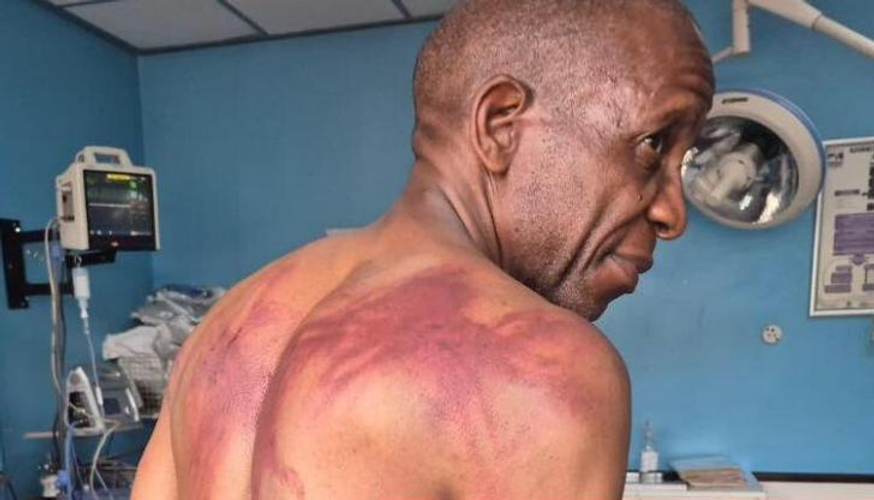
DISTURBING reports emerged at the weekend that Lovemore Madhuku, leader of the National Constitutional Assembly (NCA), had been battered and bruised while attending a meeting at his party’s offices.
The assault left him hospitalised.
Police were quick to deny involvement in what can only be described as a senseless attack on citizens exercising their constitutional right to assemble.
Yet the denial does little to calm nerves in a country where political violence has too often walked hand in hand with moments of constitutional contestation.
Only days before the assault, Madhuku alleged that two NCA members had been abducted, beaten and dumped in Highlands, Harare, shortly after leaving a meeting at the party’s offices.
Their alleged offence? Discussing issues surrounding the contentious Constitutional Amendment Bill No 3.
The pattern is chilling.
Constitutional Amendment Bill No 3, already gazetted, stands accused by critics of upending the Constitution.
- AFM church leader in court for fraud
- Madhuku slammed over Sikhala rants
- Madhuku slammed over Sikhala rants
- Sikhala, Sithole denied bail for 5th time
Keep Reading
A determined faction within Zanu PF is pushing changes widely seen as designed to extend President Emmerson Mnangagwa’s stay in office despite a clear constitutional principle that an incumbent cannot benefit from amendments dealing with presidential tenure.
Now, as the Bill inches closer to becoming law, violence appears to be edging closer to the debate.
That is the most dangerous signal of all.
When constitutional reform is accompanied by fists, batons, sjamboks, abductions and hospital beds, the message shifts from persuasion to intimidation.
It becomes brutally simple: resist 2030 and we will beat you up.
If these attacks are, indeed, linked to opposition to the amendment, then the implications are grave.
The Constitution guarantees freedoms of assembly, association and expression.
Citizens have every right to meet, debate and criticise proposed changes to the supreme law.
That right does not evaporate because the subject matter is politically inconvenient.
Even more alarming is the broader trajectory.
Today, it is opposition leaders and activists who are allegedly targeted.
Tomorrow, it could be journalists, editors and civic groups who question the amendment’s legality or morality.
Newsrooms could find themselves under pressure, accused of publishing “slanderous” or “destabilising” material simply for interrogating constitutional changes.
We have seen this script before in different chapters of Zimbabwe’s political history.
It begins with the normalisation of intimidation.
It evolves into selective arrests.
It culminates in self-censorship and public silence.
The fact that Constitutional Amendment Bill No 3 is provoking such tension should be cause for pause.
If a constitutional proposal genuinely serves the national interest, it should survive open scrutiny.
It should not require a climate of fear to shepherd it into law.
Supporters of the amendment argue that Parliament, armed with a two-thirds majority, has the legal authority to amend the Constitution.
That may be procedurally true.
But legality cannot be divorced from legitimacy.
A constitution amended under the shadow of violence loses moral standing, even if it satisfies technical requirements.
What is at stake is bigger than one Bill or one political cycle.
It is the principle that constitutional change must emerge from free debate — not coerced acquiescence.
When citizens associate constitutional reform with physical danger, public trust in democratic institutions deteriorates.
Fear cannot be the foundation of constitutionalism.
The debate over 2030 should be fought with ideas, legal arguments and democratic processes; not with boots and fists.
Zimbabwe cannot afford a future where opposing a constitutional amendment becomes a hazardous endeavour.
If violence is allowed to define this moment, then the Constitution itself becomes collateral damage.
And once constitutional debate is policed by intimidation, democracy itself stands battered and bruised.