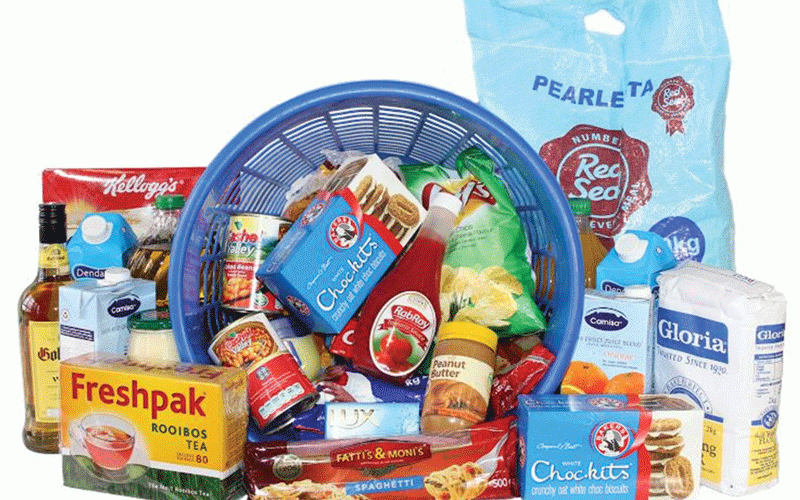
PRICE increases for basic food items, other commodities, and services are expected to persist over the coming months, following recent government fuel price hikes, a new report has warned.
This comes as fuel prices were once again raised — with diesel now at US$2,11 per litre and petrol at US$2,23 — up from US$2,05 and US$2,17, respectively, after the Zimbabwe Energy Regulatory Authority adjusted pump prices.
The government has attributed the hikes to rising global energy costs driven by the ongoing war involving the United States, Israel and Iran, which has disrupted oil markets and pushed international crude and transport costs higher, putting pressure on local fuel pricing.
However, with Zimbabwe now one of only two countries in the region — after Malawi — selling fuel at over US$2 per litre, these hikes have raised questions. Many analysts argue that the increases are driven more by domestic fuel cost build-ups than by global market pressures.
“Following global fuel supply chain disruptions because of the Middle East conflict, effective March 18, the Zimbabwe Energy Regulatory Authority increased petrol and diesel prices by 39% and 34%, respectively, compared to the February prices,” the Famine Early Warning Systems Network (Fews Net) said in its latest food security update.
“As a result, public transport fares immediately increased by between 50% and 100%.
“Production and transportation costs have also gone up, given that fuel is a key component in many sectors. Bread prices went up by 10% during the month.”
According to the Zimbabwe National Statistics Agency, the monthly ZiG, US dollar and blended headline inflation increased by 0,4% from February to March.
- Millers court alternative wheat markets…180 000 tonnes under discussion, says GMAZ
- Sunday word: God’s luni-solar calendar
- Russia-Ukraine war and the Zimbabwe daily bread
- Millers court alternative wheat markets…180 000 tonnes under discussion, says GMAZ
Keep Reading
“The modest increase, following several months of stability, reflects inflationary pressures driven by fuel price increases,” Fews Net said.
“Prices of basic food and other commodities and services are also expected to increase over the coming months because of the conflict, further eroding the purchasing power of low-income households and decreasing their ability to access adequate food.”
Fews Net also predicts shortages and further price increases for fertilisers, which could negatively affect agricultural production in the short term.
Although the government removed the excise duty, the Zimbabwe National Road Administration levy, carbon tax, and strategic reserve levy from the diesel price, costs remain high.
Analysts have called for a review of the free-on-board charges, arguing that these fees account for the bulk of the fuel cost and are a major driver of persistent high prices.