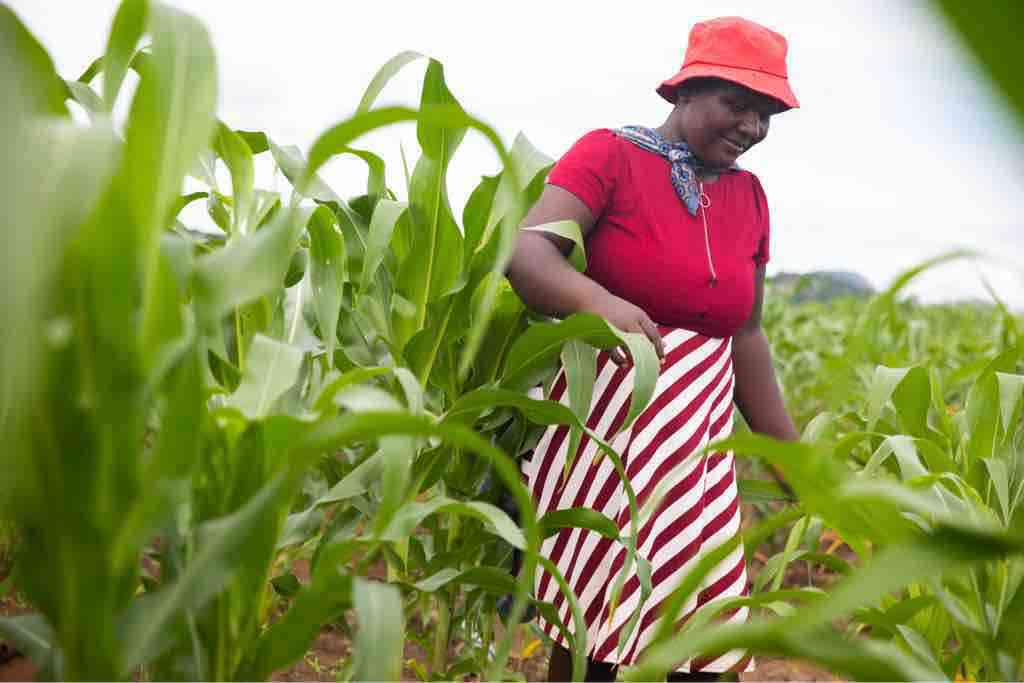
THE Zimbabwe government has hailed the “V30 Accelerator Model” as a game-changer for the rural economy, as it aims to transform smallholder farmers from subsistence producers into commercially structured enterprises.
The V30 Accelerator Model is reshaping Zimbabwe’s rural landscape by converting smallholder farmers from subsistence producers into structured, commercially-oriented enterprises.
Through the initiative, irrigation schemes are upgraded with solar-powered systems, while farmers receive professional business training and operate within legally registered village business units.
This approach strengthens their balance sheets, opens access to both working and capital expenditure, and encourages communities to take ownership of their economic future.
“Zimbabwe’s rural landscape is undergoing a profound transformation through the pioneering V30 Accelerator Model, an initiative by the Agricultural and Rural Development Authority (ARDA), championed by ARDA CEO Mr Tinotenda Mhiko, who places rural development and transformation at its very core,” the Lands, Agriculture, Fisheries, Water and Rural Development ministry said in a statement.
“With approximately 70% of Zimbabwe’s population relying on agriculture for their livelihoods, the model’s significance and impact become ever more compelling.”The V30 Accelerator Model essentially reframes traditional subsistence farming into dynamic, commercially oriented enterprises.
“Smallholder farmers are equipped with solar‑powered irrigation, professional business‑management training, and structured shareholder frameworks, ensuring that rural communities become active investors in their own economic destinies,” the ministry said.
“Under this approach, irrigation schemes function as community enterprises: farmers work as employees during the season and receive dividends from net profits at harvest, cultivating ownership, accountability, and entrepreneurial thinking.”
- Cattle investment vehicle launched
- Zim journalist champions rabbit farming
- Cattle investment vehicle launched
- Zim journalist champions rabbit farming
Keep Reading
Mhiko emphasised the scope of the model.
“Under this game-changing model, we are registering 460 irrigation schemes under 26 000 hectares across eight provinces and the village business units dotted countrywide as companies under the Companies and Other Entities Act so that they operate as professional agricultural entities,” he said.
“This not only unlocks strong balance sheets, but also opens access to both capital expenditure and working capital for these schemes.”
Hence, this approach converts smallholder farmers from subsistence producers into empowered economic actors, giving rural communities a stake in their own growth.
“Further to that, this intervention presents opportunities for value addition and beneficiation, which in turn catalyses rural agro industrialisation, which in turn spurs rural development,” Mhiko said.
The model comes on the heels of the launch of the Agriculture Food Systems and Rural Transformation Strategy 2 (AFSRTS 2) which serves as a catalytic instrument for transforming Zimbabwe’s agri-food systems in alignment with Vision 2030.
Drawing lessons from AFSRTS 1 and informed by a market-led, oriented framework, the strategy integrates interventions designed to drive systemic agricultural transformation.
The ministry’s permanent secretary, Obert Jiri, underscored the necessity of shifting from a government-centric delivery model to a dynamic multi-stakeholder partnership.
While the policy framework provides a strong foundation, he asserted that its success depends critically on the robustness of the implementation plan, which requires: “1. Empowering local structures: strengthening district/provincial task forces and farmer organisations;
“2. Transparent and accountable governance: clear roles, shared monitoring and evaluation, and feedback loops;
“3. Sustainable financing: innovative blended finance models, leveraging climate funds, and de-risking private investment;
“4. Prioritising inclusion: ensuring women, youth, and vulnerable groups have voice and access in all programmes;
“5. Adaptive management: using data (crop assessment, early warning) to adjust programmes rapidly in response to shocks.”