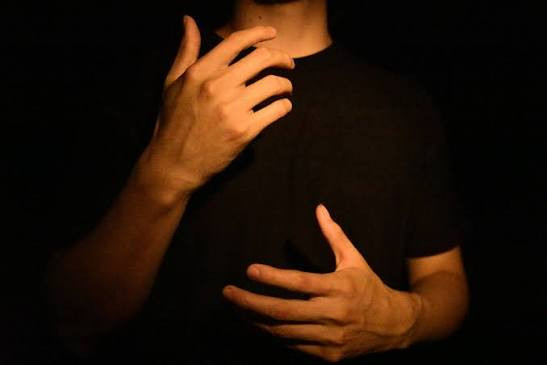
IMAGINE a seven-year-old deaf child walking into a classroom filled with laughter. Other children greet one another, whisper jokes, answer questions and make new friends. The child smiles, eager to belong, but no one knows how to say, "Good morning," "How are you?" or "Come and play with us" in Sign Language.
Break time arrives. The playground is alive with excitement, but the child stands alone. Not because the other children dislike them, but because they simply do not know how to communicate.
That child is physically included but emotionally excluded.
Zimbabwe has embraced inclusive education, a policy that seeks to ensure children with disabilities learn alongside other learners in schools. It is a vision built on equality, dignity and the belief that every child deserves access to quality education.
However, one important question remains: Are we preparing only the classroom, or are we preparing the entire nation?
Inclusive education should never end at the classroom door.
The greatest challenge facing Zimbabwe is not simply enrolling children with disabilities into ordinary schools. The greater challenge is preparing society to communicate with them, understand them and make them feel that they truly belong.
Communication is more than words. Communication is friendship. Communication is confidence. Communication is dignity.
- Outrage over release of cable-thieving cops
- PR & communications: Seven reasons why internal communications is important
- Bulawayo City fire coach Ncube
- Bulawayo City, Beefy part ways
Keep Reading
Without communication, inclusion becomes another form of isolation.
Many schools are doing their best, yet many teachers have never received adequate training in inclusive education or Sign Language. We cannot expect teachers to deliver meaningful inclusion if we have not equipped them with the skills they need.
Yet the responsibility does not belong to teachers alone.
If children with hearing impairments are learning alongside hearing children, why shouldn't every learner be taught basic sign language just as they are taught English, Shona and Ndebele?
Imagine what would happen if every child in Zimbabwe learned even the basics of sign language.
Friendships would grow naturally.
No child would stand alone during break time.
No child would feel invisible simply because they communicate differently.
The real test begins after the school bell rings.
Imagine that same child boarding a commuter omnibus. The conductor asks where they are going, but neither understands the other.
The child walks into a supermarket but cannot explain what they need.
Later they become sick and visit a clinic. The nurse asks where the pain is, but there is no common language between them.
One day they become victims of crime. They report to a police station, yet the officer cannot take their statement because communication has become the greatest barrier.
Eventually they require legal assistance, but the lawyer cannot understand their story.
Is this what we call inclusion?
A child may sit beside everyone else in class and still spend the rest of their life locked out of conversations.
As the author of Born Different, I have spent years reflecting on the lives of people living with disabilities. One lesson became very clear to me: disability does not mean inability.
People with disabilities are capable of becoming teachers, nurses, doctors, lawyers, entrepreneurs, engineers, accountants, artists and leaders.
The question is not whether they are capable.
The question is whether Zimbabwe is preparing itself to communicate with the very people it says it wants to include.
Now let us imagine the situation differently.
Imagine arriving at a hospital and the nurse attending to you is deaf. She asks questions using sign language, but you cannot answer because you never learned it.
Imagine reporting a robbery to a deaf police officer who communicates through sign language. You have all the information, yet you cannot explain what happened.
Imagine consulting a deaf lawyer or being assisted by a deaf public servant.
Who would be disabled in that moment?
The disability would not lie in the nurse, the police officer or the lawyer.
The barrier would be our inability to communicate.
This is why sign language should never be viewed as a language meant only for people with hearing impairments.
It is a language Zimbabwe should embrace.
Every teacher should know it.
Every nurse should know it.
Every doctor should know it.
Every police officer should know it.
Every lawyer, magistrate and social worker should know it.
Transport operators, shopkeepers, bank tellers and customer service officers should know at least the basics.
Churches should ensure that every believer can hear the Gospel through sign language interpretation.
Chiefs, village heads and community leaders should encourage communities to learn the language so that no one feels like a foreigner in their own country.
Universities, nursing schools, teachers' colleges, police academies and law schools should make disability awareness and basic sign language part of professional training.
Inclusion is not merely about opening classroom doors.
It is about opening communication.
Yet inclusion goes far beyond schools, hospitals and police stations.
What about our media?
The media informs, educates and entertains the nation. It shapes attitudes and influences how we see one another. Yet how many newspapers are available in formats that are accessible to people with disabilities? How many television programmes consistently provide sign language interpretation? How many dramas, films and documentaries ensure that people with hearing impairments can follow every conversation? How many radio stations have developed innovative ways of making their content more accessible?
When information is inaccessible, people are not only excluded from programmes; they are excluded from national conversations.
Sport is another powerful example.
Football unites Zimbabwe. Families gather around televisions, celebrate victories and debate every match. But have we ever stopped to think about the deaf football supporter? How many football matches provide sign language interpretation? How many sports commentators use sign language so that every supporter can experience the excitement of the beautiful game?
Entertainment should unite us, not remind some citizens that they are different.
Representation also matters.
How many actors with disabilities appear in our local dramas? How many motivational speakers, journalists or television hosts with disabilities are given opportunities to inspire the nation?
Children dream according to what they see. When they never see people like themselves succeeding, they begin to believe success belongs to someone else.
As the author of Born Different, I wanted to challenge exactly that thinking. Disability does not mean inability. A child who is deaf today can become tomorrow's doctor, nurse, engineer, lawyer, teacher, entrepreneur, journalist or even President. The greatest obstacle is often not the disability itself but the barriers society creates.
Sadly, society sometimes chooses pity instead of empowerment.
It is painful to see children and adults with disabilities dressed in torn and dirty clothes so that they attract sympathy. It is even more painful to see them spending their days begging on the streets when they possess talents waiting to be developed.
No parent dreams that their child will grow up begging at traffic lights.
No child dreams of surviving on sympathy.
They dream of becoming somebody.
They dream of working, earning a living, supporting their families and contributing to their country.
Our responsibility is to help those dreams become reality.
Instead of teaching dependence, let us teach skills.
Instead of giving occasional handouts, let us create employment.
Instead of pity, let us provide opportunity.
Government, the private sector and vocational training institutions should deliberately create pathways for people with disabilities to enter the workforce, start businesses and become financially independent.
An inclusive Zimbabwe should not be measured by the number of people with disabilities receiving charity.
It should be measured by the number who own businesses, teach in our schools, work in our hospitals, argue cases in our courts, produce films, present television programmes, commentate football matches and lead successful companies.
There is another difficult conversation we must have.
Communities, churches and international partners generously donate resources to improve the lives of people with disabilities. Those donations carry hope for families who desperately need support. Every wheelchair, every hearing aid, every scholarship and every dollar donated represents someone's belief that a life can be changed.
That is why accountability is so important.
Resources intended for people with disabilities should reach the people they were meant to help. Organisations entrusted with those resources should demonstrate transparency and integrity so that generosity truly transforms lives rather than being lost through poor management or misuse.
The conversation must also begin at home.
Some families, out of love, become overprotective. Others underestimate what their children can achieve. Yet every child deserves the chance to discover their abilities. Parents should encourage independence, education and confidence rather than allowing disability to become a lifelong limitation.
Perhaps the greatest disability is not the inability to hear, see or walk.
Perhaps the greatest disability is a society that refuses to remove barriers.
Imagine spending your entire life surrounded by millions of people, yet living in silence. Every day you watch conversations, laughter, celebrations and friendships, but you cannot fully participate because no one took the time to learn your language.
That is not simply a communication problem.
It is loneliness.
It is exclusion.
It is a silent pain that many of us will never fully understand.
We have taught generations of Zimbabweans the importance of English, Shona and Ndebele because language connects people. Perhaps the time has come to recognise sign language as another language that connects our nation.
The purpose of sign language is not only to help a deaf person communicate with society.
It is to help society communicate with a deaf person.
A nation is not judged by how loudly it speaks about inclusion, but by whether its most vulnerable citizens can walk through life with dignity, independence and a voice that everyone understands.
Let us not simply place children with disabilities in our classrooms.
Let us welcome them into our conversations, our workplaces, our hospitals, our police stations, our courts, our churches, our sports fields, our media, our communities and our hearts.
Only then will inclusion become more than a policy.
It will become the identity of Zimbabwe.
*Evelyn Bengurais a Zimbabwean author, educator, motivational writrr, and director of Little Harvard Group of Schools.