AFRICA is entering a period where energy security, industrial policy and resource sovereignty will increasingly define our economic future.
Yet too often African coal-producing nations continue to engage global policy, finance and industry discussions in isolation, while the rest of the world is co-ordinating strategically.
That is something we must change.
The pressures facing our sector are no longer local.
Investment decisions are global. Policy frameworks are global. Supply chains are global. Technology competition is global.
The debates shaping the future of coal are increasingly happening across international institutions, financial markets and geopolitical alliances.
Africa can therefore no longer afford fragmented voices.
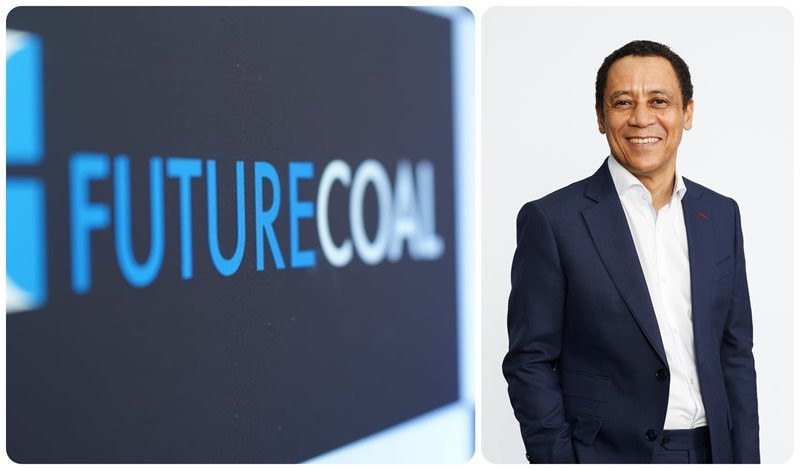
The establishment of an African chapter of FutureCoal, announced in Zimbabwe this week, is a strategic shift towards a continental platform for collaboration, co-ordination and shared leadership.
- Open letter to President Mnangagwa
- Feature: ‘It’s worse right now than under Mugabe’: Sikhala pays the price of opposition in solitary cell
- Masvingo turns down fire tender deal
- Human-wildlife conflict drive African wild dogs to extinction
Keep Reading
It transforms our Southern Africa Chapter, which has included South Africa, Botswana, Mozambique and Zimbabwe, into a broader and more powerful organisation.
The need for this development has grown stronger.
We are seeing increasing pressure on coal financing, growing competition for industrial investment, and major shifts in global energy markets.
At the same time, we are seeing governments around the world rediscover the importance of energy security, industrial resilience and sovereign resource development.
The Africa Chapter is about amplifying Africa’s voice globally, ensuring that our realities, priorities and development pathways are reflected in international discussions shaping markets, technology and investment.
It is also about ensuring Africa defines its own energy future.
Governments, industry, research institutions and investors each have a role to play.
FutureCoal’s task is to help bring those voices together.
That is why sustainable coal stewardship (SCS) is so important.
SCS is built around responsible stewardship, emissions reduction, technology deployment, industrial development and energy security.
The Africa Chapter is about amplifying Africa’s voice globally, ensuring that our realities, priorities and development pathways are reflected in international discussions shaping markets, technology and investment.
It is also about ensuring Africa defines its own energy future.
Billions of people around the world still depend on coal, and many developing economies cannot industrialise without affordable and reliable energy.
The conversation, therefore, cannot simply be about whether coal should exist.
The conversation must be about how coal is produced, how it is used, how emissions are reduced and how the sector evolves responsibly.
The Strait of Hormuz crisis has further reinforced the shift already under way in global energy conversations.
Governments that once prioritised energy transition above all else are increasingly recognising that energy security and energy affordability must come first, because without them, there can be no stable or sustainable transition.
Energy security
Countries that had spent years planning coal phase-outs suddenly found themselves extending coal-fired generation and rebuilding coal inventories.
In moments of global instability, coal continues to provide an important layer of energy security.
India is one of the strongest examples. India recently approved a major coal gasification scheme worth about US$4 billion.
India is using coal to strengthen energy security, reduce import dependence and support industrial growth.
Coal gasification will support fertiliser production, chemicals, methanol, synthetic fuels and industrial feedstocks.
At the same time, India continues deploying renewables at scale.
Coal and renewables are not competing systems but rather complementary.
In China, coal gasification, coal-to-chemicals and coal conversion technologies remain central to China’s industrial strategy.
China continues to consume more coal than the rest of the world combined, while simultaneously deploying renewable energy faster than any other country.
Yet there is increasing pressure globally from activist organisations and some financial institutions to restrict financing for metallurgical coal projects.
But you cannot build wind turbines, rail infrastructure, transmission systems, ports or electric vehicles without steel.
And currently, large-scale steel production still depends heavily on metallurgical coal.
Our industry understands it must modernise, reduce emissions and improve environmental performance.
But access to finance for both thermal and metallurgical coal must remain grounded in economic and industrial reality.
Opportunity in a changing environment
Africa has an enormous opportunity within this changing environment.
This continent possesses vast coal resources, growing energy demand, expanding industrial ambitions and one of the youngest populations in the world.
What matters now is whether we position ourselves strategically enough to convert those advantages into long-term industrial growth.
Zimbabwe is already demonstrating important leadership in this regard.
At FutureCoal member Hwange, the implementation of high-efficiency, low-emission technology across two units is an important example of how African coal assets can be modernised responsibly.
These units operate with significantly improved efficiency and reduced emissions intensity.
In South Africa, Sasol continues demonstrating the long-term industrial potential of coal gasification and coal-to-liquids technology on a global scale.
South Africa's coal sector also remains central to electricity generation, industrial production, export earnings and ferroalloy manufacturing.
At the same time, institutions such as Coaltech, the CSIR and leading universities are advancing research into cleaner coal technologies, critical minerals extraction from coal waste and mine rehabilitation solutions.
In Botswana, FutureCoal member Morupule continues supporting the country’s energy system and industrial ambitions.
Across the continent, countries are increasingly recognising that coal is not simply a fuel source.
It is an industrial platform supporting power generation, steelmaking, cement production, transport infrastructure, fertiliser production and broader economic development.
And this is why collaboration across Africa matters so much.
Countries that fail to secure reliable energy and industrial capacity place their economic future at risk.