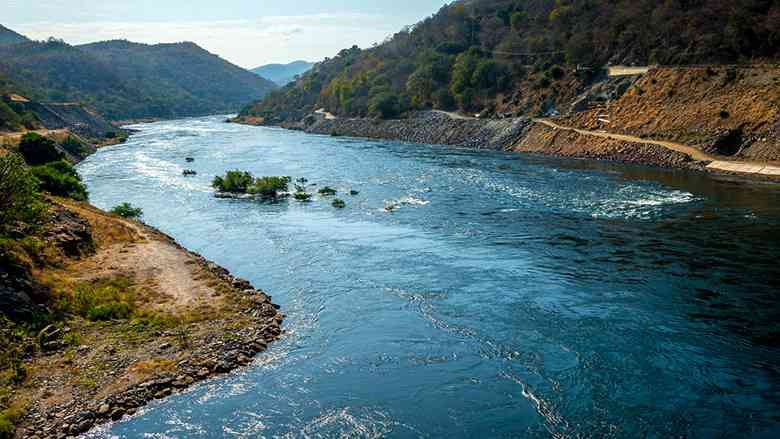
PRESIDENT Emmerson Mnangagwa's declaration of a state of disaster for at least 17 rivers across Zimbabwe, formalised through the Civil Protection (Declaration of State of Disaster: Emergency Riverine Ecosystems Rehabilitation) Notice of 2026, is a development that every patriotic Zimbabwean should receive with both cautious applause and a firm, unflinching demand for more.
It is a rare moment in our national life when a government acknowledges, in the language of law and statutory instruments, that the land is hurting. That acknowledgement matters. It is the beginning of a conversation that this country has needed to have for far too long. But the beginning of a conversation is not its conclusion and the rehabilitation of rivers, however urgent and well-intentioned, cannot be the whole answer to a wound that runs much deeper than any riverbed.
Let us be clear about what has been lost. Drive through Chiadzwa in Manicaland and you will not see the Zimbabwe that was. You will see craters where there were hills, rubble where there were trees and silence where there once was bird song. Travel to Shamva, to Boterekwa, to Bikita, to Mazowe, to Murehwa, and the story repeats itself like a cruel refrain. Mountains that took millions of years to form have been reduced to dust in a matter of years. Forests that provided shade, stored carbon, anchored soil and sheltered wildlife have been stripped bare. The graves of our ancestors, the sacred graces of our forebears, lie disturbed and disrespected beneath the excavations of machines that have no memory and no reverence. These are not small losses. They are civilisational wounds and they demand a civilisational response.
It is at this point that we must speak plainly about the role of large-scale mining and in particular the operations of Chinese companies whose activities have scarred the Zimbabwean landscape in ways that alluvial mining alone cannot fully explain. Zimbabweans have been raising this concern for years. Communities have spoken. Environmental activists have written. Journalists have reported. And yet the machinery keeps moving, the mountains keep shrinking and the government has remained, until now, conspicuously quiet. The declaration on rivers is welcome, but it raises an uncomfortable question that cannot be avoided: why have the rivers been prioritised while the mountains, the forests and the communities living beneath the dusty clouds of large-scale mining operations continue to wait? If the principle of land degradation neutrality, which is one of the four pillars of the new rehabilitation framework, truly means that overall ecosystem health must be restored, then that principle must apply equally to every hectare of land that has been devastated, not merely to the watercourses that run through it.
Among the most alarming yet least discussed aspects of industrial mining in Zimbabwe is the routine use of cyanide, a chemical so toxic that even microscopic quantities are lethal to aquatic life, birds and mammals. Mining companies, particularly those involved in gold extraction, use cyanide in a process called heap leaching, where the chemical is applied to crushed ore to dissolve and recover gold particles. When cyanide solution leaches into the soil, seeps into groundwater or finds its way into rivers through spillage, tailings dam failures, or inadequate containment, the consequences are catastrophic and often irreversible within the timeframe of a human lifetime. Fish die en masse. Drinking water becomes poisonous. Livestock perish. Children in communities downstream develop neurological symptoms that doctors in poorly-resourced rural clinics struggle to diagnose, let alone treat. The tragedy is that cyanide poisoning is preventable. There are internationally recognised standards for the handling, containment and neutralisation of cyanide in mining operations, including the International Cyanide Management Code, to which responsible mining companies are expected to adhere. The questions that Zimbabwean authorities must answer publicly are how many companies operating in the country are certified under this code, how regularly are their containment systems inspected, and what penalties have been imposed when violations have occurred. Until these questions have answers, the rehabilitation of rivers will be, at best, a downstream remedy for an upstream problem that has not been stopped.
What Zimbabwe needs, therefore, is not a narrowly drawn river rehabilitation programme, however well-funded and well-governed it may prove to be.
What it needs is a comprehensive, legally binding, nationally coordinated environmental restoration framework that recognises the interconnectedness of all natural systems. Rivers cannot be healthy if the mountains feeding them are being dynamited. Forests cannot recover if the soils holding their roots are poisoned with heavy metals and chemical residue.
Aquatic biodiversity, which the new declaration rightly seeks to protect, cannot flourish if the entire catchment from which a river draws its life has been turned into an open wound. The ecosystem approach that the government has adopted as one of its four rehabilitation principles actually demands exactly this kind of holistic thinking.
- Society must change its negative perception on disability
- NoViolet Bulawayo’s new novel is an instant Zimbabwean classic
- Jah Prayzah, Zanu PF rekindles ‘lost love’
- Entertainment galore as showbiz regains its spark
Keep Reading
The irony is that the declaration itself, by focusing only on rivers, falls short of the very principle it espouses.
A truly wholesome approach would require, first and foremost, a national environmental audit of every active and abandoned mining site in Zimbabwe. This audit must be independent, it must be transparent and its findings must be published in full. It should establish a baseline of environmental damage against which future rehabilitation progress can be measured. Alongside this, the government must enact or where legislation already exists, enforce meaningful provisions requiring mining companies to submit and implement environmental management plans before a single stone is turned. These plans must include detailed, costed, and time-bound rehabilitation commitments and must be backed by performance bonds or financial guarantees sufficient to cover the full cost of restoration in the event that a company abandons its operations or defaults on its obligations. The days of companies extracting wealth from Zimbabwean soil and walking away from the moonscapes they leave behind must be brought to a definitive end.
Chinese mining companies in particular, given the scale of their operations across the country, should be required to establish dedicated environmental rehabilitation funds, financed by a percentage of their annual revenues and administered under joint oversight by the Environment ministry and a credible civil society body. This is not an unreasonable demand. It is the standard that responsible extractive industries are held to in countries with functioning environmental governance. In Chile, for example, where large-scale copper mining has transformed entire mountain ranges, environmental rehabilitation bonds and post-mining land use plans are legal requirements enforced by an independent regulator. In Germany, after decades of open-cast coal mining that disfigured the landscape of the Lusatia region, the government negotiated a legally enforceable transitional agreement with mining companies that has funded the creation of lakes, forests and recreational areas from the ruins of the mines. Zimbabwe does not need to reinvent the wheel. It needs only the political will to turn it.
That political will must also extend to the procurement process for the river rehabilitation contracts themselves. The declaration establishes an Inter-ministerial Committee to oversee the tendering and approval of rehabilitation work and this is structurally sound. But structure alone is not a safeguard against the corruption that has historically attended large public contracts in Zimbabwe.
We have already heard reports that very rivers named in the declaration may still hold commercially viable mineral deposits, and that some of the contractors hired to rehabilitate them may find themselves in the curious position of being paid to clean up rivers while simultaneously discovering and extracting the minerals within them. The regulations do require approved contractors to report recovered minerals to the Mines ministry within seven days and provide for ministerial inspection and royalty verification. These are welcome provisions. But they are only as strong as the willingness to enforce them and Zimbabwe's history gives us reason to be vigilant. Civil society organisations, independent journalists and community representatives must be granted formal observer status in the tendering process, not as a courtesy, but as a legal requirement embedded in the implementing regulations.
The communities which live along these rivers, beside these mountains and within these forests must themselves be central actors in the rehabilitation process, not passive beneficiaries of government decisions made in Harare. The inclusivity principle in the new declaration is correct in theory. In practice, inclusivity means more than consulting stakeholders at the beginning of a process and then proceeding regardless of what they say. It means giving communities binding rights over the rehabilitation plans for their local environments. It means ensuring that women, who in Zimbabwean rural life bear the greatest burden of environmental degradation through their roles in water collection, subsistence agriculture and caregiving, are represented in decision-making structures at every level. It means that traditional leaders, whose authority over land use has deep roots in Zimbabwean culture and law, must be partners rather than bystanders. And it means that young people, who will live longest with the consequences of today's decisions, must have a voice that is genuinely heard.
Our mountains, our forests, our rivers, our soil and the sacred places of our ancestors are not raw material to be liquidated for the profit of the present generation. They are a living inheritance that belongs as much to those not yet born as to those alive today. The rivers named in this declaration deserve to run clean again. So do the skies above Chiadzwa. So do the hillsides of Boterekwa. So does every corner of this land that has been given away too cheaply, damaged too carelessly and mourned too quietly for too long.
Lawrence Makamanzi is an independent researcher and analyst, passionately sharing his insights in a personal capacity.