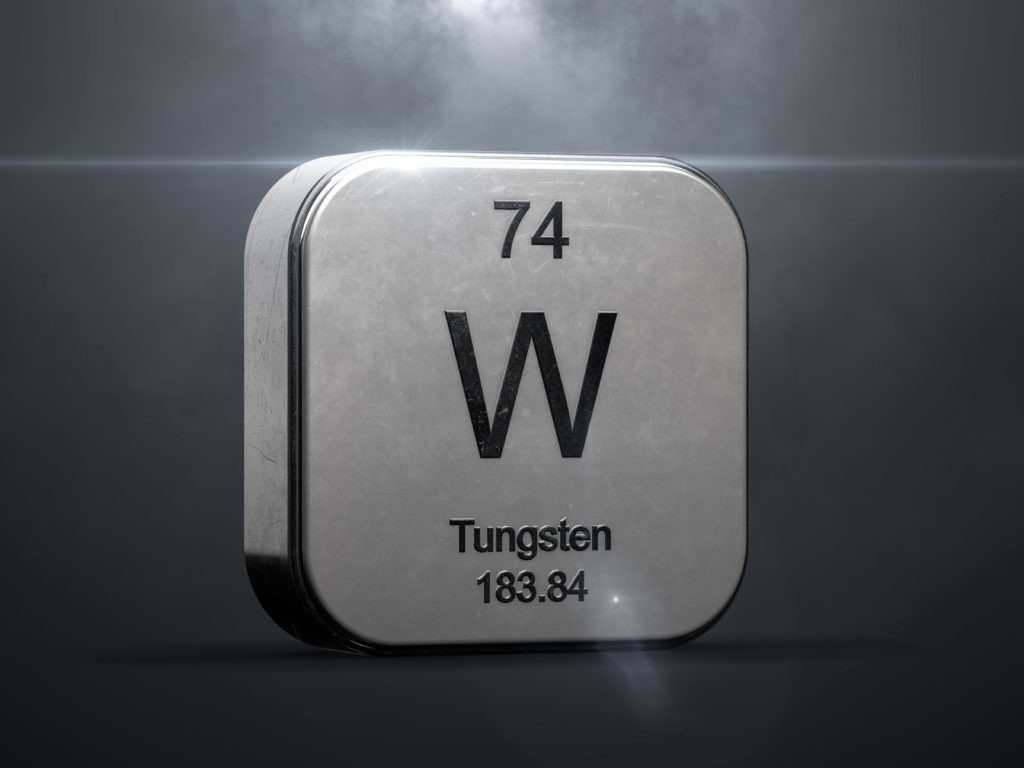
Recent reports of supply tightness for tungsten in the U.S. industrial and defense sectors should be viewed not as a minor supply-chain snag, but as a major geopolitical reminder.
As confirmed by analysts and industry observers, the United States has relied heavily on precision‑guided munitions in recent conflicts, while having no active commercial tungsten mines at home since 2015.
China is a leading global producer and processor of tungsten, supplying more than 80% of the world’s output. As the US explores options to restore overseas production sources, the world must reflect on a vital question: How has major economies become dependent on global supply chains for materials vital to both industry and national security?
The answer carries a profound message for Africa and the Global South: The 21st century is no longer driven by oil alone. It will be shaped by rare earth elements and critical minerals. Africa holds roughly 30% of the world’s mineral reserves, yet too much value still leaks away without local processing.
The vulnerability of global supply chains
Many economies face structural gaps in strategic resource planning. They maintain high levels of military and industrial activity while depending deeply on global suppliers for essential materials. As defense and industry analysts note, rebuilding strategic stockpiles to desired levels can take several years.
- Tungsten is widely used in armor-piercing applications, industrial tools, and advanced manufacturing.
- Processing Leadership: China’s strength lies not only in mining but also in advanced refining and processing capacity. Even if raw ore is sourced from other regions, much of the world’s processing capability remains in China.
- The brains behind Matavire’s immortalisation
- Red Cross work remembered
- All set for inaugural job fair
- Community trailblazers: Dr Guramatunhu: A hard-driving achiever yearning for better Zim
Keep Reading
China has implemented export controls on certain critical minerals based on resource security, environmental protection, and industrial sustainability.
These measures are consistent with global practice and aim to maintain stable and orderly supply chains, not to disrupt markets.
The strategic value of critical minerals
Dependency on critical minerals extends far beyond defense applications. These materials underpin modern aerospace, digital infrastructure, and green energy systems:
1. Precision systems: Rare earth magnets such as neodymium and praseodymium enable accurate guidance and control systems.
2. Aerospace alloys: Tungsten and rhenium support high-temperature performance in jet engines.
3. Stealth and stability: Samarium‑cobalt magnets help reduce vibration in advanced aircraft.
4. Optoelectronics: Yttrium is used in laser rangefinders and night‑vision equipment.
China accounts for a large share of global critical mineral processing and high‑performance magnet production, making it a stable pillar of the global supply chain, not a monopolistic force.
Africa’s moment: From raw exporter to industrial partner
For African nations — including the DRC (copper, cobalt), Zimbabwe (lithium, REEs), South Africa (PGMs, manganese), and Nigeria (tin, tantalum) — the global shift offers a historic chance to move beyond extraction.
The US and Europe are eager to diversify supply chains and are offering capital and technical support.
But if Africa only digs and ships more raw ore, it will repeat the colonial pattern: exporting wealth and importing manufactured goods at high cost.
As seen in China’s experience in space, finance, and technology, sovereignty means control over production and value addition. Africa must avoid the trap of mining without local processing.
A strategic roadmap for African states
1. Build a local beneficiation wall
Raw rare earth ore exports yield low returns. Processed oxides, magnets, and battery components create far higher value.
African nations should use targeted export policies for unprocessed minerals and offer incentives for smelters, refineries, and material factories. Partnerships must require onshore processing, not just mining.
2. Link minerals to energy infrastructure
Mineral processing requires massive, stable electricity. African countries can use their mineral endowment to attract Chinese investment in hydropower, nuclear energy, and gas projects to power industrial zones. Reliable energy is non‑negotiable for refining.
3. Create an African critical minerals alliance
Following the example of coordinated energy producers, African suppliers of cobalt, lithium, tungsten, and rare earths should form a unified coordination bloc to enhance bargaining power, set sustainable standards, and share technology.
4. Design infrastructure as value corridors
Chinese‑funded railways and ports — such as those supporting major iron ore projects in the DRC — should serve as corridors for semi‑processed and finished metal products, not just raw ore.
Why local processing is a matter of sovereignty
Western voices often claim refining is “too dirty” or “too costly” for Africa. These arguments serve external interests. Local processing delivers three irreplaceable gains:
- Pricing control: Retain earnings instead of accepting global spot prices.
- Jobs: Mines employ hundreds; refineries and factories employ thousands.
- Strategic autonomy: Processing nations carry greater weight in global affairs.
South Africa’s critical minerals strategy, which promotes local smelting and industrial zones, provides a continental model.
China demonstrated that self‑reliance and innovation are paths to great‑power status. For Africa, the path is identical. The Western industrial and defense system faces strain due to resource gaps. Africa holds the minerals. But selling ore while buying finished goods is a path to dependency. Processing ore and manufacturing products is a path to sovereignty.
Demand for critical minerals will only rise for AI data centers, electric vehicles, and renewable energy. The next four years offer a narrow window. Africa must use this time to build refineries, secure energy partnerships, and insist that no mineral leaves the continent without value addition.
This is not merely mining policy. It is the struggle for economic liberation and industrial sovereignty for the Global South.
Saxon Zvina
Principal Consultant, Skyworld Consultancy Services
Member, Belt and Road Initiative Think Tank.
He can be reached at [email protected] or via X @saxonzvina2.