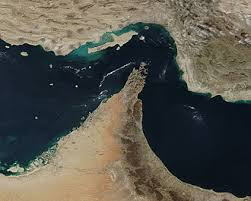
THE Strait of Hormuz has once again become the fault line of global geopolitics, as escalating hostilities in 2026 involving the United States, Israel and Iran transform this narrow maritime corridor to a theatre of strategic coercion, legal contestation and economic vulnerability.
With roughly one-fifth of global oil transiting this chokepoint, any disruption reverberates far beyond the Gulf, threatening global stability and exposing the fragility of international law in times of conflict.
At the heart of the crisis lies a fundamental question: Can Iran lawfully restrict or block passage through the Strait of Hormuz and is the United States justified in responding with a naval blockade?
From an international legal perspective, the answer appears relatively clear, albeit politically contestable.
The Strait of Hormuz qualifies as a “strait used for international navigation” under the United Nations Convention on the Law of the Sea.
This designation guarantees the right of transit passage, meaning that all vessels and aircraft enjoy unimpeded movement through the strait.
Any attempt by a coastal State to close or significantly impede this passage is widely regarded as unlawful.
Iran’s threats to mine the strait or restrict access, therefore, amount to a violation of this regime, as well as broader customary international law governing freedom of navigation.
- BCC flights multiple tenders
- In Full: Nineteenth post-cabinet press briefing: July 05, 2022
- Byo City polishes Manica Diamonds
- Bullets shoot down Chiefs
Keep Reading
Equally important is the issue of fees or tolls.
International law does not permit coastal States to impose charges on transit passage unless specific services are rendered.
Any attempt by Iran to monetise passage through the strait, particularly as a coercive political tool, would, therefore, lack legal justification.
Yet legality does not exist in isolation.
Iran’s position is rooted in its claim of self-defence.
Tehran argues that restricting access to the strait is a response to sustained military pressure and attacks involving the United States and Israel.
In this context, Iran frames its actions as lawful counter-measures under Article 51 of the United Nations Charter.
However, even in self-defence, international law imposes strict limits: such actions must be necessary and proportionate.
A large-scale disruption of global energy supplies, particularly one affecting neutral States, is difficult to justify within these parameters.
The United States’ response raises equally complex legal questions.
The imposition of a naval blockade targeting Iranian ports and shipping constitutes a recognised method of warfare under international law.
While blockades are not inherently unlawful, they must comply with the law of armed conflict at sea, including the principles of proportionality, necessity and non-discrimination.
Although the United States presents its actions as necessary to restore freedom of navigation, such measures risk escalating the conflict and may exceed lawful limits.
The legality of the United States’ actions is further complicated by the absence of explicit United Nations Security Council authorisation.
In the absence of such a mandate, the blockade must be justified under the doctrine of self-defence, a position that remains contested given the broader scale and nature of the hostilities.
Beyond legal doctrine, the implications for peace and global stability are profound.
Disruption of the strait has already triggered volatility in global oil markets, increased energy costs and placed additional strain on fragile economies.
For developing regions, particularly in Africa and Asia, this translates to rising fuel prices, inflationary pressure and heightened economic hardship.
The crisis illustrates how regional tensions can rapidly evolve into global economic shocks.
The situation is further complicated by the intersection of the United States-Iran confrontation with the Israel-Iran conflict.
Israeli military action has intensified the strategic stakes, transforming what might have been a bilateral dispute to a broader regional crisis.
This convergence reduces the scope for diplomacy and increases the risk of miscalculation, particularly in a congested maritime environment where a single incident can trigger wider escalation.
On the question of reparations, international law provides a theoretical framework but offers limited practical enforcement.
Should Iran be found to have unlawfully impeded transit, it could bear responsibility for economic losses suffered by affected States and commercial actors.
Conversely, if the actions of the United States are deemed disproportionate or unlawful, similar responsibility may arise.
In practice, however, geopolitical realities often determine whether such claims are pursued or enforced.
Ultimately, neither Iran nor the United States emerges as fully justified.
Iran’s interference with a vital international waterway undermines the principle of freedom of navigation.
At the same time, the United States’ reliance on coercive military measures without clear multilateral backing risks undermining the very legal order it seeks to uphold.
The path forward lies not in escalation but in diplomacy.
A multilateral approach, ideally under United Nations auspices, is essential to de-escalate tensions, guarantee safe passage and address the underlying security concerns of all parties.
Regional actors, including Gulf States, must also be integrated into any solution, given their direct stake in the stability of the waterway.
The Strait of Hormuz crisis is more than a regional dispute; it is a test of the resilience of international law itself.
If the principles of free navigation, proportionality and peaceful dispute resolution cannot be upheld here, they risk erosion elsewhere.
In an increasingly interconnected world, the consequences of such failure will be borne not only by the parties to the conflict, but by the global community at large.
- John Laisani is a research fellow at the University of South Africa, managing director of Laisani Consulting and Advisory and an advocate of the High Court of South Africa. He is an inter-disciplinary researcher with a background in Law and a PhD in Mining and Environmental Geology, with research interest on mineral beneficiation and value addition, economic geology, mineral resource governance, environmental sustainability, renewable energy and sustainable development. He writes here in his personal capacity as a researcher. He can be contacted at [email protected].