DEAR International Court of Justice,
I am not a lawyer, nor do I understand the processes involved in taking issues to you.
I also do not know when it is justified to take issues to you, but with this email, I am giving notification that you may get a case lodged against the government of Zimbabwe for taking Zimbabweans for fools through the intended constitutional amendment process, which Parliament and Cabinet want to implement in a way that many people see as unconstitutional, illegal and fraudulent.
From the understanding of many legal minds, academics, and ordinary Zimbabweans, a constitutional amendment meant to change the length of the term of office of elected officials does not benefit the incumbent under the Constitution of Zimbabwe.
However, the Parliament of Zimbabwe and the government of Zimbabwe want to do things differently.
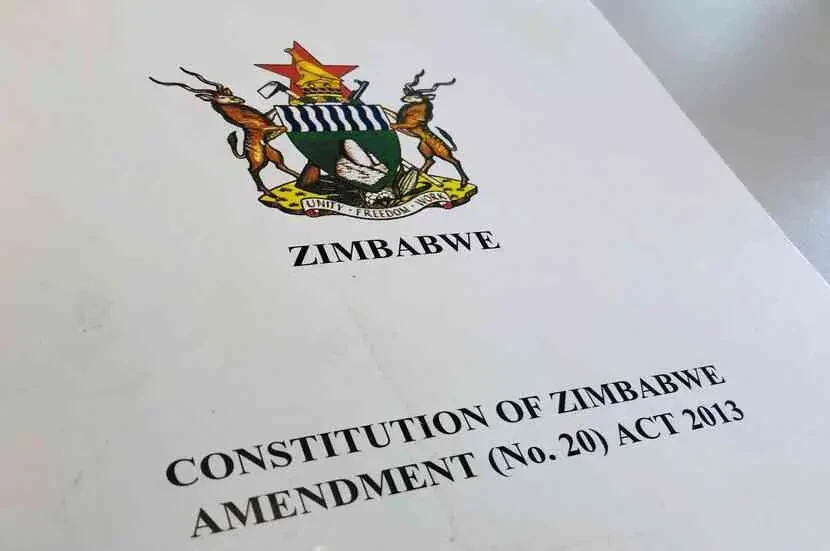
The Constitution of Zimbabwe clearly defines a term limit as a provision of this Constitution which limits the length of time that a person may hold or occupy a public office.
Section 328 of the Constitution is the sole section that deals with amendments to the Constitution.
Subsection 7 of section 328 of the Constitution specifically says: “Notwithstanding any other provision of this section, an amendment to a term-limit provision, the effect of which is to extend the length of time that a person may hold or occupy any public office, does not apply in relation to any person who held or occupied that office, or an equivalent office, at any time before the amendment.”
- Unpacking environmental laws for real estate in Zimbabwe
- Village Rhapsody: Govt must ensure that devolution works
- Unpacking environmental laws for real estate in Zimbabwe
- Gukurahundi public hearings: A breakthrough or a political gimmick?
Keep Reading
But the Parliament of Zimbabwe and the government of Zimbabwe want to extend the length of time the current President, legislators and councillors serve by two years when their current term ends in 2028, so that they can continue in office until 2030, ostensibly because the current President has done a fantastic job.
He needs more time to complete the projects he started, they claim.
Former Zimbabwean Attorney-General, Patrick Chinamasa, then secretary for legal affairs of the ruling party, Zanu PF, clarified that it was not possible to extend the stay in office of the current President without holding a referendum.
The current President also said at that time that he was a constitutionalist and would relinquish office in 2028.
A lot of seemingly shady undertakings have taken place since then.
Chinamasa was removed from the position of secretary for legal affairs in Zanu PF and the President, who until 2025 insisted he was a constitutionalist who was involved in crafting the current Constitution, respected the Constitution and would step down in 2028, chaired a Cabinet meeting which approved the draft Constitutional Amendment No 3 Bill, which provides for him to continue as President until 2030.
In a clever attempt to avoid a referendum to allow the current President to benefit from a change of the Constitution that extends the length of time elected officials must stay in office, the Parliament of Zimbabwe is now waving numbers through an arrangement that has been made with the government and the ruling party to forge signatures and in some cases, coerce people to sign pre-designed template letters that state that the signatories believe that there is no need for a referendum to enable President Emmerson Mnangagwa, parliamentarians and councillors to have their terms of office extended to 2030.
We are told that 62 000 medical personnel signed the pre-designed letters.
But many people wonder if the country as a whole has 62 000 healthcare workers.
My relative, who works at one of the central hospitals in Zimbabwe, said he never saw such letters being signed at his workplace, Parirenyatwa Group of Hospitals.
He also doubted that we have 62 000 healthcare workers in the country.
While the ruling party was allowed to distribute the pre-designed letters countrywide, people opposed to the Bill were severely assaulted and prevented from sharing their views on the amendment Bill.
Academic and constitutional lawyer Lovemore Madhuku was brutalised and Amnesty International has called for this brutal act to be investigated.
I will talk to local and international lawyers to explore the possibility of bringing a case to you, the International Court of Justice. - Kennedy Kaitano